Review: Alan Wallace
Hidden Dimensions: The Unification of Physics and Consciousness
Blogger Ref Link http://www.p2pfoundation.net/Multi-Dimensional_Science
Review by Nathan Senge
Ref Center for Buddhist Studies Weblog

There is a quiet revolution afoot. The last century has witnessed Buddhists and quantum physicists quietly moving into perigee, however unwittingly until the last twenty years. In Hidden Dimensions: The Unification of Physics and Consciousness (New York: Columbia University Press, 2007. Cloth, 176 Pages), B. Alan Wallace gives an incisive portrayal of this merging of minds and argues that these two paths are not just complementary—they are intimately related.Wallace begins his project by attempting to divest the Western reader of biased constructions of knowledge. He reminds us that, in the middle ages, the Western totem pole of disciplines was a reversal of its current configuration; theology came first, to which philosophy was subservient, followed by science in turn. Looking toward a new paradigm of thought, Wallace proposes that we bend the totem pole in a circle centered around contemplation (14)—reflecting the fact that all knowledge begins with the observer. As he rightly points out, there is no direct transmission of law from data. We must not forget the primacy of observation itself and from what glass our lens is cut.
Hidden Dimensions: The Unification of Physics and Consciousness
Blogger Ref Link http://www.p2pfoundation.net/Multi-Dimensional_Science
Review by Nathan Senge
Ref Center for Buddhist Studies Weblog
There is a quiet revolution afoot. The last century has witnessed Buddhists and quantum physicists quietly moving into perigee, however unwittingly until the last twenty years. In Hidden Dimensions: The Unification of Physics and Consciousness (New York: Columbia University Press, 2007. Cloth, 176 Pages), B. Alan Wallace gives an incisive portrayal of this merging of minds and argues that these two paths are not just complementary—they are intimately related.Wallace begins his project by attempting to divest the Western reader of biased constructions of knowledge. He reminds us that, in the middle ages, the Western totem pole of disciplines was a reversal of its current configuration; theology came first, to which philosophy was subservient, followed by science in turn. Looking toward a new paradigm of thought, Wallace proposes that we bend the totem pole in a circle centered around contemplation (14)—reflecting the fact that all knowledge begins with the observer. As he rightly points out, there is no direct transmission of law from data. We must not forget the primacy of observation itself and from what glass our lens is cut.
Wallace’s most important and original achievement is his argument that we should see Buddhism in a new methodological light. He convincingly demonstrates that Buddhist meditation is a scientifically rigorous way of studying reality. Contrary to what most Western thinkers may presuppose, it does not require a leap of faith in the spirit of Kierkegaard and Christianity. The knowledge it concerns is falsifiable in the Popperian sense (though not necessarily to everyone).Just as no one could evaluate a theory in Quantum Mechanics without the math, no one can assess the Buddhist knowledge claims without first learning the language in which it is articulated. In this case the language is meditation. Yes, this does means experience is the language of experience. And yes, this does sound somewhat circular and begs the question: how do we filter valid experience from deceptive experience? The answer, according to Wallace, comes from what he describes as “mental technology.”In Astronomy we use a telescope to see distant stars. In a similar way, Buddhists use a mental telescope. Wallace calls this “quiescence”—it refers to a very specific form of introspection. Wallace explains:
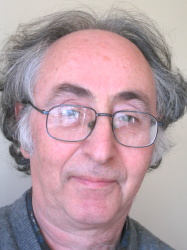
Nathan Senge graduated from Dartmouth College summa cum laude in 2005 with a major in Chemistry and minor in Physics. While there, he worked with Miles Blencowe (Professor of Physics) in exploring new ways of understanding Quantum Mechanics. Presently he is finishing his post-baccalaureate study in Religion at Columbia University. This summer he will begin the M.P.A. program in Environmental Science and Policy at Columbia University's School of International and Public Affairs. When he's not contemplating Buddhism and science, Nate is jamming with his band Kitten's Ablaze.
“…[A]ny mediator who has not yet achieved it [quiescence] is technically regarded as a novice… Once one has achieved this exceptional level of attention balance, one should be able to effortlessly remain there, with the physical senses totally withdrawn, for at least four hours, with unwavering mindfulness and an extraordinary degree of vividness” (88).Tall order. And perhaps seemingly impossible to the laymen. Nevertheless, someone untrained in metallurgy, geometry, and optics would be clueless in constructing a telescope. The analogy is sound.According to Wallace, Buddhists advance a theory of an interdependent reality. This is often described in the context of the doctrines of Dependent Origination and Emptiness. Meditators trained in quiescence (remember the telescope?) probe the nature of mind and reality with a discriminating eye. Each constituent particle is shown to be relational and devoid of intrinsic existence. Wallace calls this realization "contemplative insight." Make no mistake—this is not nihilism. Nor is it an assertion of relativism. The absence Wallace describes is not no-thing, it is merely the lack of some-thing. And that something is the fiction of an independent reality. A something that has never existed, will never exist, but is nonetheless reified by most people. This tendency to reify is at the root of human suffering and is the target of the Buddhist philosophical project. Conventional reality, says Wallace, is therefore said to be 'like an illusion' in Buddhism. This is an untapped point of connection between the two fields that Wallace could have clarified. Both have a version of conventional and deep truth. In physics, there is Classical and Quantum Mechanics. The former operates on the world of duality; it can use classical logic to fragment a complex system into its component parts and analyze their motion in isolation from one another, thereafter adding them up and deriving their group behavior. The latter demonstrates that, due to quantum interference (a theme that Wallace does mention on page 29, but does not tie explicitly back to Buddhism), this kind of conceptual fragmentation is no longer possible. Analogously, Tibetan Buddhists talk of a conventional reality where the use of separable concepts is useful despite the ultimate reality of their emptiness.In bringing together the fields of modern physics and Buddhism, however, I think Wallace could have been somewhat more explicit. For instance, a brief explanation of Quantum Mechanics is needed to fully grasp their common subscription to interrelatedness. This is because, from the quantum side, at minute scales we cannot distinguish what we observe from the person who takes the reading. This goes beyond Heisenberg. It is true that we disturb what we measure because of the Uncertainty Principle, but that is just an epistemological problem. The Uncertainty Principle does not say we are connected to what we observe. It says that light has to go from the observee to the observer and that it bumps into both of us. The deeper problem is metaphysical and owes to the Collapse Postulate (which is the heart of the so-called “Measurement Problem”). Prior to a measurement, quantum states are expressed as a linear combination of orthonormal (read perpendicular, each with a magnitude of one) basis states. Think of these basis states like a finite subset of the y- and x-axis of an everyday graph, with the “linear combination” of them being a vector anywhere in that space. These basis states are “linearly independent”—they cannot be expressed in terms of each other. And in Quantum Physics they represent mutually exclusive properties; for instance, the y- basis vector could mean that a particle is inside an arbitrary box. The x- basis vector could mean the particle is outside this same box. The particle, when looked upon, cannot be both outside and inside the box (a disagreement here leads to deeper metaphysical questioning beyond the scope of this brief review).So before a measurement occurs, one doesn’t know the particle is inside or outside of the box. The particle is actually both inside and outside the box (at least it is mathematically speaking). This is what is meant by a “linear combination.” The state, call it ‘T,’ is expressed mathematically as ‘T=a*x + b*y,’ where ‘x’ and ‘y’ are the x- and y- basis vectors of before, respectively, and ‘a’ and ‘b’ are the square root of the probability that ‘T’ is outside and inside the box, respectively. Thus, the particle is ontologically both outside and inside the box before a measurement occurs. What’s worse, the probabilities of each condition, ‘a2’ and ‘b2,’ can change in time!Not until we measure this dispersed entity does it “collapse” into one of these two basis states, meaning it is now measured as being either outside or inside of the box. This collapse is thus probabilistic; we cannot know beforehand where the particle is (if that statement even makes sense), since the “particle” is dispersed through space and can thus be understood more aptly as a wave. And how this collapse occurs depends directly on the observer. No one has yet demonstrated how or when this influence occurs, only that it happens. The observer and the observee are entwined.To make matters even more complicated, these particles often exist in "entangled states," meaning they cannot be analyzed mathematically in isolation from one another—they are ontologically conjoined both before and after a measurement even if they are separated by an infinite distance. Should you change the properties of one such particle, the related properties of the other instantly change in turn. This fact, codified in “Bell’s Theorem,” evidences a greater interconnectedness in the universe than classical physics postulated.Instead of presenting this kind of a summary, Wallace presents more advanced theories arising from contemporary quantum physicists whose key terms are never defined for the reader. For instance, he says that “Physicist George Ellis has proposed a fourfold model of reality consisting of matter and forces, consciousness, physical and biological possibilities, and mathematical reality” (55). This is problematic given that Wallace later says “that after 400 years of progress in physics, we still don’t know what matter or energy is” (59). I also find his definition of consciousness—“physical and biological possibilities”—as somewhat vague. And I can only assume a “mathematical reality” is the same as the “Platonic realm of archetypes” whose accessing is the subject of Chapter 5 and 6 (though that connection is never made explicit) (59).Along these line, Wallace also talks about Hooft and Susskind’s “holographic universe” and how “our illusory, three-dimensional world is completely described by a physical theory defined only in terms of a two-dimensional ‘boundary’ of the universe” (55). Yet I feel like it’s never made entirely clear what the boundary is or how its presence necessitates a third dimension that its enclosed two are projected upon. Basically it comes down to this: these are all important scientific concepts whose meaningfulness deserves a more detailed analysis in their own language. Wallace does appear to go into great depth when talking about Buddhist meditation (i.e. his description of the five-element meditation in Chapter 6). Thus I fear the reader may come away thinking his expertise is too heavily weighted toward the Buddhist side of things.Furthermore, I think it would have been helpful for the reader to have had more explicit parallels between Buddhism and quantum mechanics. Thematically Wallace seems to oscillate between the two—talking about one or the other in isolation of each other. They are rarely mentioned in the same context until the very end.Wallace's final chapter picks up from his first with a comparative look at the categories of ancient thought. This time he turns to the Greeks, in many ways the founders of quantum mechanics, and recalls the triumvirate of the good (ethics), the true (epistemology and metaphysics), and the beautiful (aesthetics). Wallace finds a comparable expression in the Buddhist articulation of "happiness [aesthetics], understanding [epistemology and metaphysics], and virtue [ethics]” (120). For me this clearly points to the importance of Wallace's project as work of "comparative philosophy." What he offers is a new mode of thought, a fusion of ideas organized around Buddhist contemplation. Wallace calls this new field "contemplative science" and he deserves a lot credit for enaging in this type of non-normative discourse. For very few—in any—have the courage.In the final analysis, I found this book to be an illuminating and adventurous read both in terms of the science and the contemplative traditions that it expounds upon. My only real criticism is that I think the journey may require more roadsigns. Needless to say, I eagerly await Wallace's next book and look forward to more publications in the burgeoning field of "contemplative science."--------------------------------------------------------------------------
Nathan Senge graduated from Dartmouth College summa cum laude in 2005 with a major in Chemistry and minor in Physics. While there, he worked with Miles Blencowe (Professor of Physics) in exploring new ways of understanding Quantum Mechanics. Presently he is finishing his post-baccalaureate study in Religion at Columbia University. This summer he will begin the M.P.A. program in Environmental Science and Policy at Columbia University's School of International and Public Affairs. When he's not contemplating Buddhism and science, Nate is jamming with his band Kitten's Ablaze.
« Podcast: Mark Siderits"The Cartography of Personal Identity: Mapping a Course for the Future" | Main | Podcast: Georges Dreyfus"Self, Consciousness & Subjectivity:A Preliminary Buddhist Account" »









 at