- Category: Meditation
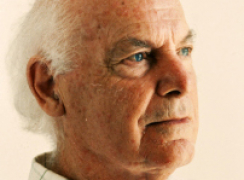
 by Swami Sivananda
Swami Sivananda Saraswati (Sep 8, 1887—Jul 14, 1963), was an Indian spiritual leader and a well known proponent of Yoga and Vedanta. Sivananda was born Kuppuswamy in South India. He studied medicine and practiced and worked as a doctor in Malaysia for ten years. Over time, a sense that medicine was healing on a superficial level grew in him, urging him to look elsewhere to fill the void, and in 1923 he left Malaya and retuned to India to pursue a spiritual quest.
Sivananda went to Rishikesh in 1924 where met his guru, Swami Vishwananda Saraswati, who initiated him into the Sannyas order and gave him his monastic name. After initiation, Sivananda settled in Rishikesh and immersed himself in intense spiritual practices.
Swami Sivananda wrote many books on a variety of subjects: metaphysics, Yoga, religion, Western philosophy, psychology, eschatology, fine arts, ethics, education, health, sayings, poems, epistles, autobiography, biography, stories, dramas, messages, lectures, dialogues, essays and anthology.
In the following article, he describes the signs that show the progress on the path of meditation.
ed. Natha.net
Signs of progress on the path of meditation
The goal of life is to reach the final bliss or Moksha. Moksha can be reached by constant meditation with a heart that is rendered pure and steady by selfless service, Japa, etc.
Meditation is the only real royal road to the attainment of salvation. Meditation kills all pains, sufferings and sorrows. Meditation destroys all causes of sorrow. Meditation gives vision of unity. Meditation induces sense of oneness. Meditation is a balloon or an aeroplane that helps the aspirant to soar high into the realms of eternal bliss, everlasting peace and undying joy.
Reality or Brahman can be realised by man. Many have attained Self-realisation. Many have enjoyed the Nirvikalpa Samadhi. Sankara, Dattatreya, Mansoor, Shams Tabriez, Jesus, Buddha were all realised souls who had direct perception of the Truth or Cosmic vision. But one who has known cannot communicate it to others for want of means. Even the knowledge acquired by the five senses which are common to all cannot be communicated to others. You cannot tell the taste of sugar-candy to a man who has never tasted it. You cannot communicate the idea of colour to one born blind. All that the teacher can do is to tell his disciple the method of knowing the Truth or the path that leads to the unfoldment of intuitional faculty.
These are the signs that indicate that you are growing in meditation and approaching God. You will have no attraction for the world. The sensual objects will no longer tempt you. You will become desireless, fearless, 'I'-less and 'mine'-less. Deha-dhyasa or attachment to the body will gradually dwindle. You will not entertain the ideas, "She is my wife; he is my son; this is my house." You will feel that all are manifestations of the Lord. You will behold God in every object.
The body and mind will become light. You will always be cheerful and happy. The name of the Lord will always be on your lips. The mind will be ever fixed at the lotus-feet of the Lord. The mind will be ever producing the image of the Lord. It will be ever seeing the picture of the Lord. You will actually feel that Sattva or purity, light, bliss, knowledge and love are ever flowing from the Lord to you and filling up your heart.
You will have no body-consciousness. Even if there be body-consciousness, it will be in the form of a Samskara or a mental retention. A drunkard may not have full consciousness that he has a cloth round his body. He may feel that something is loosely hanging from his body. Even so, you will have a feeling of the body. You will feel that something is sticking to you like a loose cloth or loose shoes.
You will have no attraction for the sex. You will have no sex-idea. Women will appear to you as manifestations of the Lord. Money and gold will appear to you as pieces of stone. You will have intense love for all creatures. You will be absolutely free from lust, greed, anger, jealousy, pride, delusion, etc. You will have peace of mind even when people insult you, beat you and persecute you. The reason why you are not disturbed is that you get immense spiritual strength from the Indweller or the Lord. Pain or pleasure, success or failure, honour or dishonour, respect or disrespect, gain or loss are alike for you.
Even in dreams, you are in communion with the Lord. You will not behold any worldly pictures.
You will have conversations with the Lord in the beginning. You will see Him in physical form. When your consciousness becomes cosmic, conversation will stop. You will enjoy the language of the silence or the language of the heart. From vaikhari (vocal speech) you will pass on to Madhyama, Pasyanti and Para (subtle forms of sounds) and eventually you will rest in soundless Omkara or soundless Brahman.
Dispassion, Discrimination, serenity, self-restraint, one-pointedness of mind, Ahimsa, Satya, purity, forbearance, fortitude, patience, forgiveness, absence of anger, spirit of service, sacrifice, love for all, will be your habitual qualities. You will be a cosmic friend and benefactor.
During meditation you will have no idea of time. You will not hear any sounds. You will have no idea of the environments. You will forget your name and all relationship with others. You will enjoy perfect peace and bliss. Gradually you will rest in Samadhi.
Samadhi is an indescribable state. It is beyond the reach of mind and speech. In Samadhi or the superconscious state the meditator loses his individuality and becomes identical with the Supreme Self. He becomes an embodiment of bliss, peace and knowledge. So much only can be said. You have to experience this yourself through constant meditation.
Contentment, unruffled state of mind, cheerfulness, patience, decrease in the excretions, sweet voice, eagerness and steadiness in the practice of meditation, disgust for worldly prosperity or success and company, desire to remain alone in a quiet room or in seclusion, desire for association with Sadhus and Sannyasins, Ekagrata or one-pointedness of mind are some of the signs which indicate that you are growing in purity, that you are progressing in the spiritual path.
You will hear various kinds of Anahata sounds like the sound of a bell, a kettledrum, thunder, conch, Vina or flute, the humming of a bee, etc., during meditation. The mind can be fixed on any of these sounds. This also will lead to Samadhi. You will behold various kinds of colours and lights during meditation. This is not the goal. You will have to merge the mind in that which is the source for these lights and colours.
A student in the path of Vedanta ignores these sounds and lights. He meditates on the significance of the Mantra of the Upanishad by negating all forms. "The sun does not shine there, nor do the moon and the stars, nor does this lightning shine and much less this fire. When He shines, everything shines after Him; by His Light all these shine." He meditates also like this: "This air does not blow there. The fire does not burn there. There is neither mind nor Prana (vital-energy) in that homogeneous essence." "Asabda (soundless), Asparsa (touchless), Arupa (formless), Agandha (odourless), Aprana (without Prana), Amana (mindless), Atindriya (beyond the senses), Adrishya (not perceived by the physical eye)--Chidanandarupah Sivoham, Sivoham. I am blissful Siva, I am blissful Siva."
Taken from ”Concentration and Meditation”
http://nathayogacenter.com/