The previous post gave reference to the book below by an academic. It is similiar but not identical to the ideas of my paradigm known as Multi-Dimensional Science which is probably far more advanced in certain respects.
RS.
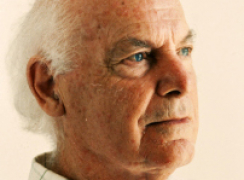
‘Scientific Mysticism’ is a term coined by Michael Whiteman, a British-born South African mathematician and mystic. (This article may be read together with the article on Whiteman’s life and thought.)
Introduction
The term ‘scientific mysticism’ appeared as a title in the trilogy, Old and New Evidence on the Meaning of Life, by Michael Whiteman1 Volume One was entitled An Introduction to Scientific Mysticism.2 Whiteman aimed to bring mysticism into the field of science as an entity that is ‘open-minded, rigorously tested, rationally coherent, and illuminating.’3 ‘Mysticism’ here is defined as:
the study of everything non-physical, including the other worlds and their archetypal governance, as well as our spiritual bodies, the facts and their relationship being known by the self-evidence of direct observation and not by reasoning or speculation.4
This indicates empirical science, sharing territory with psychical research. Yet Whiteman drew a distinction between ‘psychical’ and ‘mystical’ experience. The former includes the study of purportedly non-physical events, the latter extends to states that have a sense of higher significance and ultimates, openness to guidance, transformed being, and orientation to the perceived source of the Right and Good.
Whiteman was familiar with Vedic, Sanskrit, Pali, Greek and Biblical Hebrew, and quoted extensively from ancient texts. He regarded most current translations as inadequate because the authors lacked psychical and mystical experience. His revolutionary commentary, also his translation of ‘The Yoga Sutras of Patanjali’5 combined with canonical Buddhist texts,5 6 show striking parallels with refinements of modern thought.
Whiteman’s occupation as a professor of applied mathematics provided a base in physics for his scientific mysticism. Another base was extensive personal experience in psychical and mystical states. His methods rested on observation, conceptual analysis and insight, in tune with Edmund Husserl’s phenomenology.7 This aims at gaining face-to-face self-evidence and detailed precision, shedding the usual ‘cloak of ideas’. Science in Whiteman’s usage is not an exercise in theorizing.
Potentiality and Actualization
A key to Whiteman’s scientific mysticism is the idea of potentiality and actualization. This had been developed by the physicist Werner Heisenberg,8 who saw that a physical ‘happening’ comes about through an occasion of observation, and that this ‘happening’ is open to physical description. But what governs the happening is not open to physical observation; at best it can be given mathematical expression. So behind a physical event one has to recognize what Heisenberg called ‘an objective tendency or possibility, a “potentia” in the sense of Aristotelian philosophy’. And the governing potentia, the ‘reason’ for something to happen, is abstract in a physical sense; you can’t put it in a test tube.
Whiteman concurred that only transcending logical substructures, potentialities, merit the term ‘reality’, as opposed to appearances. Appearances come into existence only on an occasion of observation, and will be actualized differently for different people.
Whiteman wrote, ‘nothing specific can be actualized without the integration of “subjective” and “objective” factors, not in succession, but on the instant of actualization.’9 An observer who is freed in some way from the physical state will actualize for himself things that are beyond the reach of ordinary physical sensing. This is the beginning of psychical and mystical perception.
Whiteman wrote, ‘The difference between one “world” and another then depends upon the state of life in which the observer happens to be settled.’ 10 An individual’s perceiving results from integration of objective potentialities together with his own subjective potentialities, including subconscious elements. Whiteman believed the potentiality-actualization principle operates in the mental sphere of every individual: thought and images are actualizations in consciousness of an individual’s ‘thought-image sphere’, as he called it, which includes memory and imagination.11
Actualization of Psi Phenomena
Whiteman saw telepathy resulting from the interaction or resonance between the thought-image spheres of individuals. The interaction is not actualized at the physical level, and so transfer of information occurs independently of physical space and time. Clairvoyance is resonance between the potentiality-sphere of a physical object or event and the thought-image sphere of an individual, resulting in the actualization of impressions in the individual’s thought-image sphere. Once again, resonance or interaction happens independently of physical space and time, not being physically actualized. Psychokinesis may be regarded as a reverse clairvoyant interaction; potentialities usually linked in some way to an individual result in physical actualizations.
Potentiality-actualization relationships should not be seen as static; potentiality-fields continually change or develop, and have feedback loops, although not in physical time. This will affect the outcome of future physical events, which helps to explain how precognition happens. Whiteman saw precognition as actualization in an individual’s thought-image sphere of developing potentiality-fields that may affect future physical events. The individual may even intervene in the physical actualization of these events by altering the potentiality-fields, so allowing prevention of a precognized event from happening.12 Even if potentiality-fields are time-ordered, resulting in a succession of events actualized in the physical world, the ordering is not fixed in the way a road map is fixed. They are accessible in states of physical detachment, and so allow limited alteration and the exercise of free will.
Out-of-body Experience
Whiteman defined mysticism as ‘the study of everything non-physical, including the other worlds ...’13 As just discussed, potentiality-fields have the capacity to deliver different spaces or worlds of physical and non-physical actuality, depending on the state of the observer. Without this understanding, mysticism cannot begin to make sense. Direct experience of ‘the other worlds’ occurs mainly in out-of-body experience, which Whiteman preferred to term ‘separative’ experience, since there is usually awareness of a body of some kind.
The commonest type he termed ‘primary separation’, in which there is no awareness in the physical body, even though what appears to be the physical body can be viewed. In ‘secondary separation’ the physical body is under some degree of conscious control, but principal awareness lies in another organism seemingly not located in the space of the physical body, and the two bodies are quite independent. In ‘tertiary separation’ the physical body is normally under complete control, but there is full awareness of being in a different bodily form despite the locations of the two bodies seeming to be the same. Difference between the two bodies may be radical, such as one being male and the other female. For Whiteman, the highest mystical experiences were generally of this type.
Whiteman noted that such non-physical experience, in terms of reality-impression and intensity, may range from appearing weak to seeming even more real and meaningful than in physical life. At its most powerful, termed by him mystical, ‘Everything in such states, spatial characteristics included, is known as if in archetypal unchanging form, and is therefore startlingly more real (rationally-objective, ever-present) than the derivative and shifting forms of the physical world.’14 He saw a need ‘to distinguish between what is deceptive or illusory and what has the quality of face-to-face objectivity and truth which we describe by saying that a thing is real.’15 This requires setting up a numerical scale, which he called a General Index of Reality.
Index of Reality
This index covers a range from ordinary dreaming (zero rating) to what is experienced as spiritually releasing with a high degree of reality, namely mystical experience (high rating). The Index properly relates to separative experience. Features scoring in the Index include continuity of memory between physical and non-physical experience, free observation, ability to compare accurately with physical and non-physical states, awareness of substance and tangibility, communication of thought with others, and a feeling of transcendence of physical life.
The General Index does not include reports of observing physical things during a separative experience. Regarded by most people as veridical (corresponding to reality), these observations could have been made by clairvoyance or remote viewing, and do not necessarily mean that something somehow separated from the physical body to make the observation. As Whiteman stated, any claimed physical supporting evidence merely has ‘chiefly propaganda value for the uninformed or sceptical, who do not realize that separation is not established by them, but who may thereby be induced to accept the “interior” testimony as having some bearing on “scientific fact”.16
Whiteman’s Index might seem of limited value to standard parapsychology, where a useful scoring system should identify experiences that rate better than dream, hallucination or some form of pathology. In Whiteman’s Index the direction of ranking is towards mystical experience, which is hardly looked for in parapsychology, even shied away from. The order of ranking is: undeveloped, borderline, psychical, pre-mystical, mystical. Out of a possible sixteen points, experiences reaching six to eight points rank as ‘psychical separations’, scoring on criteria listed two paragraphs above. Further requirements of ‘mystical’ rank were noted in the Introduction, and demarcate ‘mystical’ from ‘psychical’. Yet in the eyes of a physically-fixated investigator, the mystical requirements would indicate reduced reality rating, since ‘reality’ means ‘like physical experience’. For Whiteman this was a cardinal error; higher reality can only mean ‘unlike physical experience’.
Other Spaces
All separative experience, physical-like or transformative, was considered by Whiteman to occur in spaces other than physical, although often so similar to what is presented physically as to be mistaken for it. He called it ‘duplicate physical’ space. He wrote:
If one is taken into a ‘psychic’ space when not familiar with such states, or with fixed ideas about them, and if the phenomena resemble physical ones closely... there may be a strong persuasion to think that the objects are being observed physically; and this applies even to possible duplicate presentations of the observer’s physical body in its actual situation.17
‘Fixed ideas’ assume there is only one ‘real’ space that can be manifested, namely the physical world. A fixed idea will contribute to the potentialities governing a separative experience, and lead to the actualization of a physical-like ‘duplicate’ scene. Yet as someone free of the constraints of one-level thinking, Whiteman wrote of an ‘inexhaustible variety’ of appearance in other spaces. Naturalistic conditioning may still result in ‘fantasy influences’ in undeveloped states, yet highest development leads to ‘perfectly acceptable forms of transcendent unified beauty’, where ‘the surroundings, correspondingly, are distinguished by the quality of the light, and gain in intelligible character, perfection of beauty, depth of glowing heart quality, unitive freedom and sense of blending with other minds, as the highest condition, which is that of Mystical Form Liberation, is approached.’ In these descriptions, Whiteman states,
‘I’ and ‘me’ do not stand for the familiar consciousness of self in the physical personality, or, in fact, for anything that can be known in an ordinary physical state of mind. To understand what is meant, the characteristics of the merged ordinary self must be ruled out.18
One might question how ‘other spaces’ are related to the physical and, if at all, to each other. In states classified by Whiteman as tertiary separation, the non-physical body holds much of the focus of attention but does not appear to be spatially apart from the physical body; ‘the locations of the two bodies seem the same, in spite of differences in their form and/or size and possibly also in their surroundings.’ This seems to tally with a view widespread in spiritist circles that different ‘levels’ of experience and existence all coincide spatially but have different ‘vibration frequencies’, so there is no contact or communication between the various states except through special mediating conditions. Whiteman did include ‘interpenetrating spaces’ in a particular set of ‘facts of experience’,19 but he did not present the idea of interpenetrating spaces as some kind of cosmological system; he was disposed to keep to systems of facts, not constructs of theory.
Skills, Cycles
Whiteman was confident about discovering the underlying logic in phenomena, being convinced that behind any particular observation there is an intelligible structure ‘operative in and analysable out of the total experience’.20 He did not accept Kant’s idea of the unknowability of things-in-themselves.21 Instead, there is ‘intellectual or perceptual knowledge which transcends in a certain clear and unmistakable way the onward urge of time, the rigid apartness of spatial objects, and the apparent isolation of the individual mind in its state of fixation on bodily impressions. It is a state of release. Fixation being overcome, the mind opens out into universality’.22 We cannot achieve this state, he believed ‘without psychological and spiritual faculties of attention, judgement, purposiveness and self-discipline’, based on three ‘foundational skills’ named Active Recollection, Continuous Recollection, and Faith + Obedience.23 (The origin of these skills in his own life is reported in Michael Whiteman.)
Active Recollection aims to recall or recover the essence in what is perceived, ‘and thus the attainment of objective insight and release’.24 Husserl termed it the phenomenological epoché or stoppage, ‘the necessary operation which renders pure consciousness accessible to us’.25 It is termed samādhi or sati in Indian literature.26 Continuous Recollection is ‘the freely stabilized ground of release at which Active Recollection has been aiming.’27 Obedience is not a state of subservience but orientation to ‘the transcendent Source of Right and Good.’28 It operates in conjunction with Faith in this transcendence.
The three foundational skills were structured into a four-part system known since ancient times and appearing in modern contexts in learning theory, Freud and Jung. Described as the four creative functions, these are ‘purposive drive, deciding on means, putting into practice, and a virtually secret maturing of one’s skills in consequence’.29 In ancient texts they are represented as four stages in the passage of the sun, rising in the east, zenith in the south, down to earth in the west, and underground in the north.30 This corresponds with aspiration (E), assessment (S), action or manifestation (W), fulfilment or non-attachment (N); it also corresponds respectively with Faith, Obedience, Active Recollection, Continuous Recollection.31
Whiteman placed great importance on this cycle having its opposites or ‘counterfeits’ of self-will, self-satisfaction, automaticity, complacency, which may lead to a corresponding cycle of ‘stresses’ of death-feeling, shame, pain, fear. This in turn may lead to ‘inner contests’,32 which hopefully overcome these spiritual deficiencies.
Physics and Psychology
In his search for underlying logic, and for universality, Whiteman converted his ‘psychological’ cycle into a sixteen-fold number system, with the aim of integrating it with a ‘physical’ sixteen-fold number system derived from three space and three time dimensions. He noted that three of the creative functions – drive, means, and maturing – are composite, containing two ‘first principles’ of essence and existence, equivalent to potentiality and actualization. In turn, essence and existence each have three constituents, termed by him ‘hypostases’, meaning underlying, irreducible causes. The three hypostases of essence were seen as purpose, means, end. The hypostases of existence were actuation, becoming, manifestation, the three-stage structure of creation called in Upanishadic philosophy the Great Stride of Vishnu.33 So, for example, ‘deciding on means’ combines ‘means’ (essence) firstly with ‘actuation’ (existence), then with ‘becoming’ (existence), and lastly with manifestation (existence). The third quarter, West, brings prior causes into manifestation purely as ‘existence’ and so lacks an ‘essence’ hypostasis.
This analysis allows the development of a number system in psychology, and so the prospect of comparison with a number system in physics.34 From these number systems Whiteman intended to provide ‘a clear-cut explanatory system... as, for instance, the basic laws of mechanics are exhibited before any problems are tackled’.35 The hypostases of essence were numbered 1 = purpose, 2 = means, 3 = end. The hypostases of existence were numbered 6 = actuation, 5 = becoming, 4 = manifestation/grounding. So, for example ‘East’ can be expressed as the combination 16 (enthusiasm), 15 (inspiration), 14 (intention). Combining the numbers 1 to 6 results in 16 subfunctions, in agreement with ‘15 + 1 kalās, stages in any creative act, as recognized in the Upanishads’.36
The physical number system was derived from the three space and three time dimensions. One time dimension lies in potentiality-fields with a time-ordered, space-like aspect noted above in connection with precognition. Another time dimension or function involves the processes leading to physical actualization from time-structured potentiality. Finally there is physical clock-time; it is the only time-dimension that is measurable. Combining the six dimensions yields a 16-fold number system like the psychological subfunctions, ‘in such close correspondence with the formulations of quantum theory that there is an obvious invitation to exhibit the two as aspects of an integrated understanding of the world’.37
Space does not allow a tabulation of the physics/psychology correspondences, or how they were derived. The correspondences, however, satisfied Whiteman’s view that to explain what we experience is to
admit a subjective cycle, such as mystics, many theologians, and some psychologists have admitted. This cycle, in its most complete form is 16-fold, and parallels exactly what may be called the ‘world cycle’ (as it appears in Quantum Field Theory) in every way, while manifesting itself in every kind of human experience. This is a form of potentiality which is discernible, and indeed can be lived by the individual in an enormous variety of ‘altered states of consciousness’...38
Whiteman’s Scientific Mysticism was a revolutionary attempt to discern and characterize this potentiality.
John Poynton
Literature
Heisenberg, W. (1959). Physics and Philosophy: The Revolution in Modern Science. London: Allen and Unwin.
Husserl, E. (1931). Ideas: General Introduction to Pure Phenomenology (trans. W.R. Boyce Gibson). London: Allen & Unwin.
Whiteman, J.H.M. (1961). The Mystical Life. London: Faber and Faber.
Whiteman, J.H.M. (1967). Philosophy of Space and Time and the Inner Constitution of Nature: A Phenomenological Study. London: Allen and Unwin.
Whiteman, J.H.M. (1977). Parapsychology and physics. In Handbook of Parapsychology, ed by B.B. Wolman, 730-56. New York: Van Nostrand Reinhold.
Whiteman, J.H.M. (1986). Old and New Evidence on the Meaning of Life: The Mystical World-Vew and Inner Contest. Volume 1, An Introduction to Scientific Mysticism. Gerrards Cross, UK: Colin Smythe.
Whiteman, J.H.M. (1993). Aphorisms on Spiritual Method: The ‘Yoga Sutras of Patanjali’ in the lLight of Mystical Experience. Gerrards Cross, UK: Colin Smythe.
Whiteman, J.H.M. (2000). Old and New Evidence on the Meaning of Life: The Mystical World-Vew and Inner Contest. Volume 2, Dynamics of Spiritual Development. Gerrards Cross, UK: Colin Smythe.
Whiteman, J.H.M. (2006). Old and New Evidence on the Meaning of Life: The Mystical World-Vew and Inner Contest. Volume 3, Universal Theology and Life in other Worlds. Gerrards Cross, UK: Colin Smythe.
Endnotes
- 1.Whiteman (1986, 2000, 2006).
- 2.Whiteman (1986)
- 3.Whiteman (1986), vii.
- 4.Whiteman (1961), 1.
- 5.Whiteman (1993).
- 6.Whiteman (1986, 1993, 2000, 2006).
- 7.Husserl (1931).
- 8.Heisenberg (1959).
- 9.Whiteman (1986).
- 10.Whiteman (2006), 3.
- 11.Whiteman (1986).
- 12.Whiteman (1986).
- 13.Whiteman (1961), 1.
- 14.Whiteman (1986), 42.
- 15.Whiteman (2006). 10.
- 16.Whiteman (1986).
- 17.Whiteman (1986), 1.
- 18.Whiteman (1961), 158.
- 19.Whiteman (1986).
- 20.Whiteman (1967).
- 21.Whiteman (1967).
- 22.Whiteman (1967).
- 23.Whiteman (1986).
- 24.Whiteman (1986).
- 25.Whiteman (1986).
- 26.Whiteman (1993).
- 27.Whiteman (1986).
- 28.Whiteman (1986).
- 29.Whiteman (2006).
- 30.Whiteman (1986, 2006).
- 31.Whiteman (1986).
- 32.Whiteman (1986, 2000, 2006).
- 33.Whiteman (1986).
- 34.Whiteman (1986, 2000, 2006).
- 35.Whiteman (2000).
- 36.Whiteman (2006).
- 37.Whiteman (1977).
- 38.Whiteman (2006), 332.


 Media related to


