Showing posts with label comparative religion. Show all posts

Monday, 25 November 2013

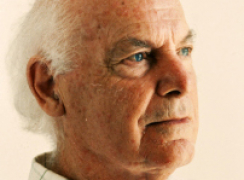
Sir James George Frazer

From Wikipedia, the free encyclopedia

Blogger Ref  http://www.p2pfoundation.net/Multi-Dimensional_Science
 

Jump to: navigation, search
Sir James George Frazer
225x
Sir James George Frazer
Born1 January 1854 (1854-01)
Glasgow, Scotland, United Kingdom
Died7 May 1941(1941-05-07) (aged 87)
Cambridge, England, United Kingdom
NationalityScottish
FieldsSocial anthropologist
Alma materUniversity of Glasgow (MA 1874)
Known forResearch in mythology and comparative religion
InfluencedJack Goody
Notable awardsFellow of the Royal Society[1]
Sir James George Frazer OM FRS[1] FRSE FBA (1 January 1854 – 7 May 1941), was a Scottish social anthropologist influential in the early stages of the modern studies of mythology and comparative religion.[2] He is often considered one of the founding fathers of modern anthropology.
His most famous work, The Golden Bough (1890), documents and details the similarities among magical and religious beliefs across the globe. Frazer posited that human belief progressed through three stages: primitive magic, replaced by religion, in turn replaced by science.
He is buried at the Parish of the Ascension Burial Ground in Cambridge. His wife Lilly died the day after him on 8 May 1941 and they are buried next to each other.


Biography[edit]

Born in Glasgow, Scotland, Frazer attended school at Springfield Academy and Larchfield Academy in Helensburgh.[3] He studied at the University of Glasgow and Trinity College, Cambridge, where he graduated with honours in Classics (his dissertation was published years later as The Growth of Plato's Ideal Theory) and remained a Classics Fellow all his life.[4] From Trinity, he went on to study law at the Middle Temple, but never practised.
Four times elected to Trinity's Title Alpha Fellowship, he was associated with the college for most of his life, except for a year, 1907–1908, spent at the University of Liverpool. He was knighted in 1914, and a public lectureship in social anthropology at the universities of Cambridge, Oxford, Glasgow and Liverpool was established in his honour in 1921.[5] He was, if not blind, then severely visually impaired from 1930 on. He and his wife, Lily, died within a few hours of each other. They are buried at the Ascension Parish Burial Ground in Cambridge, England.
The study of myth and religion became his areas of expertise. Except for visits to Italy and Greece, Frazer was not widely traveled. His prime sources of data were ancient histories and questionnaires mailed to missionaries and imperial officials all over the globe. Frazer's interest in social anthropology was aroused by reading E. B. Tylor's Primitive Culture (1871) and encouraged by his friend, the biblical scholar William Robertson Smith, who was comparing elements of the Old Testament with early Hebrew folklore.
Frazer was the first scholar to describe in detail the relations between myths and rituals. His theories of totemism were superseded by the work of the French anthropologist, Claude Lévi-Strauss, who developed the concept of structuralism. His vision of the annual sacrifice of the Year-King has not been borne out by field studies. His generation's choice of Darwinian evolution as a social paradigm, interpreted by Frazer as three stages of human progress—magic giving rise to religion, then culminating in science—has not proved valid.[6] Yet The Golden Bough, his study of ancient cults, rites, and myths, including their parallels in early Christianity, is still studied by modern mythographers for its detailed information.[citation needed]
The first edition, in two volumes, was published in 1890. The third edition was finished in 1915 and ran to twelve volumes, with a supplemental thirteenth volume added in 1936. He published a single-volume abridged version, largely compiled by his wife Lady Frazer, in 1922, with some controversial material on Christianity excluded from the text.[7] The work's influence extended well beyond the conventional bounds of academia, inspiring the new work of psychologists and psychiatrists. Sigmund Freud cited Totem and Exogamy frequently in his own Totem and Taboo: Resemblances Between the Psychic Lives of Savages and Neurotics.[8]
The symbolic cycle of life, death and rebirth which Frazer divined behind myths of many peoples captivated a generation of artists and poets. Perhaps the most notable product of this fascination is T. S. Eliot's poem The Waste Land (1922). More recently, Frazer's work influenced the ending of Francis Ford Coppola's film, Apocalypse Now (1979)[citation needed] (a copy of The Golden Bough is shown in one of the final shots).
Frazer's pioneering work[9] has been criticised by late 20th-century scholars. For instance, in the 1980s Edmund Leach wrote a series of critical articles, one of which was featured as the lead in Anthropology Today, vol. 1 (1985).[10] He criticised The Golden Bough for the breadth of comparisons drawn from widely separated cultures, but often based his comments on the abridged edition, which omits the supportive archaeological details. In a positive review of a book narrowly focused on the cultus in the Hittite city of Nerik, J. D. Hawkins remarked approvingly in 1973, "The whole work is very methodical and sticks closely to the fully quoted documentary evidence in a way that would have been unfamiliar to the late Sir James Frazer."[11]
Another important work by Frazer is his six-volume commentary on the Greek traveler Pausanias' description of Greece in the mid-2nd century AD. Since his time, archaeological excavations have added enormously to the knowledge of ancient Greece, but scholars still find much of value in his detailed historical and topographical discussions of different sites, and his eyewitness accounts of Greece at the end of the 19th century.[citation needed]

Origin-of-death stories[edit]

Frazer collected stories from throughout the British Empire and devised four general classifications into which many of them could be grouped:[12][13]
  1. The Story of the Two Messengers
  2. The Story of the Waxing and Waning Moon
  3. The Story of the Serpent and his Cast Skin
  4. The Story of the Banana

The Story of the Two Messengers[edit]

This type of story is common in Africa. Two messages are carried from the supreme being to mankind: one of eternal life and one of death. The messenger carrying the tidings of eternal life is delayed, and so the message of death is received first by mankind.[13]
The Bantu people of Southern Africa, such as the Zulu, tell that Unkulunkulu, the Old Old One, sent a message that men should not die, giving it to the chameleon. The chameleon was slow and dawdled, taking time to eat and sleep. Unkulunkulu meanwhile had changed his mind and gave a message of death to the lizard who travelled quickly and so overtook the chameleon. The message of death was delivered first and so, when the chameleon arrived with its message of life, mankind would not hear it and so is fated to die.[13]
Because of this, Bantu people, such as the Ngoni, punish lizards and chameleons. For example, children may be allowed to put tobacco into a chameleon's mouth so that the nicotine poisons it and the creature dies, writhing while turning colors.[13]
Variations of the tale are found in other parts of Africa. The Akamba say the messengers are the chameleon and the thrush while the Ashanti say they are the goat and the sheep.[13]
The Bura people of northern Nigeria say that, at first, neither death nor disease existed but, one day, a man became ill and died. The people sent a worm to ask the sky deity, Hyel, what they should do with him. The worm was told that the people should hang the corpse in the fork of a tree and throw mush at it until it came back to life. But a malicious lizard, Agadzagadza,[14] hurried ahead of the worm and told the people to dig a grave, wrap the corpse in cloth, and bury it. The people did this. When the worm arrived and said that they should dig up the corpse, place it in a tree, and throw mush at it, they were too lazy to do this, and so death remained on Earth.[15][16] This Bura story has the common mythic motif of a vital message which is diverted by a trickster.[17]
In Togoland, the messengers were the dog and the frog, and, as in the Bura version, the messengers go first from mankind to God to get answers to their questions.[13]

The Story of the Waxing and Waning Moon[edit]


The phases of the moon
The moon regularly seems to disappear and then return. This gave primitive peoples the idea that man should or might return from death in a similar way. Stories that associate the moon with the origin of death are found especially around the Pacific region. In Fiji, it is said that the moon suggested that mankind should return as he did. But the rat god, Ra Kalavo, would not permit this, insisting that men should die like rats. In Australia, the Wotjobaluk aborigines say that the moon used to revive the dead until an old man said that this should stop. The Cham have it that the goddess of good luck used to revive the dead, but the sky-god sent her to the moon so she could not do this any more.[13]

The Story of the Serpent and his Cast Skin[edit]


A snake shedding its skin
Animals which shed their skin, such as snakes and lizards, appeared to be immortal to primitive people. This led to stories in which mankind lost the ability to do this. For example, in Vietnam, it was said that the Jade Emperor sent word from heaven to mankind that, when they became old, they should shed their skins while the serpents would die and be buried. But some snakes overheard the command and threatened to bite the messenger unless he switched the message, so that man would die while snakes would be eternally renewed. For the natives of the island of Nias, the story was that the messenger who completed their creation failed to fast and ate bananas rather than crabs. If he had eaten the latter, then mankind would have shed their skins like crabs and so lived eternally.[13]

The Story of the Banana[edit]


Dead banana plants
The banana plant bears its fruit on a stalk which dies after bearing. This gave people such as the Nias islanders the idea that they had inherited this short-lived property of the banana rather than the immortality of the crab. The natives of Poso also based their myth on this property of the banana. Their story is that the creator in the sky would lower gifts to mankind on a rope and, one day, a stone was offered to the first couple. They refused the gift as they did not know what to do with it and so the creator took it back and lowered a banana. The couple ate this with relish, but the creator told them that they would live as the banana, perishing after having children rather than remaining everlasting like the stone.[13]

Selected works[edit]

  • Creation and Evolution in Primitive Cosmogenies, and Other Pieces (1935)
  • The Fear of the Dead in Primitive Religion (1933–36)
  • Condorcet on the Progress of the Human Mind (1933)
  • Garnered Sheaves (1931)
  • The Growth of Plato's Ideal Theory (1930)
  • Myths of the Origin of Fire (1930)
  • Fasti, by Ovid (text, translation and commentary), 5 volumes (1929)
  • Devil's Advocate (1928)
  • Man, God, and Immortality (1927)
  • The Gorgon's Head and other Literary Pieces (1927)
  • The Worship of Nature (1926) (from 1923–25 Gifford Lectures,[18])
  • The Library, by Apollodorus (text, translation and notes), 2 volumes (1921): ISBN 0-674-99135-4 (vol. 1); ISBN 0-674-99136-2 (vol. 2)
  • Folk-lore in the Old Testament (1918)
  • The Belief in Immortality and the Worship of the Dead, 3 volumes (1913–24)
  • The Golden Bough, 3rd edition: 12 volumes (1906–15; 1936)
  • Totemism and Exogamy (1910)
  • Psyche's Task (1909)
  • The Golden Bough, 2nd edition: expanded to 6 volumes (1900)
  • Pausanias, and other Greek sketches (1900)
  • Description of Greece, by Pausanias (translation and commentary) (1897-) 6 volumes.
  • The Golden Bough: a Study in Magic and Religion, 1st edition (1890)
  • Totemism (1887)
  • Jan Harold Brunvard, American Folklore; An Encyclopedia, s.v. "Superstition" (p 692-697)

See also[edit]

References[edit]

  1. ^ Jump up to: a b Fleure, H. J. (1941). "James George Frazer. 1854-1941". Obituary Notices of Fellows of the Royal Society 3 (10): 896–826. doi:10.1098/rsbm.1941.0041.  edit
  2. Jump up ^ Mary Beard, "Frazer, Leach, and Virgil: The Popularity (and Unpopularity) of the Golden Bough," Comparative Studies in Society and History, 34.2 (April 1992:203-224).
  3. Jump up ^ Jaques Waardenburg. 1999. Classical Approaches to the Study of Religion. Aims, Methods and Theories of Research, Volume I: Introduction and Anthology, p244. New York : Walter de Gruyter. ISBN 3-11-016328-4
  4. Jump up ^ Venn, J.; Venn, J. A., eds. (1922–1958). "Frazer, James George". Alumni Cantabrigienses (10 vols) (online ed.). Cambridge University Press. 
  5. Jump up ^ Address to Sir James George Frazer on the occasion of the foundation, in his honour, of the Frazer Lectureship in Social Anthropology in the Universities of Oxford, Cambridge, Glasgow and Liverpool (1920).
  6. Jump up ^ See social darwinism and human progress.
  7. Jump up ^ For the history of The Golden Bough see R. Fraser, The Making of The Golden Bough: The Origins and Growth of an Argument (London, 1990).
  8. Jump up ^ Sigmund Freud, Totem and Taboo: Resemblances Between the Psychic Life of Savages and Neurotics, trans., A.A. Brill (London: Routledge and Sons, 1919), p. 4
  9. Jump up ^ "For those who see Frazer's work as the start of anthropological study in its modern sense, the site and the cult of Nemi must hold a particular place: This colourful but minor backwater of Roman religion marks the source of the discipline of Social Anthropology", remarks Mary Beard, in noting the critical reassessment of Frazer's work following Edmund Leach, "Frazer, Leach, and Virgil: The Popularity (and Unpopularity) of the Golden Bough," Comparative Studies in Society and History, 34.2 (April 1992:203-224), p. 204.
  10. Jump up ^ Leach, "Reflections on a visit to Nemi: did Frazer get it wrong?", Anthropology Today 1 (1985)
  11. Jump up ^ Hawkins, reviewing Volkert Haas, Der Kult von Nerik: ein Beitrag zur hethitischen Religionsgeschichte, in Bulletin of the School of Oriental and African Studies, University of London 36.1 (1973:128).
  12. Jump up ^ Janet Parker, Alice Mills, Julie Stanton (2007), "Myths of Death", Mythology: Myths, Legends and Fantasies, Struik, p. 306, ISBN 978-1-77007-453-8 
  13. ^ Jump up to: a b c d e f g h i J. G. Frazer (1913), The Belief in Immortality and The Worship of the Dead, Macmillan, ISBN 978-1-4400-4514-1 
  14. Jump up ^ Eva M. Thury, Margaret K. Devinney (2005), Introduction to Mythology, Oxford University Press, p. 95, ISBN 978-0-19-517968-2 
  15. Jump up ^ Arthur Cotterell (1999), "Death comes into the world", Encyclopedia of World Mythology, ISBN 978-0-7607-2855-0, "Long ago, there was no such thing as death. All were therefore surprised when a man died. They sent a worm to the sky to ask Hyel, the supreme deity (Bura, Pabir/Nigeria), what they should do." 
  16. Jump up ^ Scheub, Harold (1990), The African storyteller: stories from African oral traditions, Kendall/Hunt Publishing Company, p. 52, ISBN 978-0-8403-6037-3, "the Bura people [...] had an unusually full system of culture embedded in their folk tales." 
  17. Jump up ^ Scheub, Harold (1994), Meanings: Manual for the African Storyteller, Kendall/Hunt, p. 27, ISBN 978-0-8403-9934-2, "The motif is a venerable mythic motif, the interrupted message, and raises the question of what would have happened if only, if only . . . A worm, in this incarnation of the motif, is to inform the humans that life is everlasting. But a trickster of a lizard overtakes the worm, and gives the wrong message: humans are evanescent. So it is that death comes permanently into the world. And the storyteller adds a scene in which the onus for death is placed entirely on the backs of humans: people are too lazy to retrieve the corpse and hang it on a tree." 
  18. Jump up ^ Gifford Lecture Series - Books at www.giffordlectures.org

External links[edit]

Monday, 25 February 2013

Frithjof Schuon


Frithjof Schuon (/ˈʃuːɑːn/; German: [ˈfʀiːtˌjoːf ˈʃuːˌɔn]; June 18, 1907 – May 5, 1998) was born to German parents in Basel, Switzerland. He is known as a philosopher, metaphysician and author of numerous books on religion and spirituality.
Schuon is recognized as an authority on philosophy, spirituality and religion, an exponent of the Religio Perennis, and one of the chief representatives of the Perennialist School. Though he was not officially affiliated with the academic world, his writings have been noticed in scholarly and philosophical journals, and by scholars of comparative religion and spirituality. Criticism of the relativism of the modern academic world is one of the main aspects of Schuon's teachings. In his teachings, Schuon expresses his faith in an absolute principle, God, who governs the universe and to whom our souls would return after death. For Schuon the great revelations are the link between this absolute principle—God—and mankind. He wrote the main bulk of his metaphysical teachings in French. In the later years of his life Schuon composed some volumes of poetry in his mother tongue, German. His articles in French were collected in about twenty titles in French which were later translated into English as well as many other languages. The main subjects of his prose as well as his poetic compositions are spirituality and various essential realms of man's life journey from his Creator back to Him.[1]

Contents

[edit]Biography

Schuon was born in Basel, Switzerland, on June 18, 1907. His father was a native of southern Germany, while his mother came from an Alsatian family. Schuon's father was a concert violinist and the household was one in which not only music but literary and spiritual culture were present. Schuon lived in Basel and attended school there until the untimely death of his father, after which his mother returned with her two young sons to her family in nearby Mulhouse, France, where Schuon was obliged to become a French citizen. Having received his earliest training in German, he received his later education in French and thus mastered both languages early in life.[citation needed]
From his youth, Schuon's search for metaphysical truth led him to read the Upanishads and the Bhagavad Gita. While still living in Mulhouse, he discovered the works of René Guénon, the French philosopher and Orientalist, which served to confirm his intellectual intuitions and which provided support for the metaphysical principles he had begun to discover.[citation needed]
Schuon journeyed to Paris after serving for a year and a half in the French army. There he worked as a textile designer and began to study Arabic in the local mosque school. Living in Paris also brought the opportunity to be exposed to various forms of traditional art to a much greater degree than before, especially the arts of Asia with which he had had a deep affinity since his youth. This period of growing intellectual and artistic familiarity with the traditional worlds was followed by Schuon's first visit to Algeria in 1932. It was then that he met the celebrated Shaykh Ahmad al-Alawi and was initiated into his order.[2] On a second trip to North Africa, in 1935, he visited Algeria and Morocco; and during 1938 and 1939 he traveled to Egypt where he met Guénon, with whom he had been in correspondence for 27 years. In 1939, shortly after his arrival in Pie,India, World War II broke out, forcing him to return to Europe. After having served in the French army, and having been made a prisoner by the Germans, he sought asylum in Switzerland, which gave him Swiss nationality and was to be his home for forty years. In 1949 he married, his wife being a German Swiss with a French education who, besides having interests in religion and metaphysics, is also a gifted painter.[3]
Following World War II, Schuon accepted an invitation to travel to the American West, where he lived for several months among thePlains Indians, in whom he always had a deep interest. Having received his education in France, Schuon has written all his major works in French, which began to appear in English translation in 1953. Of his first book, The Transcendent Unity of Religions (London, Faber & Faber) T. S. Eliot wrote: "I have met with no more impressive work in the comparative study of Oriental and Occidental religion." [3]
While always continuing to write, Schuon and his wife traveled widely. In 1959 and again in 1963, they journeyed to the American West at the invitation of friends among the Sioux and Crow American Indians. In the company of their Native American friends, they visited various Plains tribes and had the opportunity to witness many aspects of their sacred traditions. In 1959, Schuon and his wife were solemnly adopted into the Sioux family of James Red Cloud. Years later they were similarly adopted by the Crow medicine man andSun Dance chief, Thomas Yellowtail. Schuon's writings on the central rites of Native American religion and his paintings of their ways of life attest to his particular affinity with the spiritual universe of the Plains Indians. Other travels have included journeys to Andalusia, Morocco, and a visit in 1968 to the home of the Holy Virgin in Ephesus. In 1980, Schuon and his wife emigrated to the United States, where he continued to write until his death in 1998.[citation needed]
Through his many books and articles, Schuon became known as a spiritual teacher and leader of the Traditionalist School. During his years in Switzerland he regularly received visits from well-known religious scholars and thinkers of East.[citation needed]

[edit]Views

[edit]Transcendent unity of religions

The traditionalist or perennialist perspective began to be enunciated in the 1920s by the French philosopher René Guénon and, in the 1930s, by Schuon himself. The Harvard orientalist Ananda Coomaraswamy and the Swiss art historian Titus Burckhardt also became prominent advocates of this point of view. Fundamentally, this doctrine is the Sanatana Dharma – the "eternal religion" – of Hindu Neo-Vedantins. It was supposedly formulated in ancient Greece, in particular, by Plato and later Neoplatonists, and in Christendom byMeister Eckhart (in the West) and Gregory Palamas (in the East). Every religion has, besides its literal meaning, an esoteric dimension, which is essential, primordial and universal. This intellectual universality is one of the hallmarks of Schuon's works, and it gives rise to insights into not only the various spiritual traditions, but also history, science and art.[citation needed]
The dominant theme or principle of Schuon's writings was foreshadowed in his early encounter with a Black marabout who had accompanied some members of his Senegalese village to Switzerland in order to demonstrate their culture. When the young Schuon talked with him, the venerable old man drew a circle with radii on the ground and explained: God is in the center; all paths lead to Him.[citation needed]

[edit]Metaphysics

For Schuon, the quintessence of pure metaphysics can be summarized by the following vedantic statement, although the Advaita Vedanta's perspective finds its equivalent in the teachings of Ibn Arabi, Meister Eckhart or Plotinus: Brahma satyam jagan mithya jivo brahmaiva na'parah (Brahman is real, the world is illusory, the self is not different from Brahman).[4]
The metaphysics exposited by Schuon is based on the doctrine of the non-dual Absolute (Beyond-Being) and the degrees of reality. The distinction between the Absolute and the relative corresponds for Schuon to the couple Atma/Maya. Maya is not only the cosmic illusion: from a higher standpoint, Maya is also the Infinite, the Divine Relativity or else the feminine aspect (mahashakti) of the Supreme Principle.
Said differently, being the Absolute, Beyond-Being is also the Sovereign Good (Agathon), that by its nature desires to communicate itself through the projection of Maya. The whole manifestation from the first Being (Ishvara) to matter (Prakriti), the lower degree of reality, is indeed the projection of the Supreme Principle (Brahman). The personal God, considered as the creative cause of the world, is only relatively Absolute, a first determination of Beyond-Being, at the summit of Maya. The Supreme Principle is not only Beyond-Being. It is also the Supreme Self (Atman) and in its innermost essence, the Intellect (buddhi) that is the ray of Consciousness shining down, the axial refraction of Atma within Maya.[5]

[edit]Religio perennis

Schuon, in more than twenty books written mainly in French, explains the metaphysical principles as well as the spiritual and moral aspects of human life. Schuon's religio perennis cannot be called a new religion with its own dogma and practices. For Schuon, thereligio perennis is the underlying religion, the religion of the heart or the religio cordis. Esoterists in every orthodox tradition have a more or less direct access to it, but it cannot be a question of practicing the religio perennis independently. Religious forms can be more or less transparent but religious diversity is not denied for its raison d'être is metaphysically explained. On the one hand, formal religions are upaya (providential saving stratagem), different manifestations of the core-essence of the religio perennis. On the other hand, religious forms correspond to as many archetypes in the divine Word itself. Religious forms are willed by God and each religion corresponds to a particular and homogenous cosmos, characterized by its own perspective of the Absolute.[6]
The Perennialist perspective itself can thus be characterized as essentially metaphysical, esoteric, primordial but also traditional. For Schuon, there is no spiritual path outside of a revealed religion, which provides spiritual seekers with a metaphysical doctrine and a spiritual method, but also with a spiritual environment of beauty and holiness.[7]

[edit]Spiritual path

According to Schuon the spiritual path is essentially based on the discernment between the "Real" and the "unreal" (Atma / Maya); concentration on the Real; and the practice of virtues. Human beings must know the "Truth". Knowing the Truth, they must then will the "Good" and concentrate on it. These two aspects correspond to the metaphysical doctrine and the spiritual method. Knowing the Truth and willing the Good, human beings must finally love "Beauty" in their own soul through virtue, but also in "Nature". In this respect Schuon has insisted on the importance for the authentic spiritual seeker to be aware of what he called the "metaphysical transparency of phenomena".[8]
Schuon wrote about different aspects of spiritual life both on the doctrinal and on the practical levels. He explained the forms of the spiritual practices as they have been manifested in various traditional universes. In particular, he wrote on the Invocation of the Divine Name (dhikr, Japa-Yoga, the Prayer of the Heart), considered by Hindus as the best and most providential means of realization at the end of the Kali Yuga. As has been noted by the Hindu saint Ramakrishna, the secret of the invocatory path is that God and his Name are one.[9]

[edit]Quintessential esoterism

Guénon had pointed out at the beginning of the twentieth century that every religion comprises two main aspects: "Esoterism" and "Exoterism". Schuon explained that the esoterism itself displays two aspects, one being an extension of exoterism and the other one independent of exoterism; for if it be true that the form "is" in a certain way the essence, the essence on the contrary is by no means totally expressed by a single form; the drop is water, but water is not the drop. This second aspect is called "quintessential esoterism" for it is not limited or expressed totally by one single form or theological school and, above all, by a particular religious form as such.[10]

[edit]Criticism of modernity

In his essay 'The Contradictions of Relativism' Schuon wrote that uncompromising relativism that underlies many modern philosophies had fallen into an intrinsic absurdity in declaring that there is no absolute truth and then attempting to put this forward as an absolute truth. Schuon notes that the essence of Relativism is found in the idea that we never escape from human subjectivity whilst its expounders seem to remain unaware of the fact that Relativism is therefore also deprived of any objectivity. Schuon further notes that the Freudian assertion that rationality is merely a hypocritical guise for a repressed animal drive results in the very assertion itself being devoid of worth as it is itself a rational judgment.[11]

[edit]See also

[edit]References

  1. ^ Schuon, Frithjof (1982). From the Divine to the Human. USA: World Wisdom Books. pp. 1. ISBN 0-941532-01-1.
  2. ^ Frithjof Schuon, Songs Without Names, Volumes VII-XII, (World Wisdom, 2007) p. 226.
  3. ^ a b Frithjof Schuon's life and work.
  4. ^ Schuon, Frithjof (1982). From the Divine to the Human. USA: World Wisdom Books. pp. 21. ISBN 0-941532-01-1.
  5. ^ Schuon, Frithjof (1982). From the Divine to the Human. USA: World Wisdom Books. pp. 37. ISBN 0-941532-01-1.
  6. ^ Schuon, Frithjof (1982). From the Divine to the Human. USA: World Wisdom Books. pp. 43. ISBN 0-941532-01-1.
  7. ^ Schuon, Frithjof (1982). From the Divine to the Human. USA: World Wisdom Books. pp. 59. ISBN 0-941532-01-1.
  8. ^ Schuon, Frithjof (1982). From the Divine to the Human. USA: World Wisdom Books. pp. 61. ISBN 0-941532-01-1.
  9. ^ Schuon, Frithjof (1982). From the Divine to the Human. USA: World Wisdom Books. pp. 73. ISBN 0-941532-01-1.
  10. ^ Schuon, Frithjof (1982). From the Divine to the Human. USA: World Wisdom Books. pp. 85. ISBN 0-941532-01-1.
  11. ^ Logic and transcendence, Perennial Books, 1975.

[edit]Bibliography

Schuon was a frequent contributor to the quarterly journal Studies in Comparative Religion, (along with Guénon, Coomarswamy, and many others) which dealt with religious symbolism and the Traditionalist perspective.

[edit]External links

"Scientific Mysticism" of Michael Whiteman

  The previous post gave reference to the book below by an academic. It is similiar but not identical to the ideas of my paradigm known as ...