Showing posts with label prahlad jani. Show all posts

Saturday, 20 April 2013

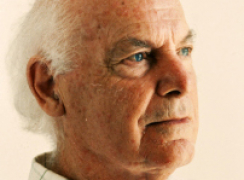
Man claims to have had no food or drink for 70 years

Indian military scientists are studying an 82-year-old who claims he has not had any food or drink for 70 years.


Prahlad Jani is being held in isolation in a hospital in Ahmedabad, Gurjarat, where he is being closely monitored by India's defence research organization, who believe he may have a genuine quality which could help save lives.
He has now spent six days without food or water under strict observation and doctors say his body has not yet shown any adverse effects from hunger or dehydration.
Mr Jani, who claims to have left home aged seven and lived as a wandering sadhu or holy man in Rajasthan, is regarded as a 'breatharian' who can live on a 'spiritual life-force' alone. He believes he is sustained by a goddess who pours an 'elixir' through a hole in his palate. His claims have been supported by an Indian doctor who specializes in studies of people who claim supernatural abilities, but he has also been dismissed by others as a "village fraud."
India's Defence Research Development Organisation, whose scientists develop drone aircraft, intercontinental ballistic missiles and new types of bombs. They believe Mr Prahlad could teach them to help soldiers survive longer without food, or disaster victims to hang on until help arrives.
"If his claims are verified, it will be a breakthrough in medical science," said Dr G Ilavazhagan, director of the Defence Institute of Physiology & Allied Sciences.
"We will be able to help save human lives during natural disasters, high altitude, sea journeys and other natural and human extremities. We can educate people about the survival techniques in adverse conditions with little food and water or nothing at all."
So far, Mr Prahlad appears to be standing up to scrutiny. He has not eaten or drunk any fluids in six days, and similarly has not passed urine or a stool in that time. He remains fit and healthy and shows no sign of lethargy. Doctors will continue observing him for 15 days in which time they would expect to see some muscle wastage, serious dehydration, weight loss,and fatigue followed by organ failure.
It is common in India for Jains and Hindus to fast, sometimes for up to eight days, without any adverse affects, as part of their religious worship. Most humans cannot survive without food for 50 days. The longest hunger strike recorded is 74 days.
According to Dr Sudhir Shah, who examined him in 2003, he went without food or water for ten days in which urine appeared to be reabsorbed by his body after forming in his bladder. Doubts were expressed about his claim after his weight fell slightly at the end of the trial.

Another article is included here

The man who says he hasn't eaten or drunk for 70 years: Why are eminent doctors taking him seriously?

By Tom Rawstorne


There are few people, however busy their lives, unable to remember the last meal that they consumed. But Prahlad Jani is one of them.
And the reason is that the last morsel of food that he says passed his lips did so in the early years of World War II.
‘I can’t recall exactly what it was,’ the 82-year-old Indian admits. ‘It was such a long time ago.’
During the 70-odd years since, Mr Jani says he has eaten not so much as a single grain of rice nor consumed a drop of water. And while such an extended gap between meals might be expected to have a fatal impact on the activities of one so deprived, this octogenarian says he’s never felt better.
Tests: 83-year-old Prahlad Jani has twice attended hospital to be watched by eminent doctors
Tests: 83-year-old Prahlad Jani has twice attended hospital to be watched round the clock by eminent doctors
‘Although I walk 100 or 200 kilometres in the jungle, I never sweat and don’t feel tired or sleepy,’ he says. ‘I can meditate for three, eight or 12 hours — or even months.’
No food? No water? Superhuman strength? One straitjacket (size zero) for Mr Jani, please.
It is, of course, more than tempting to dismiss this Hindu holy man and his claims as the stuff of absolute nonsense.
Medical science tells us that human beings rarely survive more than a week without water, and a couple of months at most without food. To even suggest otherwise is ridiculous, and also potentially dangerous.
Practitioners of extreme starvation diets can cause serious damage to their bodies, leading to death. And yet, despite all that is known, there is a growing bandwagon that says Mr Jani and his incredible claims should not be dismissed entirely out of hand.
On Thursday afternoon, he emerged from hospital in the Indian state of Gujarat, where he had spent 15 days. He was monitored around the clock and, according to the medics who oversaw him, consumed no food and no water whatsoever.
No human should be able to survive such conditions unscathed — the lack of water alone should have killed him. But Mr Jani apparently suffered absolutely no ill-effects at all.
Hindu: Mr Jani is one of countless from his religion to make claims of unworldly feats
Attending a press conference at the Sterling Hospital in Ahmedabad, he said: ‘I am fit and strong today and even the doctors agree. They ran every test possible for 15 days and proved that I do not need food to keep me strong.
'I am strong and healthy, because it is the way God wants me to be.’
So what is the explanation for his ability to endure such privations? No one knows for sure. But over the next three months, the medics will attempt to come up with some answers as they study the results of a battery of tests.
Military scientists drawn from India’s Defence Research and Development Organisation believe that Mr Jani could hold the key to understanding how humans can be taught to survive for long periods without sustenance.
‘It is possible that it will be able to help save human lives during natural disasters, high altitude, sea journeys and other natural and human extremities,’ said a spokesman for the team.
‘We can educate people about the survival techniques in adverse conditions with little food and water, or nothing at all.’ He added: ‘If his claims are verified, it will be a breakthrough in medical science.’
By any standards that is a very big ‘if’. For starters, the doctors are considering only the two weeks during which Mr Jani was under their supervision. His claims not to have eaten for the preceding seven decades can and will never be
verified. The same goes for much of his early history.
According to his version of events — and there is no other — Mr Jani left his home in Rajasthan at the age of seven, and went to live in the jungle.
When he reached the age of 11, he underwent a religious experience during which he became a follower of the Hindu goddess Amba. In her honour, he chose to dress as a female devotee, wearing a red sari-like garment, nose-ring, bangles and crimson flowers in his shoulder-length hair.
In return, Mr Jani believes that the goddess has sustained him ever since by feeding him with a lifegiving, invisible ‘elixir’, which has supposedly given him the strength to continue without food or water.
For at least the past 40 years, Mr Jani has been living, hermit-like, in a cave in the jungles close to the Gujarati temple of Ambaji. He rises at 4am, spending most of the day meditating.
While well-known locally, for many years Mr Jani was no more famous than the millions of other Hindu holy men — sadhus or yogi as they are known — in India.
Mystical figures, these individuals renounce normal life for one on the margins of society, focusing every waking minute on the spiritual. They often assume austere or extreme practices — standing on one leg or refusing to talk for years on end.
Like Mr Jani, many sadhus regularly undergo lengthy periods of fasting. But the claim that his fast had endured for decades caught the public imagination and first propelled him into the limelight.
Challenged to prove that he could survive without food or water, in 2003 he underwent his first hospital investigations. Then, as now, he was placed under the care of Dr Sudhir Shah, a consultant neurologist from Ahmedabad who specialises in studying people with seemingly ‘supernatural’ powers.
Doctors had prepared a special glass-walled room equipped with CCTV cameras to monitor Mr Jani for ten days. The toilet was sealed to test his claim that he had no need to urinate or defecate.
The only fluid allowed was a small amount of water, to use as mouthwash. This was collected and measured in a beaker when he spat it out, to make sure that none had been drunk.
Scans revealed some urine accumulation in his bladder, but this seemed to be re-absorbed by the body because it was never passed.
In every other respect, clinically, Mr Jani was found to be perfectly normal.
While the results secured him an international following, they failed to offer any concrete answers. As a result, Dr Shah and the military team decided to repeat the experiment this year.

'We may never know the truth, but until he is exposed as a fraud, perhaps we should enjoy suspending our disbelief and give Mr Jani the benefit of the doubt'

 
So, on April 22, Mr Jani re-entered the hospital for 15 days of tests. They ended on Thursday afternoon with doctors admitting that they were baffled by what they had seen.
Presenting their preliminary findings, Dr Shah was joined by biologist Dr Ilavashagn, director of the Defence Institute of Physiology and Allied Sciences (DIPAS), a heavily-funded department of the Defence Research and Development Organisation.
The doctors announced that despite apparently living on thin air for two weeks, the holy man was more healthy than someone half his age.
Blood tests, hormone profiles, MRIs and angiographs (imaging tests of the blood vessels) all pointed to the conclusion that Mr Jani had not needed to eat, drink or use the toilet once.
Dr Ilavazhagn said: ‘Clinical, biochemical, radiological and other relevant examinations were done on Prahlad Jani and all reports were within the safe range throughout the study. He is healthy, his mind is sharp.
'What is truly astonishing, and something we have no explanation for, is that he has not passed stools or urine. To my knowledge, that is medically unprecedented.’
There will be many who maintain that the latest tests prove nothing — and that Mr Jani’s survival is down to nothing more mysterious than trickery.
That’s the view held by the Indian Rationalist Association, an organisation which publicly campaigns against superstition and spiritual fraudsters.
It has attacked the Indian Ministry of Defence for even agreeing to take part in the tests, accusing them of being ‘taken in by the absurd claims of a village fraud’.
Sanal Edamaruku, the association’s secretary general, told the Mail: ‘I asked to be allowed to send an independent team to survey the room where this test is taking place, but I was repeatedly turned down.
'It is ridiculous to ask people to believe that any man can go 15 days, let alone 70 years, without food or water.
Seven decades: Mr Jani claims he had a religious experience as a teenager in the jungle
Seven decades: Mr Jani claims he had a religious experience as a teenager
‘Dr Shah has been in charge of three similar investigations over the past ten years, and he has never allowed independent verification.
'In 2000, he was asking for funds to investigate a man he claimed got his energy from the sun, just like plants do.
‘In 2003, he even approached NASA for funds to investigate Mr Jani, claiming astronauts might benefit from the research. This particular hospital, led by this particular doctor, keeps on making these claims without ever producing evidence or publishing research.’
Mr Edamaruku is convinced that Mr Jani must have had access to food and water at the hospital, and does not believe that he was kept under strict supervision around the clock.
He says that whenever the Rationalist Association has investigated individuals making similar claims, all have been exposed as frauds.
In 1999, they investigated a woman who claimed that she was the reincarnation of another Hindu goddess. For five years, she had remained alone in a small closet where it was claimed she had not eaten nor passed any urine or faeces.
In co-operation with the police, investigators from the association searched the room, finding a toilet hidden behind a shelf and a disguised hole through which she received food. Blood tests revealed the presence of glucose, indicating the intake of food.
To further prove the case, a gas was released into the room that made the woman vomit. The contents of her stomach were found to include pieces of recently-eaten chapatti and potatoes.

'I am strong and healthy, because it is the way God wants me to be,’ says Prahlad Jani

 
Mr Edamaruku is concerned that by publicising the activities of individuals such as Mr Jani, others will be encouraged to copy.
‘The Hindu religion is a belief system that’s all about magical thinking, about great things happening that are not understandable to the ordinary person,’ he explained.
‘These claims are very dangerous, because people try to follow these holy men and can end up hurting themselves.
‘In any other religion there’s a priest who requires a lot of training and there’s a structure which means people can’t just make up their qualifications.
'In Hinduism, anyone can become a guru overnight. You just decide that’s what you are, dress the part and become it.’
Perhaps he’s right. Doesn’t logic and common sense dictate that Prahlad Jani must be tricking the world somehow?
And yet, there’s a part of all of us that would love to believe such a human ‘miracle’ could be true.
After all, isn’t a consultant neurologist staking his reputation on these tests being entirely watertight?
We may never know the truth, but until he is exposed as a fraud, perhaps we should enjoy suspending our disbelief and give Mr Jani the benefit of the doubt.
After all, wouldn’t life be boring if everything was rational?


Read more: http://www.dailymail.co.uk/news/article-1274779/The-man-says-eaten-drunk-70-years-Why-eminent-doctors-taking-seriously.html#ixzz2QzzFS0Y1
Follow us: @MailOnline on Twitter | DailyMail on Facebook

Thursday, 14 March 2013

Inedia

From Wikipedia, the free encyclopedia


Jump to: navigation, search

Inedia (Latin: "fasting") is the alleged ability to live without food. The word was first used to describe a fast-based lifestyle within Catholic tradition, which holds that certain saints were able to survive for extended periods of time without food or drink other than the Eucharist.[citation needed]
Breatharianism is a related concept, in which believers claim food and possibly water are not necessary, and that humans can be sustained solely by prana (the vital life force in Hinduism), or, according to some, by the energy in sunlight (according to Ayurveda, sunlight is one of the main sources of prana). The terms breatharianism or inedia may also refer to this philosophy practised as a lifestyle in place of the usual diet.
The consensus of the scientific community is that "breatharianism" is potentially lethal pseudoscience, and indeed several adherents of these practices have died from starvation.[1][2][3]

Contents

[edit] Scientific basis

Nutritional science indicates that fasting for extended periods leads to starvation, dehydration, and eventual death. In the absence of calorie intake, the body normally burns its own reserves of glycogen, body fat, and muscle. Breatharians claim that their bodies do not consume these reserves while fasting.[4]
Few breatharians have submitted themselves to medical testing; of those that have, including a hospital's observation of an Indian mystic Prahlad Jani surviving without food or water for 15 days,[5] none have undergone peer review with results independently reproduced.[6] In a handful of documented cases, individuals attempting breatharian fasting have died,[1][2][3] and among the claims investigated by the Indian Rationalist Association, all were found to be fraudulent.[7]

[edit] Practitioners

[edit] Ram Bahadur Bomjon

Ram Bahadur Bomjon is a young Nepalese Buddhist monk who lives as an ascetic in a remote area of Nepal. Ram Bahadur Bomzan appears to go for periods of time without ingesting either food or water.[8][9] One such period was chronicled by the Discovery Channel, in which, during 96 hours of filming, he neither moved, nor ate or drank anything.[10]

[edit] Jasmuheen

Jasmuheen (born Ellen Greve) was a prominent advocate of breatharianism in the 1990s. She claimed "I can go for months and months without having anything at all other than a cup of tea. My body runs on a different kind of nourishment."[citation needed] Interviewers found her house stocked with food; Jasmuheen claimed the food was for her husband. In 1999, she volunteered to be monitored closely by the Australian television program 60 Minutes for one week without eating to demonstrate her methods.[11][12] Jasmuheen stated that she failed on the first day of the test because the hotel room in which she was confined was located near a busy road, causing stress and pollution that prevented absorption of required nutrients from the air. "I asked for fresh air. Seventy percent of my nutrients come from fresh air. I couldn’t even breathe," she said. The third day the test was moved to a mountainside retreat. After Jasmuheen had fasted for four days, Dr. Berris Wink, president of the Queensland branch of the Australian Medical Association, urged her to stop the test.
According to Dr. Wink, Jasmuheen’s pupils were dilated, her speech was slow, and she was "quite dehydrated, probably over 10%, getting up to 11%". Towards the end of the test, she said, "Her pulse is about double what it was when she started. The risks if she goes any further are kidney failure. 60 Minutes would be culpable if they encouraged her to continue. She should stop now". The test was stopped. Dr. Wink said, "Unfortunately there are a few people who may believe what she says, and I'm sure it's only a few, but I think it's quite irresponsible for somebody to be trying to encourage others to do something that is so detrimental to their health".[13] Jasmuheen challenged the results of the program, saying, "Look, 6,000 people have done this around the world without any problem."[citation needed] Though she claims thousands of followers,[14][15] mostly in Germany,[16] there has been no verification that any have lived for extended periods without food.
Jasmuheen was awarded the Bent Spoon Award by Australian Skeptics in 2000 ("presented to the perpetrator of the most preposterous piece of paranormal or pseudoscientific piffle").[17] She also won the 2000 Ig Nobel Prize for Literature for Living on Light. Jasmuheen claims that their beliefs are based on the writings and "more recent channelled material" from St. Germain.[18] She stated that her DNA has expanded from 2 to 12 strands, to "absorb more hydrogen". When offered $30,000 to prove her claim with a blood test, she said that she didn't understand the relevance.[19]

[edit] Deaths of Jasmuheen's followers

The deaths of 49-year-old Australian-born Scotland resident Verity Linn, 31-year-old Munich preschool teacher Timo Degen, and 53-year-old Melbourne resident Lani Marcia Roslyn Morris while attempting the breatharian "diet" advocated by Jasmuheen have elicited criticism.[1][2] Jim Vadim Pesnak, 63, and his wife Eugenia, 60, went to jail for six and two years, respectively, on charges of manslaughter for their involvement in the death of Morris, when Pesnak delayed seeking medical attention.[20] Jasmuheen claimed that Linn's death had a psycho-spiritual, rather than physiological, source. (Linn was nominated for a Darwin Award, but did not win.[21])
Jasmuheen has denied any involvement with the three deaths and claims she cannot be held responsible for the actions of her followers. In reference to the death of Lani Morris, she said that perhaps Morris was "not coming from a place of integrity and did not have the right motivation".[2]
In 2007, a pregnant woman in Hungary died of malnutrition while following a "lighteater" fast forced on the family by her husband, who was later remanded to a mental institution. The couple's two young children were also in dire straits when they were found.
In 2012 it was reported that a Swiss woman died of starvation after having attempted to survive on light alone, based on one of Jasmuheen's books.[22]

[edit] Wiley Brooks

Wiley Brooks is founder of the Breatharian Institute of America. He was first introduced to the public in 1980 when appearing on the TV show That's Incredible!.[23] Brooks stopped teaching recently to "devote 100% of his time on solving the problem as to why he needed to eat some type of food to keep his physical body alive and allow his light body to manifest completely."[24] Brooks claims to have found "four major deterrents" which prevented him from living without food: "people pollution", "food pollution", "air pollution" and "electro pollution".[24]
In 1983 he was reportedly observed leaving a Santa Cruz 7-Eleven with a Slurpee, hot dog and Twinkies.[25] He told Colors magazine in 2003 that he periodically breaks his fasting with a cheeseburger and a cola, explaining that when he's surrounded by junk culture and junk food, consuming them adds balance.[26]
On his website, Brooks states that his potential followers must first prepare by combining the junk food diet with the meditative incantation of five magic "fifth-dimensional" words which appear on his website, some of which are words from Kundalini yoga.[27][28] In the "5D Q&A" section of his website Brooks claims that cows are fifth-dimensional (or higher) beings that help mankind achieve fifth-dimensional status by converting three-dimensional food to five-dimensional food (beef).[29] In the "Question and Answer" section of his website, Brooks explains that the "Double Quarter-Pounder with Cheese" meal from McDonald's possesses a special "base frequency" and that he thus recommends it as occasional food for beginning breatharians.[30] He then goes on to reveal that Diet Coke is "liquid light".[30] Prospective disciples are asked after some time following the junk food/magic word preparation to revisit his website in order to test if they can feel the magic.[28]
Brooks states that he may be contacted on his fifth-dimensional phone in order to get the correct pronunciation of the five magic words.[28] In case the line is busy, prospective recruits are asked to meditate on the five magic words for a few minutes, and then try calling again.[28]
Brooks's institute has charged varying fees to prospective clients who wished to learn how to live without food, which have ranged from US$100,000 with an initial deposit of $10,000[31] to one billion dollars, to be paid via bank wire transfer with a preliminary deposit of $100,000, for a session called "Immortality workshop".[32] A payment plan was also offered.[33] These charges have typically been presented as limited time offers exclusively for billionaires.[34][35]
It would appear that as of recently, based on pictures and writings[36] [37] [38] that Wiley has posted on his website, that he has become sick, and in fact, homeless.

[edit] Hira Ratan Manek

Hira Ratan Manek (born 12 September 1937) claims that since 18 June 1995, he has lived on water, and, occasionally, tea, coffee, and buttermilk. Manek states that Sungazing is the key to his health,[39] citing the Jainist Tirthankara Mahavira, ancient Egyptians, Greeks, and Native Americans as his inspiration.
According to his website, three extended periods of his fasting have been observed under control of scientific and medical teams, the first lasting 211 days in 1995–96, in Calicut, India, under the direction of Dr C. K. Ramachandran. During that period he is reported to have lost 41 kg.[40]
The second study lasted 411 days in 2000–2001, in Ahmedabad, India, under the direction of a 21 member team of medical doctors and scientists led by doctors Sudhir Shah and K. K. Shah, a past President of the Indian Medical Association and current Chairman of the Jainist Doctors' Federation (the latter group aims to "Promote scientific research and medical education based on principles of Jainism").[41] Dr K. K. Shah said "Fasting is a method of curing the meditation of mind and body which has been proved by great jain monks, sanyasis and munis of ancient times. There is a need to propagate these methods during this age of increasing diseases of the body and mind due to over consumptions and increasing with fasting would help maintain perfection.".[40] Dr Sudhir Shah was also involved in the study of Prahlad Jani.[42]
The paper[43] published by Dr Sudhir Shah makes it clear that dozens of people had access to Hira Ratan Manek during the study and he went on at least one excursion: "Most surprisingly, he had himself climbed the famous Shatrunjay mountain (Palitana hill) on 4.4.01, on 401st day of his legendary fasting along with 500 fellowmen without anybody’s help, within 1.5 Hrs. only". The paper reports that the subject lost 19 kg of weight during the study period. Neither the experiment, as described in the paper, nor the paper itself have been validated by any other reputable, peer-reviewed scientific or medical journal.
A third study allegedly lasted for 130 days in Philadelphia, Pennsylvania, at Thomas Jefferson University and the University of Pennsylvania under the direction of Dr. Andrew Newberg and Dr. George C. Brainard. Dr Sudhir Shah, who led the previous study, acted as an advisor and consultant to the USA team. However, Dr. Andrew Newberg said that Hira stayed at the University of Pennsylvania only for brain scans on studies of meditation, not his ability to fast indefinitely.
In the documentary "Eat the Sun" (2011-Peter Sorcher), he was caught on camera eating a big meal in a restaurant on 500 Haight Street, San Francisco, U.S.A. [44]

[edit] Prahlad Jani ("Mataji")

Prahlad Jani is an Indian 81 year old sadhu who has claimed to have lived without food and water for the last 70 years. His ability to live without food and water was investigated by doctors at Sterling Hospital, Ahmedabad, Gujarat in 2003 and 2010.[45] The research team reported that he did not consume any food or water during the testing periods, although they could not comment on his claim of having been able to survive in this way for 70 years.[46] The study concluded that Prahlad Jani was able to survive under observation for two weeks without either food or water, and had passed no urine or stool,[47] with no need for dialysis.[48]
Interviews with the researchers speak of strict observation and relate that round-the-clock observation was ensured by multiple CCTV cameras. Jani was reportedly subjected to multiple medical tests.[46] Jani's only contact with any form of fluid was during gargling and bathing, and the doctors said they measured the fluid that Jani spat out.[7]
The case has attracted criticism, both after 2003 tests and after the recent 2010 tests. Sanal Edamaruku, president of the Indian Rationalist Association, criticized the 2010 experiment for allowing Jani to move out of a certain CCTV camera's field of view, meet devotees and leave the sealed test room to sunbathe. Edamaruku stated that the regular gargling and bathing activities were not sufficiently monitored,[49] and accused Jani of having had some "influential protectors" who denied Edamaruku permission to inspect the project during its operation.[49]

[edit] Religious traditions

[edit] Christianity

Some Christians, such as Catholicism and Eastern Orthodoxy, also have traditions of fasting, in which saints, as well as Jesus, are claimed to have been able to go for a period of time (without any food, or with no food but the Eucharist).[50] Such saints include:

[edit] Buddhism

[edit] Hinduism

Hindu religious texts contain account of saints and hermits practicing what would be called inedia, breatharianism or Sustenance through Light in modern terms. In Valmiki's Ramayana, Book III, Canto VI, an account of anchorites and holy men is given, who flocked around Rama when he came to Śarabhanga's hermitage. These included, among others, the "...saints who live on rays which moon and daystar give" and "those ... whose food the wave of air supplies". In Canto XI of the same book a hermit named Māṇḍakarṇi is mentioned: "For he, great votarist, intent -- On strictest rule his stern life spent -- ... -- Ten thousand years on air he fed..." (English quotations are from Ralph T. H. Griffith's translation).
Paramahansa Yogananda's Autobiography of a Yogi details two alleged historical examples of breatharianism, Giri Bala and Therese Neumann.
There are claims that Devraha Baba lived without food.

[edit] Taoism

[edit] Shamanism

  • Henri Monfort

[edit] In popular culture

In 1977, Jay Kinney drew an underground comics strip in which the breatharians take over. Also in the comic, McDonald’s and all other restaurants all have scratch and sniff menus, with no actual food.

[edit] See also

[edit] References

  1. ^ a b c "UK: Scotland Woman 'starved herself to death'". BBC. 21 September 1999. http://news.bbc.co.uk/2/hi/uk_news/scotland/453661.stm. Retrieved 10 March 2008.
  2. ^ a b c d Tom Walker, Judith O'Reilly (26 September 1999). "Three deaths linked to 'living on air' cult". Sunday Times (London).
  3. ^ a b "Swiss woman dies after attempting to live on sunlight; Woman gave up food and water on spiritual journey". Associated Press. 25 April 2012. http://www.nydailynews.com/life-style/health/swiss-women-dies-giving-water-food-thought-live-sunlight-article-1.1067359.
  4. ^ "What happens to your body as a breatharian? Howstuffworks". Recipes.howstuffworks.com. http://recipes.howstuffworks.com/breatharian1.htm. Retrieved 30 July 2009.
  5. ^ http://www.wusa9.com/news/watercooler/story.aspx?storyid=100671&catid=148 Hermit Claims 70 Years Survival Without Food
  6. ^ "Rationalists doubt claims made for 'Mataji' Prahalad Jani". Daily News & Analysis. 16 May 2010. http://www.dnaindia.com/india/report_rationalists-doubt-claims-made-for-mataji-prahalad-jani_1383648. Retrieved 19 September 2012.
  7. ^ a b Rawstorne, Tom (8 May 2010). "The man who says he hasn't eaten or drunk for 70 years: Why are eminent doctors taking him seriously?". Daily Mail. http://www.dailymail.co.uk/news/worldnews/article-1274779/The-man-says-eaten-drunk-70-years-Why-eminent-doctors-taking-seriously.html. Retrieved 14 October 2010.
  8. ^ "Nepalese Buddha Boy 'reappears'". BBC News. 20 March 2006.
  9. ^ "paldendorje.com". http://paldendorje.com/en/.
  10. ^ "The Boy With Divine Powers - Documentary on Buddha Boy". http://www.youtube.com/watch?v=lhMnSzOEe1E&NR=1.
  11. ^ "Living on air: Breatharian put to the test". Archived from the original on 2 November 2005. http://web.archive.org/web/20051102085047/http://sixtyminutes.ninemsn.com.au/60/stories/1999_10_24/story_57.asp.
  12. ^ "Jasmuheen". http://www.ratbags.com/rsoles/comment/jasmuheen.htm. Retrieved 7 June 2008.
  13. ^ "Fresh-air dietician fails TV show's challenge". Yahoo News. 25 October 1999.
  14. ^ Harris, Gillian (6 April 2000). "Starvation guru given hostile reception". The Times.
  15. ^ "Mysticism". http://liberatapublishers.com/mysticism.htm. Retrieved 7 June 2008.
  16. ^ Steiner, Susie (21 September 1999). "Face behind food-free teaching". The Times.
  17. ^ "Bent Spoon 2000 – Winner (Jasmuheen)". http://www.skeptics.com.au/spoon/2000winners.htm. Retrieved 7 June 2008.[dead link]
  18. ^ "All they need is the air". BBC News. 22 September 1999. http://news.bbc.co.uk/2/hi/uk_news/454313.stm. Retrieved 11 January 2010.
  19. ^ "Correx Archives — Jasmuheen". Corex. Australian Broadcasting Corporation. 1997. http://www.abc.net.au/science/correx/archives/jasmuheen.htm. Retrieved 7 June 2008.
  20. ^ Sands, Judy (27 November 1999). "Prison for air cult disciples". Courier-Mail.
  21. ^ 1999 Darwin Award: Breatharianism The Darwin Awards. Accessed 3:34 A.M. Eastern Standard Time, 8 July 2012 C.E.
  22. ^ "Swiss woman starves to death on daylight diet". Herald Sun. 26 April 2012. http://www.heraldsun.com.au/news/more-news/swiss-woman-starved-to-death-on-daylight-diet/story-e6frf7lf-1226339082591. Retrieved 26 April 2012. "This was the fourth known death linked to breatharianism and Jasmuheen's books since the practice emerged in the early 90s."
  23. ^ Broom, Jack (5 October 1993). "Living On Light, Air – 'Breatharian' Says Food Is Poison But Pops An Occasional Twinkie". Seattle Times. http://community.seattletimes.nwsource.com/archive/?date=19931005&slug=1724507. Retrieved 12 February 2009.
  24. ^ a b "Wiley Brooks website through Internet Archive". Web.archive.org. 11 February 2006. Archived from the original on 11 February 2006. http://web.archive.org/web/20060211031744/http://www.breatharian.com/WileyBrooks-altinate.htm. Retrieved 30 July 2009.
  25. ^ "MetroActive News & Issues". http://www.metroactive.com/papers/cruz/01.05.00/nuzjunkies-0001.html. Retrieved 7 June 2008.
  26. ^ "sonoma papers". Metroactive.com. http://www.metroactive.com/papers/sonoma/02.13.03/diets-0307.html. Retrieved 30 July 2009.
  27. ^ Five magic words download (MS Word document)
  28. ^ a b c d "Wiley Brooks website: Five magic words". Breatharian.com. http://www.breatharian.com/fivemagicwords.html. Retrieved 30 July 2009.
  29. ^ Q and A five magic words
    Holy cows section
  30. ^ a b "5 magic words Q&A". Breatharian.com. http://www.breatharian.com/5wordsqa.html. Retrieved 30 July 2009.
  31. ^ "Wiley Brooks website: Initiation workshops". Breatharian.com. http://www.breatharian.com/initiationworkshops.html. Retrieved 30 July 2009.
  32. ^ Immortality workshop Retrieved 21 November 2010
  33. ^ "Initiation workshops from the Internet Archive". Web.archive.org. 13 February 2008. Archived from the original on 13 February 2008. http://web.archive.org/web/20080213070205/http://www.breatharian.com/initiationworkshops.html. Retrieved 30 July 2009.
  34. ^ "Fees via Internet archive". Web.archive.org. Archived from the original on 18 February 2006. http://web.archive.org/web/20060718084609/http://www.breatharian.com/WileyBrooks-altinate.htm. Retrieved 30 July 2009.
  35. ^ Initiation workshops through Internet Archive. Retrieved January 2008.
  36. ^ Brooks, Wiley. "Breatharian Institute (blog)". Wiley Brooks. http://www.breatharian.com/wileysblogupdates.html.
  37. ^ Brooks, Wiley. "Breatharian Institute (2012 Trial By Fire)". Wiley Brooks. http://www.breatharian.com/2012trialbyfire.html.
  38. ^ Brooks, Wiley. "Breatharian Institute (pictures)". Wiley Brooks. http://www.breatharian.com/pictures.html.
  39. ^ "Solar Healing Center". http://solarhealing.com. Retrieved 6 February 2012.
  40. ^ a b "Hira Ratan Manek". Archived from the original on 1 March 2005. http://web.archive.org/web/20050301181035/http://niejedzenie.info/english/hiraratanmanek.htm. Retrieved 7 June 2008.
  41. ^ "::: Aims &Amp; Objectives Of Jdf :::". http://www.jaindoctorsfederation.org/aimsandobjectives.html. Retrieved 7 June 2008.
  42. ^ "Unexplained Mysteries, Unexplained Mystery, Unexplained Mysteries. Unexplained Mysteries". http://www.amazingabilities.com/amaze5a.html. Retrieved 7 June 2008.
  43. ^ "Fasting, Prolonged Fasting, Fasting, Hira Manek Prolonged Fasting Medical Report". http://www.amazingabilities.com/amaze5c.html. Retrieved 7 June 2008.
  44. ^ http://www.youtube.com/watch?v=ds9Y9DScCK8
  45. ^ Manas Dasgupta (9 May 2010). "The Hindu – DIPAS concludes observational study on ‘Mataji'". http://beta.thehindu.com/news/national/article425184.ece. Retrieved 15 June 2010.
  46. ^ a b Experts baffled as Mataji's medical reports are normal
  47. ^ Rajeev Khanna (25 November 2003). "Fasting fakir flummoxes physicians". BBC News. http://news.bbc.co.uk/2/hi/south_asia/3236118.stm. Retrieved 7 June 2008.
  48. ^ Scientists Baffled by Prahlad Jani, Man Who Doesn't Eat or Drink
  49. ^ a b Edamaruku, Sanal (18 May 2010). "Prahlad Jani and his powerful protectors". Rationalistinternational.net. http://www.rationalistinternational.net/article/2010/20100518/en_1.html. Retrieved 14 June 2010.
  50. ^ "Patron Saints Index: inedia". http://www.catholic-forum.com/saints/define87.htm. Retrieved 7 June 2008.
  51. ^ "St. Theoctiste of Lesbos". http://www.stjohndc.org/Russian/english.htm. http://www.stjohndc.org/Russian/saints/e_9711c.htm. Retrieved 25 April 2011.

[edit] External links


   Blogger Reference Link  http://www.p2pfoundation.net/Multi-Dimensional_Science

"Scientific Mysticism" of Michael Whiteman

  The previous post gave reference to the book below by an academic. It is similiar but not identical to the ideas of my paradigm known as ...