Showing posts with label dmt. Show all posts

Wednesday, 14 May 2025

Illusions of Self and Consciousness Explored With DMT


The strangest, most variable, psychedelic effects.

How are we to use the extraordinary power of psychedelics to help us penetrate the mysteries of consciousness? In our ordinary states of mind, consciousness, self and free will all seem real but in other states they may be revealed as illusions. Then our normal, taken-for-granted, state of consciousness is seen as a state of delusion. Psychedelic experiences can certainly seem profound and meaningful, but do they help us understand the illusion of self and consciousness when we are not in that state?

L.Brown - Own work/CC BY-SA 3.0
DMT Idea.
Source: L.Brown - Own work/CC BY-SA 3.0


Do psychedelic experiences provide a way out of delusion into clarity and understanding, or do they just replace one set of delusions with another? We may find ourselves in strange other worlds or discover that we cannot find ourselves at all. We may be transformed into another being: an animal, a plant, a flying spirit, or a disembodied observer. Our body may entirely disappear or the boundaries between self/other and mind/world may dissolve. In this state, the unity of everything seems blatantly obvious, and the hard problem of consciousness appears laughable—no problem at all. Yet, in my experience, this apparent insight into nonduality fades, duality reasserts itself, and I am not left with any kind of theoretical understanding that would sweep the hard problem away.

As an example, think about DMT, dimethyltryptamine. This can be taken in several different ways, on its own or as the main active ingredient in ayahuasca. Its peculiar property is that it is inactivated by the enzyme, monoamine oxidase, MAO, so if you ingest DMT it has almost no effect. Smoking or inhaling its vapour bypasses the enzyme but means a dramatic but very short-lived experience, sometimes said to be like compressing an eight-hour LSD trip into 20 minutes. How then is it possible to drink ayahuasca and have many hours of psychedelic experience? This is because over the centuries in which the peoples of the Amazon developed their shamanic brew, as a teacher and healer, they found many plants, such as psychotria viridis, that combined with the ayahuasca vine, or Banisteriopsis caapi, allow for long-lasting effects. The reason, as we know now, is that these other plants contain MAO inhibitors such as harmine and harmaline.

I have taken DMT using all three different methods of administration—always in very safe and well-prepared circumstances. They produced wildly different consequences. Smoking DMT evoked a brief screaming, colourful world of terror. Drinking ayahuasca produced a multitude of extraordinary, and extraordinarily varied, immersive experiences. Vaporised DMT, with controllable periods of inhalation, produced something different again—a transformation of self with close links to aspects of my 40 years of Zen training.

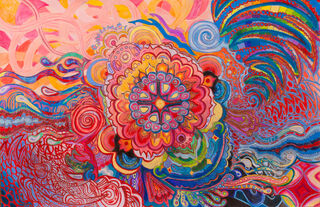
This one molecule can vary dramatically in its effects, as the art inspired by users beautifully and colourfully reveals. Yet this makes the task of understanding it at the molecular, cellular, or whole brain level especially hard. We know something about changes in EEG, increased disorder, changed connectivity in the default mode network and increased activity in parts of the visual system. There are relationships with dreaming and especially lucid dreaming, but we have hardly begun to work out why the different psychedelics, and the different modes of administration, produce the experiences they do. The recent Tucson conference, "The Science of Consciousness online," included three whole sessions on psychedelics and I spoke about DMT in the ‘Psychedelic Experiences’ plenary.

I like to imagine a future in which psychedelic research, combining experiential accounts with neuroscience, will help us see through our normal illusions and understand the nature of these other worlds of experience.

Wednesday, 20 February 2013

Out Of Body Experiences (OOBE) Astral Projection


One in ten people have an out-of-body experience at some time in their lives, they are often part of the near-death experience. Those who have experienced OBEs sometimes claim to have observed details which were unknown to them beforehand.
In some cases the phenomenon appears to occur spontaneously; in others it is associated with a physical or mental trauma, use of psychedelic drugs, dissociative drugs, or a dream-like state.
Many techniques aiming to induce the experience deliberately have been developed, for example visualization while in a relaxed, meditative state. Studies from 2007 have shown that experiences somewhat similar to OBEs can be induced by direct brain stimulation. Some of those who experience OBEs claimed to have willed themselves out of their bodies, while others report having found themselves being pulled from their bodies (usually preceded by a feeling of paralysis). In other accounts, the feeling of being outside the body was suddenly realized after the fact the experiencers saw their own bodies almost by accident. The out of body state often occur’s during the borderline stage’s between REM sleep and arousal when sleep paralysis may persist and dream imagery may mingle with sensory input.
Some neurologists have suspected that the event is triggered by a mismatch between visual and tactile signals. They used a virtual reality setup to recreate an OBE. The subject looked through goggles and saw his own body as it would appear to an outside observer standing behind him. The experimenter then touched the subject at the same time as a rod appeared to touch the virtual image. The experiment created an illusion of being behind and outside one's body. However, both critics and the experimenter himself note that the study fell short of replicating "full-blown" OBEs.
Types of OBE
During/near sleep
OBEs are sometimes reported to be preceded by and initiated from a lucid dream state, though other types of immediate and spontaneous experience are also reported. In many cases, people who claimed to have had an OBE reported being asleep, on the verge of sleep, or already asleep shortly before the experience. A large percentage of these cases referred to situations where the sleep was not particularly deep (due to illness, noises in other rooms, emotional stress, exhaustion from overworking, frequent re-awakening, etc.). In most of these cases, the subjects then felt themselves awake; about half of them noted a feeling of sleep paralysis.
Near-death experiences
Another form of spontaneous OBE is the near death experience (NDE). Some subjects report having had an OBE at times of severe physical trauma such as near-drownings or major surgery. In the case of motor vehicle accidents, they are able to recall the accident as if observing it from a location outside the vehicle or seeing themselves go through the window of the car but from their original seated position.

Other
Along the same lines as an near death experiences, extreme physical effort during activities such as high-altitude climbing and marathon running can induce OBEs. A sense of bilocation may be apparent, with both ground and air-based perspectives being experienced simultaneously.
Induced Consciously controlled and pre-meditated OBE methods (examples of which are widely available in many popular books on the subject) are also reported. Some people have attempted to develop techniques to induce OBEs.
Mental induction
Falling asleep physically without losing wakefulness. The "Mind Awake, Body Asleep" state is widely suggested as a cause of OBEs, voluntary and otherwise. Thomas Edison used this state to tackle problems while working on his inventions. He would rest a silver dollar on his head while sitting with a metal bucket in a chair. As he drifted off, the coin would noisily fall into the bucket, restoring some of his alertness. OBE pioneer Sylvan Muldoon more simply used a forearm held perpendicular in bed as the falling object. Salvador Dali was said to use a similar "paranoiac-critical" method to gain odd visions which inspired his paintings. Deliberately teetering between awake and asleep states is known to cause spontaneous trance episodes at the onset of sleep which are ultimately helpful when attempting to induce an OBE. By moving deeper and deeper into relaxation, one eventually encounters a 'slipping' feeling if the mind is still alert. This slipping is reported to feel like leaving the physical body. Some consider progressive relaxation a passive form of sensory deprivation.
Waking up mentally but not physically. This related technique is typically achieved through the practice of lucid dreaming. Once inside a lucid dream, the dreamer either shifts the subject matter of the dream in an OBE direction or banishes the dream imagery completely, in doing so gaining access to the underlying state of sleep paralysis ideal for visualization of separation from the body.
Deep trance, meditation and visualization. The types of visualizations vary; some common imageries used include climbing a rope to "pull out" of one's body, floating out of one's body, getting shot out of a cannon, and other similar approaches. This technique is considered hard to use for people who cannot properly relax. One example of such a technique is the popular Golden Dawn "Body of Light" Technique.
Mechanical induction
Brainwave synchronization via audio/visual stimulation. Binaural beats can be used to induce specific brain wave frequencies, notably those predominant in various mind awake/body asleep states. Binaural induction of the "body asleep" theta brain wave frequencies characteristic of dreaming REM sleep was observed as effective by the Monroe Institute (and corroborated by others). Simultaneous introduction of "mind awake" beta frequencies (detectable in the brains of normal, relaxed awakened individuals) was also observed as constructive. Another popular technology uses sinusoidal wave pulses to achieve similar results, and the drumming accompanying native American religious ceremonies is also believed to have heightened receptivity to "other worlds" through brainwave entrainment mechanisms.
Magnetic stimulation of the brain, as with the God helmet developed by Michael Persinger.
Electrical stimulation of the brain, particularly the temporoparietal junction (See below).
Sensory deprivation. This approach aims to encourage intense disorientation by removal of space and time references. Flotation tanks or pink noise played through headphones are often employed for this purpose. OBEs have been reported by those practicing sense-depriving forms of BDSM such as extreme bondage (mummification).[citation needed]
Sensory overload, the opposite of Sensory deprivation. The subject can for instance be rocked for a long time in a specially designed cradle, or submitted to light forms of torture, to cause the brain to shut itself off from all sensory input. Both conditions tend to cause confusion and this disorientation often permits the subject to experience vivid, ethereal out-of-body experiences. This tends to happen when the subject believes he or she is in a particular position, whereas his or her actual body is either rocking in a cradle actively, or still lying down. Consciousness suddenly transfers to the mental body.
Chemical induction
OBEs induced with drugs are sometimes considered to be hallucinations (i.e., purely subjective), even by those who believe the phenomenon to be objective in general. There are several types of drugs that can initiate an OBE, primarily the dissociative hallucinogens such as ketamine, dextromethorphan (DM or DXM), and phencyclidine (PCP). It has also been reported under the influence of tryptamine psychedelics including dimethyltryptamine (DMT) from ayahuasca. Salvia divinorum has been known to produce symptoms in which the user is said to be able to leave their bodies and travel to many places at once. Many users also claim that they feel as if their "soul" falls out of their body.
Methamphetamine has also been known to cause OBEs, not in itself but through lack of sleep. It has been reported that it felt like the person was talking above and behind them and, being under the influence of the drug, had no idea what was happening.
Galantamine is a Nootropic that can increase the odds of success when using along with Out-of-body experience or Lucid dream induction technique.
Phenomenology
Perceptions of environment
OBEs tend to fall into two types, categorized by Robert Monroe as Locale 1 and Locale 2 experiences.
In Locale 1 experiences the environment is largely consistent with reality; other common labels for this form are etheric, ethereal or RTZ (Real Time Zone) projections. The onset of this type can be frightening as intense physiological sensations may be perceived, such as electrical tingling, full body vibrations and racing heartbeat. Confusion is common in spontaneous Locale 1 experiences; the person can believe he has awakened (or died) physically and panic can be caused by the realization that ones limbs appear to be penetrating other objects.
Locale 2 experiences are less overtly physical in nature and have much subjective overlap with lucid dreaming. The subject is immersed in unrealistic worlds, modified forms of reality exhibiting physically impossible or inconsistent features. Bright and vivid colours are a common feature of this form. Robert Bruce considers this type of OBE to be an Astral Projection.

Progression
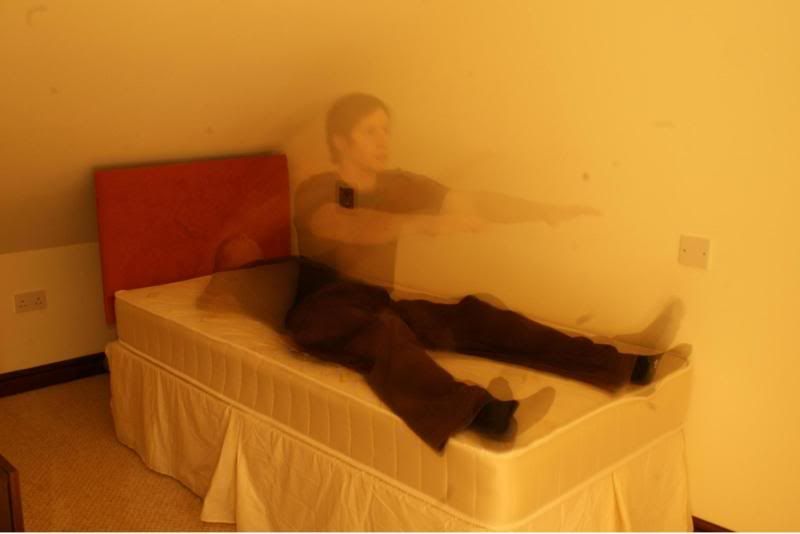
Artist's depiction of the separation stage. Though motion is perceived, paralysis is still evident.
An archetypal, classical OBE unfolds through perceptually distinct stages.
Withdrawal stage: Conscious interaction with the physical environment ceases. Attention is elsewhere, with sensory inputs going unnoticed; the body is on auto-pilot. Sleeping is an example of this stage.
Cataleptic stage: Movement is totally impaired. Alternative sensory information may suddenly seem present, such as intense vibrations, noises and sight through closed eyelids.
Separation stage: With effort, the perceptual viewpoint can be pulled away from the physical body location. Still subject to intense sensation, pull back towards the body obstructs progression.
Free movement stage: Beyond a certain radius, movement becomes unimpeded, with control increasing markedly. Visual and mental clarity can vary greatly, from barely functional to exceptional. Re-entry stage: Perceived need to return increases, leading either to voluntary reversal of separation or extremely fast involuntary snap-back. Alternatively, a transition to waking or sleeping may occur. You may feel a pressure as your soul [citation needed] reenters your body.
In practice, the absence of one or more of the classical stages is not unusual. Some (notably Robert Monroe) have claimed these stages become considerably less applicable with extreme familiarity with OBE, eventually finding just a deliberate mental shift to the feeling of the state equivalent. Monroe likened this to tuning a radio away from one station and towards another, and termed the process "phasing".
End-of-OBE perceptions
The OBE may or may not be followed by other experiences which are self-reported as being "as real" as the OBE feeling; alternatively, the subject may fade into a state self-reported as dreaming, or they may awake completely. The OBE is sometimes ended due to a fearful feeling of getting "too far away" from the body. Many end with a feeling of suddenly "popping" or "snapping" and sometimes a "pulling" back into their bodies; some even report being "sucked back" into physical form. A majority describe the end of the experience by saying "then I woke up". However it's worth noting that even those who describe the experience as something fantastic that occurs during sleep, and who describe the end of the experience by saying "and then I woke up", are very specific in describing the experience as one which was clearly not a dream; many described their sense of feeling more awake than they felt when they were normally awake. One compared the experience to that of lucid dreaming, but said that it was "more real".
NDE phenomenology
The phenomenology of an NDE usually includes additional physiological, psychological and transcendental factors beyond those of typical OBEs (Parnia, Waller, Yeates & Fenwick, 2001). Near-death experiences may include subjective impressions of being outside the physical body, visions of deceased relatives and religious figures, and transcendence of ego and spatiotemporal boundaries. Typically the experience includes such factors as: a sense of being dead; a feeling of peace and painlessness; an out-of-body experience; a tunnel experience (the sense of moving up or through a narrow passageway); encountering people of Light; God-like figures or similar forces; being given a "Life review", and a reluctance to return to life.
Studies of OBEs
The first extensive scientific study of OBEs was made by Celia Green (1968). She collected written, first-hand accounts from a total of 400 subjects, recruited by means of appeals in the mainstream media, and followed up by questionnaire. Her purpose was to provide a taxonomy of the different types of OBE, viewed simply as an anomalous perceptual experience or hallucination, while leaving open the question of whether some of the cases might incorporate information derived by extrasensory perception.
Previous collections of cases had been made by Dr Ernesno Bozzano (Italy) and Dr Robert Crookall (UK). Crookall approached the subject from a spiritualistic position, and collected his cases predominantly from spiritualist newspapers such as the Psychic News, which appears to have biased his results in various ways. For example, the majority of his subjects reported seeing a cord connecting the physical body and its observing counterpart; whereas Green found that less than 4% of her subjects noticed anything of this sort, and some 80% reported feeling they were a "disembodied consciousness", with no external body at all.
In 1999, at the 1st International Forum of Consciousness Research in Barcelona, International Academy of Consciousness research-practitioners Wagner Alegretti and Nanci Trivellato presented preliminary findings of an online survey on the out-of-body experience answered by internet users interested in the subject; therefore, not a sample representative of the general population.
1,007 (85%) of the first 1,185 respondents reported having had an OBE. 37% claimed to have had between two and ten OBEs. 5.5% claimed more than 100 such experiences. 45% of those who reported an OBE said they successfully induced at least one OBE by using a specific technique. 62% of participants claiming to have had an OBE also reported having enjoyed nonphysical flight; 40% reported experiencing the phenomenon of self-bilocation (i.e. seeing one's own physical body whilst outside the body); and 38% claimed having experienced self-permeability (passing through physical objects such as walls). The most commonly reported sensations experienced in connection with the OBE were falling, floating, repercussions e.g. myoclonia (the jerking of limbs, jerking awake), sinking, torpidity (numbness), intracranial sounds, tingling, clairvoyance, oscillation and serenity.
Another reported common sensation related to OBE was temporary or projective catalepsy, more commonly known as sleep paralysis. The sleep paralysis and OBE correlation was later corroborated by the Out-of-Body Experience and Arousal study published in Neurology by Kevin Nelson et al. (2007). Also noteworthy, is the Waterloo Unusual Sleep Experiences Questionnaire that further illustrates the correlation.
The University of Manchester has conducted yet another OBE survey. The psychologists at U. of Manchester are investigating the idea that out-of-body experiences, commonly thought of as paranormal phenomena, may in fact have their roots in how people perceive and experience their own bodies.
William Bulham, an author on the subject, has conducted an informal but informative online survey as well.

Neurology and OBE-like experiences there are several possible physiological explanations for parts of the OBE. OBE-like experiences have been induced by stimulation of the brain and by using cameras to fool the mind into thinking that the body is somewhere it is not. OBE-like experience has also been induced through stimulation of the posterior part of the right superior temporal gyrus in a patient. Positron-emission tomography was also used in this study to identify brain regions affected by this stimulation. The term OBE-like is used above because the experiences described in these experiments either lacked some of the clarity or details of normal OBEs, or were described by subjects who had never experienced an OBE before. Such subjects were therefore not qualified to make claims about the authenticity of the experimentally-induced OBE.
English psychologist Susan Blackmore suggests that an OBE begins when a person loses contact with sensory input from the body while remaining conscious.[citation needed] The person retains the illusion of having a body, but that perception is no longer derived from the senses. The perceived world may resemble the world he or she generally inhabits while awake, but this perception does not come from the senses either. The vivid body and world is made by our brain's ability to create fully convincing realms, even in the absence of sensory information. This process is witnessed by each of us every night in our dreams, though OBEs are claimed to be far more vivid than even a lucid dream.
Irwin pointed out that OBEs appear to occur under conditions of either very high or very low arousal. For example, Green found that three quarters of a group of 176 subjects reporting a single OBE were lying down at the time of the experience, and of these 12% considered they had been asleep when it started. By contrast, a substantial minority of her cases occurred under conditions of maximum arousal, such as a rock-climbing fall, a traffic accident, or childbirth. McCreery has suggested that this paradox may be explained by reference to the fact that sleep can supervene as a reaction to extreme stress or hyper-arousal. He proposes that OBEs under both conditions, relaxation and hyper-arousal, represent a form of "waking dream", or the intrusion of Stage 1 sleep processes into waking consciousness.
Van Lommel studies
The first clinical study of near death experiences (NDE's) in cardiac arrest patients was by Pim van Lommel, a cardiologist from the Netherlands, and his team (The Lancet, 2001),Of 344 patients who were successfully resuscitated after suffering cardiac arrest, approximately 18% experienced "classic" NDE's, which included out-of-body experiences. The patients remembered details of their conditions during their cardiac arrest despite being clinically dead with flatlined brain stem activity. Van Lommel concluded that his findings supported the theory that consciousness continued despite lack of neuronal activity in the brain. Van Lommel conjectured that continuity of consciousness may be achievable if the brain acted as a receiver for the information generated by memories and consciousness, which existed independently of the brain, just as radio, television and internet information existed independently of the instruments that received it.
Skeptic Michael Shermer's interpretation of Van Lommel's study, that it demonstrated that the mind was not separate from the brain, has been criticised by Deepak Chopra[45] and also by Jay Ingram of the Canadian Discovery Channel. Ingram commented: "[Shermer's] use of this study to bolster his point is bogus. He could have said, 'The authors think there's a mystery, but I choose to interpret their findings differently'. But he didn't. I find that very disappointing.
Olaf Blanke studies
Research by Olaf Blanke in Switzerland found that it is possible to reliably elicit experiences somewhat similar to the OBE by stimulating regions of the brain called the right temporal-parietal junction (TPJ; a region where the temporal lobe and parietal lobe of the brain come together). Blanke and his collaborators in Switzerland have explored the neural basis of OBEs by showing that they are reliably associated with lesions in the right TPJ region and that they can be reliably elicited with electrical stimulation of this region in a patient with epilepsy. These elicited experiences may include perceptions of transformations of the patient's arm and legs (complex somatosensory responses) and whole-body displacements (vestibular responses).
In neurologically normal subjects, Blanke and colleagues then showed that the conscious experience of the self and body being in the same location depends on multisensory integration in the TPJ. Using event-related potentials, Blanke and colleagues showed the selective activation of the TPJ 330–400 ms after stimulus onset when healthy volunteers imagined themselves in the position and visual perspective that generally are reported by people experiencing spontaneous OBEs. Transcranial magnetic stimulation in the same subjects impaired mental transformation of the participant's own body. No such effects were found with stimulation of another site or for imagined spatial transformations of external objects, suggesting the selective implication of the TPJ in mental imagery of one's own body.
In a follow up study, Arzy et al. showed that the location and timing of brain activation depended on whether mental imagery is performed with mentally embodied or disembodied self location. When subjects performed mental imagery with an embodied location, there was increased activation of a region called the "extrastriate body area" (EBA), but when subjects performed mental imagery with a disembodied location, as reported in OBEs, there was increased activation in the region of the TPJ. This leads Arzy et al. to argue that "these data show that distributed brain activity at the EBA and TPJ as well as their timing are crucial for the coding of the self as embodied and as spatially situated within the human body."
Blanke and colleagues thus propose that the right temporal-parietal junction is important for the sense of spatial location of the self, and that when these normal processes go awry, an OBE arises.
In August 2007 Blanke's lab published research in Science demonstrating that conflicting visual-somatosensory input in virtual reality could disrupt the spatial unity between the self and the body. During multisensory conflict, participants felt as if a virtual body seen in front of them was their own body and mislocalized themselves toward the virtual body, to a position outside their bodily borders. This indicates that spatial unity and bodily self-consciousness can be studied experimentally and is based on multisensory and cognitive processing of bodily information.
Michael Persinger studies
Michael Persinger has undertaken similar research to Olaf Blanke using magnetic stimulation applied to the right temporal lobe of the brain, which is known to be involved in visuo-spatial functions, multi-sensory integration and the construction of the sense of the body in space. Persinger's research also found evidence for objective neural difference between periods of remote viewing in two individuals thought to have psychic abilities. Persinger undertook his research on Sean Harribance and Ingo Swann, a renowned remote viewer who has taken part in numerous studies. Examination of Harribance showed enhanced EEG activity within the alpha band (8–12 Hz) over Harribance's right parieto-occipital region, consistent with neuropsychological evidence of early brain trauma in these regions. In a second study, Ingo Swann was asked to draw images of pictures hidden in envelopes in another room. Individuals with no knowledge of the nature of the study rated Swann's comments and drawings as congruent with the remotely viewed stimulus at better than chance levels. Additionally, on trials in which Swann was correct, the duration of 7 Hz (alpha band) paroxysmal discharges over the right occipital lobe was longer. Subsequent anatomical MRI examination showed anomalous subcortical white matter signals focused in the perieto-occipital interface of the right hemisphere that were not expected for his age or history.
Ehrsson study
In August 2007 Henrik Ehrsson, then at the Institute of Neurology at University College of London (now at the Karolinska Institute in Sweden) published research in Science demonstrating the first experimental method that, according to the scientist's claims in the publication, induced an out-of-body experience in healthy participants.[57] The experiment was conducted in the following way:
The study participant sits in a chair wearing a pair of head-mounted video displays. These have two small screens over each eye, which show a live film recorded by two video cameras placed beside each other two metres behind the participant's head. The image from the left video camera is presented on the left-eye display and the image from the right camera on the right-eye display. The participant sees these as one "stereoscopic" (3D) image, so they see their own back displayed from the perspective of someone sitting behind them. The researcher then stands just beside the participant (in their view) and uses two plastic rods to simultaneously touch the participant's actual chest out-of-view and the chest of the illusory body, moving this second rod towards where the illusory chest would be located, just below the camera's view. The participants confirmed that they had experienced sitting behind their physical body and looking at it from that location.
The experiment fits a three-point definition of the out-of-body experience (OBE). The OBE as reported in spontaneous cases can be phenomenologically more complex as commented in Slate[59] and elsewhere.
Dr. Sam Parnia – University of Southampton study
In the fall of 2008, 25 UK and US hospitals began participation in a 3 year study, co-ordinated by Dr. Sam Parnia and Southampton University. Following on the work of Van Lommel in the Netherlands, the study aims to examine near-death experiences in 1,500 cardiac arrest survivors and so determine whether people without a heartbeat or brain activity can have documentable out-of-body experiences.
OBE Training and Research Facilities
The 9-meter sphere laboratory known as the Projectarium at International Academy of Consciousness (IAC) Campus in Evoramonte, Portugal is the first modern building designed specifically to facilitate out-of-body experience. The Monroe Institute's Nancy Penn Center is another campus specializing on out-of-body experience induction. The Center for Higher Studies of the Consciousness in Brazil is another large OBE training facility.
Olaf Blanke's Laboratory of Cognitive Neuroscience has become a well-known laboratory for OBE research. Lab facilities include a 192-channel EEG platform and a Virtual-Reality EEG platform allowing to record from 256 scalp electrodes during full immersion in virtual reality.
Historically, the first laboratory research on OBE was conducted by The End of Materialism author Dr. Charles Tart at University of California - Davis in the 60's, whose research papers are available online.
Astral projection
Astral projection is a paranormal interpretation of out-of-body experience that assumes the existence of one or more non-physical planes of existence and an associated body beyond the physical. Commonly such planes are called astral, etheric, or spiritual. Astral projection is often experienced as the spirit or astral body leaving the physical body to travel in the spirit world or astral plane.
Evidence for objective reality of projection on to the etheric plane (a near-copy of the physical plane) is sometimes suggested when people, such as patients during surgery, describe OBEs in which they see or hear events or objects outside their sensory range (for instance, Pam Reynolds reported experiencing an OBE during brain surgery and described a surgical instrument she had not seen previously, as well as conversation that occurred while she was under anethesia).[citation needed]
Skeptics such as Susan Blackmore have disputed whether anything leaves the body during an OBE.
Lucid dreaming
Alice in Wonderland syndrome
Dissociation
Depersonalization
Depersonalization disorder
Hallucinations in the sane
Hypnagogia
Macropsia
Nightmare
Galantamine
Bilocation

Reference to Parsonage Side Retreat


Photo Source


Wednesday, 23 January 2013

Psychedelic Therapy

Psychedelic therapy refers to therapeutic practices involving the use of psychedelic drugs, particularly serotonergic psychedelics such as LSD, psilocybin, DMT, and 2C-B. As an alternative to synonyms such as "hallucinogen", "entheogen", "psychotomimetic" and other functionally constructed names, the use of the term psychedelic ("mind-manifesting") emphasizes that those who use these drugs as part of a therapeutic practice believe these drugs can facilitate beneficial exploration of the psyche. Proponents of psychedelic therapy also believe psychedelics enhance or unlock key psychoanalytic abilities, and so make it easier for conventional psychotherapy to take place.

Contents

[edit] History

Psychedelic therapy, in the broadest possible sense of the term, undoubtedly dates from prehistoric knowledge of hallucinogenic plants. Though usually viewed as predominantly spiritual in nature, elements of psychotherapeutic practice can be recognized in the entheogenic or shamanic rituals of many cultures.[1]
Some of the well known particular psychedelic substances that have been used to this day are: MDMA, LSD, Psilocybin, Cannabis, Mescaline, 2C-B, Dimethyltryptamine, Ibogaine, Gamma-Hydroxybutyric acid, Ketamine, Amanita muscaria, Bufotenine, Harmaline, Ayahuasca, and Salvia divinorum. Carbogen has also played role in psychedelic therapy research. Shamans have historically been well known throughout the world to mix two or more of some of the listed substances to produce synergistic effects. (See Psychoactive, Entheogen, Hallucinogen, Psychotherapy, Psychonaut, Meditation, Trance, Mysticism, Transcendence (philosophy).)
The use of psychedelic agents in Western therapy began in the 1950s, after the widespread distribution of LSD to researchers by its manufacturer, Sandoz Laboratories. Research into experimental, chemotherapeutic and psychotherapeutic uses of psychedelic drugs was conducted in several countries over the next 10–15 years. In addition to the release of dozens of books and creation of six international conferences, more than 1000 peer-reviewed clinical papers detailing the use of psychedelic compounds (administered to approximately 40,000 patients) were published by the mid-1960s.[2] Proponents believed that psychedelic drugs facilitated psychoanalytic processes, and that they were particularly useful for patients with problems that were otherwise difficult to treat, including alcoholics, although the trials did not meet the methodological standards required today.[3]
One challenge of psychedelic therapy was the greatly variable effects produced by the drugs. According to Stanislav Grof, "The major obstacle to their systematic utilization for therapeutic purposes was the fact that they tended to occur in an elemental fashion, without a recognizable pattern, and frequently to the surprise of both the patient and the therapist. Since the variables determining such reactions were not understood, therapeutic transformations of this kind were not readily replicable."[4] Attempts to produce these experiences in a controlled, non-arbitrary, predictable way resulted in several methods of psychedelic therapy, which are reviewed below.
Researchers like Timothy Leary felt psychedelics could alter the fundamental personality structure or subjective value-system of an individual, to beneficial effect. His experiments with prison inmates were an attempt to reduce recidivism through a few short, intense sessions of psilocybin administered weeks apart with biweekly group therapy sessions in between.[5] Psychedelic therapy was used in a number of other specific patient populations, including alcoholics, children with autism, and people with terminal illness.

[edit] In alcoholism

Studies by Humphrey Osmond, Betty Eisner, and others examined the possibility that psychedelic therapy could treat alcoholism (or, less commonly, other addictions). A review of the usefulness of psychedelic therapy in treating alcoholism concluded that the possibility was neither proven nor disproven.[6] Early studies of alcoholics who underwent LSD treatment reported a 50% success rate after a single high-dose session.[7] However, the studies that reported high success rates had insufficient controls, lacked objective measures of genuine change, and failed to conduct rigorous follow-up interviews with subjects. The lack of conclusive evidence notwithstanding, individual case reports are often dramatic. Bill Wilson, the founder of Alcoholics Anonymous conducted medically supervised experiments in the 1950's on the effects of LSD on alcoholism. Bill is quoted as saying "It is a generally acknowledged fact in spiritual development that ego reduction makes the influx of God's grace possible. If, therefore, under LSD we can have a temporary reduction, so that we can better see what we are and where we are going — well, that might be of some help. The goal might become clearer. So I consider LSD to be of some value to some people, and practically no damage to anyone. It will never take the place of any of the existing means by which we can reduce the ego, and keep it reduced." Bill strongly supported LSD as a potential tool for the treatment of alcoholism, but felt that it should only be undertaken by those with a rather strong superego in well supervised clinical settings.

[edit] In terminal illness

Richard Yensen, Albert Kurland and other researchers collected evidence that psychedelic therapy could be of use to those suffering from anxiety and other problems associated with terminal illness. In 1965, research consisting of providing a psychedelic experience for the dying was conducted at the Spring Grove State Hospital in Maryland. Of 17 dying patients who received LSD after appropriate therapeutic preparation, one-third improved "dramatically", one-third improved "moderately", and one-third were unchanged by the criteria of reduced tension, depression, pain, and fear of death.[8]

[edit] Restrictive regulation

One reason that psychedelic therapy was eventually restricted was concern about the use of drugs by the general public. In the mid-1960s, in response to concerns regarding the proliferation of the unauthorized use of psychedelic drugs by the general public (especially the counterculture), various steps were taken to curtail their use. Bowing to governmental concerns, Sandoz halted production of LSD in 1965, and in many countries LSD was banned, or made available on a very limited basis that made research difficult. Gradually, increasing restrictions were placed on medical and psychiatric research conducted with LSD and other psychedelic substances. In a congressional hearing in 1966, Senator Robert Kennedy questioned the shift of opinion with regards to this potentially rewarding form of treatment, noting that, "Perhaps to some extent we have lost sight of the fact that (LSD) can be very, very helpful in our society if used properly" (Subcommittee on Executive Reorganization, 1966 p. 63).
By 1970, LSD and many other psychedelics were placed into the most-restrictive "Schedule I" category by the United States Drug Enforcement Administration, along with widely-used drugs like heroin. Schedule I compounds are claimed to possess "significant potential for abuse and dependence" and have "no recognized medicinal value", effectively rendering them illegal for any purpose without special difficult-to-obtain approvals. The arguments in favor of this regulation are seemingly contradicted by hundreds of scientific and medical articles on the use of psychedelics as aids in psychotherapy. In 1968, Dahlberg and colleagues published an article in the American Journal of Psychiatry that detailed the way in which various forces had successfully discredited legitimate LSD research.[9] The essay argues that individuals in government and the pharmaceutical industry influenced research in the medical community by canceling any ongoing studies and analysis in addition to labeling genuine scientists as charlatans. Despite objections from the scientific community, authorized research into therapeutic applications of psychedelic drugs had been discontinued worldwide by the 1980s.

[edit] Continuing trials

Research and therapeutic sessions have nevertheless continued to be performed, in one way or another, to the present day. Some therapists have exploited windows of opportunity preceding scheduling of particular substances (e.g. MDMA, LSD, Psilocybin, Cannabis, Mescaline, Dimethyltryptamine, Ibogaine, Gamma-Hydroxybutyric acid, Ketamine, Amanita muscaria, Bufotenine, Harmaline, Ayahuasca, Salvia divinorum) or developed extensive non-drug techniques for achieving similar states of consciousness (e.g. Holotropic Breathwork). For the most part, however, since the early 1970s, psychedelic therapy has been conducted by an underground network of people willing to conduct therapy sessions using psychedelic substances. Board-certified therapists, in doing this, risked losing both their career and their liberty. In recent years, some researchers, including Charles Grob and Michael Mithoefer, have obtained permission for human studies of psychedelics as possible treatments.[citation needed]

[edit] Recent Resurgence

There has been a recent resurgence in the study of psychedelic drugs for medicinal purposes. A study in 2006 conducted by Griffiths et al. used psilocybin to facilitate a mystical experience. Fourteen months later, 21 of 36 patients rated the experience as one of the top five most meaningful of their lives.[10] The New York Times wrote an article in 2010 outlining some of the other findings, including resumed work with terminally ill patients.[11]

[edit] Methods

The effects of psychedelic drugs on the human mind are complex, varied and difficult to characterize, and as a result many different "flavors" of psychedelic psychotherapy have been developed by individual practitioners. Some aspects of published accounts of methodologies are discussed below.

[edit] Psycholytic therapy

Psycholytic therapy involves the use of low to medium doses of psychedelic drugs, repeatedly at intervals of 1–2 weeks. The therapist is present during the peak of the experience and at other times as required, to assist the patient in processing material that arises and to offer support when necessary. This general form of therapy was utilized mainly to treat patients with neurotic and psychosomatic disorders. The name, coined by Ronald A. Sandison, literally meaning "soul-dissolving", refers to the belief that the therapy can dissolve conflicts in the mind. Psycholytic therapy was historically an important approach to psychedelic psychotherapy in Europe, but it was also practiced in the United States by some psychotherapists including Betty Eisner.
An advantage of psychedelic drugs in exploring the unconscious is that a conscious sliver of the adult ego usually remains alert during the experience.[12] Throughout the session, patients remain intellectually alert and remember their experiences vividly.[12] In this highly introspective state, they also are actively cognizant of ego defenses such as projection, denial, and displacement as they react to themselves and their choices in the act of creating them.[12]
The ultimate goal of the therapy is to provide a safe, mutually compassionate context through which the profound and intense reliving of memories can be filtered through the principles of genuine psychotherapy.[citation needed] Aided by the deeply introspective state attained by the patient, the therapist assists him/her in developing a new life framework or personal philosophy that recognizes individual responsibility for change.[12]

[edit] Psychedelic therapy

Psychedelic therapy involves the use of very high doses of psychedelic drugs, with the aim of promoting transcendental, ecstatic, religious or mystical peak experiences. This approach differs strongly from the dialog-based processing of psychodynamic material upon which many other methodologies are based. As such, it is more closely aligned to transpersonal psychology than to traditional psychoanalysis. Psychedelic therapy is practiced primarily in North America. The psychedelic therapy method was initiated by Humphry Osmond and Abram Hoffer (with some influence from Al Hubbard) and replicated by Keith Ditman.[13]

[edit] Other variations

In Czechoslovakia, Stanislav Grof developed a form of treatment that appeared to bridge both of these main forms. He analyzed the LSD experience in a Freudian or Jungian psychoanalytic context in addition to giving significant value to the overarching transpersonal, mystical, or spiritual experience that often allowed the patient to re-evaluate their entire life philosophy.[2][4]
The Chilean therapist Claudio Naranjo developed a branch of psychedelic therapy that utilized drugs like MDA, MDMA, harmaline, and ibogaine — substances that do not involve the same degree of perceptual and emotional alteration as LSD.[2]

[edit] Anaclitic therapy

The term anaclitic (from the Ancient Greek "ἀνάκλιτος", anaklitos – "for reclining")[14] refers to primitive, infantile needs and tendencies directed toward a pre-genital love object. Developed by two London psychoanalysts, Joyce Martin and Pauline McCririck, this form of treatment is similar to psycholytic approaches as it is based largely on a psychoanalytic interpretation of abreactions produced by the treatment, but it tends to focus on those experiences in which the patient re-encounters carnal feelings of emotional deprivation and frustration stemming from the infantile needs of their early childhood. As a result, the treatment was developed with the aim to directly fulfill or satisfy those repressed, agonizing cravings for love, physical contact, and other instinctual needs re-lived by the patient. Therefore, the therapist is completely engaged with the subject, as opposed to the traditional detached attitude of the psychoanalyst. With the intense emotional episodes that came with the psychedelic experience, Martin and McCririck aimed to sit in as the "mother" role who would enter into close physical contact with the patients by rocking them, giving them milk from a bottle, etc.[4]

[edit] Hypnodelic therapy

Hypnodelic therapy, as the name suggests, was developed with the goal to maximize the power of hypnotic suggestion by combining it with the psychedelic experience. After training the patient to respond to hypnosis, LSD would be administered, and during the onset phase of the drug the patient would be placed into a state of trance. Levine and Ludwig found the combination of these techniques to be more effective than the use of either of these two components separately.[4]

[edit] Developments from 1980–present

Owing to the largely illegal nature of psychedelic therapy in this period, little information is available concerning the methods that have been used. Individuals having published information on psychedelic psychotherapy in this period include George Greer, Ann Shulgin (TiHKAL, with Alexander Shulgin), and Myron Stolaroff (The Secret Chief, about the underground therapy done by Leo Zeff) and Athanasios Kafkalides.[15]

[edit] Current research and therapy

Current legal research into possible therapeutic value of psychedelics has been ongoing for several years. The only published pilot study (and Phase I FDA safety study) so far is one that showed that Psilocybin could be safely given to those with OCD and showed trends for improvement of symptoms but the study did not clearly establish whether or not the patients were helped by the treatment.[16][17]
There are also several ongoing or recently finished clinical trials that have not yet published their results. A study by Charles Grob, sponsored by the Heffter Research Institute, used psilocybin with cancer patients, with the intention of helping them come to terms with their condition, and for pain relief.[18] Roland Griffiths and colleagues at Johns Hopkins are also studying if people with anxiety or poor mood due to current or past cancer can benefit from psilocybin.[19][20] Unlike the Grob study, the Griffiths study does not require participants be terminally ill. Another ongoing study with cancer patients is with John Halpern at Harvard Medical School's McLean Hospital, but this study is with MDMA, more commonly known as Ecstasy.[21] MDMA is also being investigated as a possible adjunct to psychotherapy for Posttraumatic stress disorder (PTSD) in people who did not benefit from available PTSD treatments.[22] Research conducted by Torsten Passie has shown that patients who also suffer from anxiety and depression can especially benefit and make significant progress in healing when given doses of MDMA and other entactogens that stimulate social and emotional effects.[23] Studies of MDMA and PTSD are currently underway in the United States (South Carolina), Switzerland, and Israel, all sponsored by the Multidisciplinary Association for Psychedelic Studies (MAPS). MAPS has a twelve-person study in Switzerland to see whether a moderately large dose of LSD (200 mcg) is more helpful as part of psychotherapy for patients with life-threatening illnesses than a lower dose (20 mcg).

[edit] See also

[edit] References

  1. ^ "Shamanic Guidelines for Psychedelic Medicine" by Michael Winkelman, IN Winkelman, Michael, and Roberts, Thomas B. (editors) (2007) Psychedelic Medicine: New Evidence for Hallucinogens as Treatments 2 Vols. Westport, CT: Praeger/Greenwood.
  2. ^ a b c Chapter from Lester Grinspoon & James B. Bakalar Psychedelic Drugs Reconsidered, A Drug Policy Classic Reprint from the Lindesmith Center, 1997, ISBN 0-9641568-5-7
  3. ^ Dyck E (June 2005). "Flashback: psychiatric experimentation with LSD in historical perspective". Can J Psychiatry 50 (7): 381–8. PMID 16086535.
  4. ^ a b c d Grof, Stanislav (2001). LSD Psychotherapy (3rd ed.). MAPS. ISBN 0-9660019-4-X.
  5. ^ Leary, T.. A new behavior change program using psilocybin. Psychotherapy: Theory, Research & Practice, Vol 2(2), 1965. pp. 61-72.
  6. ^ Mangini M (1998). "Treatment of alcoholism using psychedelic drugs: a review of the program of research". J Psychoactive Drugs 30 (4): 381–418. doi:10.1080/02791072.1998.10399714. PMID 9924844.
  7. ^ Smart RG, Storm T (March 1964). "The Efficacy of LSD in the Treatment of Alcoholism" (PDF). Quarterly Journal of Studies on Alcohol 25: 333. http://catbull.com/alamut/Bibliothek/1964_smart_2335_1.pdf. Retrieved 25 September 2012.
  8. ^ Yensen R and Donna Dryer D. Addiction, Despair, and the Soul: Successful Psychedelic Psychotherapy, A Case Study In press manuscript to be published in a book edited by Andrew Tatarsky about successful alternative treatments for addiction. Accessed August 7th, 2008
  9. ^ Dahlberg CC, Mechaneck R, Feldstein S (November 1968). "LSD research: the impact of lay publicity". Am J Psychiatry 125 (5): 685–9. PMID 5683460. http://ajp.psychiatryonline.org/cgi/pmidlookup?view=long&pmid=5683460.
  10. ^ Griffiths, Roland (2008-00-00). "Mystical-type experiences occasioned by psilocybin mediate the attribution of personal meaning and spiritual significance 14 months later". Journal of Psychopharmacology. http://csp.org/psilocybin/Hopkins-CSP-Psilocybin2008.pdf. Retrieved 2011-12-11.
  11. ^ Tierney, John (2010-04-11). "Hallucinogens Have Doctors Tuning In Again". The New York Times. http://www.nytimes.com/2010/04/12/science/12psychedelics.html. Retrieved 2010-05-22.
  12. ^ a b c d Grinspoon, Lester, and James B. Bakalar. Psychedelic Drugs Reconsidered. New York: Basic, 1979. Page 196
  13. ^ Eisner, BG. "Set, Setting and Matrix". Journal of Psychoactive Drugs. 1997; 29(2):213-216.
  14. ^ "anaclitic - Wiktionary". http://en.wiktionary.org/wiki/anaclitic. Retrieved 2010-04-23.
  15. ^ Myron Stolaroff, The Secret Chief: Conversations with a pioneer of the underground psychedelic therapy movement, Multidisciplinary Association for Psychedelic Studies (MAPS) 1997. ISBN 0-9660019-0-7 (hardcover) ISBN 0-9660019-1-5 (paperback)
  16. ^ Moreno FA, Wiegand CB, Taitano EK, Delgado PL (November 2006). "Safety, tolerability, and efficacy of psilocybin in 9 patients with obsessive-compulsive disorder". J Clin Psychiatry 67 (11): 1735–40. doi:10.4088/JCP.v67n1110. PMID 17196053. http://article.psychiatrist.com/?ContentType=START&ID=10002809.
  17. ^ "Psychedelic drug 'hope for OCD'". BBC News. 2006-12-11. http://news.bbc.co.uk/1/hi/health/6210694.stm. Retrieved 2010-05-22.
  18. ^ "Medicine hope for psychedelic drugs". BBC News. 2004-08-15. http://news.bbc.co.uk/1/hi/health/3528730.stm. Retrieved 2010-05-22.
  19. ^ Official recruitment page for Johns Hopkins psilocybin cancer study
  20. ^ Randerson, James. 'Clinical trials test potential of hallucinogenic drugs to help patients with terminal illnesses', The Guardian, August 12, 2008.
  21. ^ Psychedelic medicine: Mind bending, health giving - health - 26 February 2005 - New Scientist
  22. ^ "Ecstasy could ease crime trauma". BBC News. 2003-11-24. http://news.bbc.co.uk/1/hi/health/3232926.stm. Retrieved 2010-05-22.
  23. ^ Blackmore, Susan (2006). "Psychedelic Healing". New Scientist (Reed Business Information Ltd) 190 (2547): 50–51.

[edit] External links


         Blogger Reference Link  http://www.p2pfoundation.net/Multi-Dimensional_Science

"Scientific Mysticism" of Michael Whiteman

  The previous post gave reference to the book below by an academic. It is similiar but not identical to the ideas of my paradigm known as ...