Showing posts with label music. Show all posts

Friday, 25 October 2013

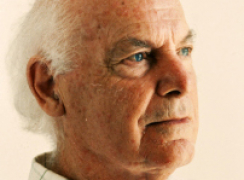
Nevill Drury

Drury authored many readable books on the esoteric, and the like. RS

Blogger Reference Link  http://www.p2pfoundation.net/Multi-Dimensional_Science


Nevill Drury (1 October 1947 – 15 October 2013) was an English-born Australian editor, publisher, and professional in many aspects of the publishing business, as well as the author of over forty books on subjects ranging from shamanism and western magical traditions to art, music, and anthropology. His books have been published in fifteen languages. [1]

Early life[edit]

Born in Hastings, England in 1947, Drury moved to Australia at the age of nine. He attended Sydney University in the late 1960s and later earned his Master of Arts (honours) degree in anthropology from Macquarie University. He received his PhD from the University of Newcastle in 2008 for a dissertation on the visionary art and magical beliefs of Rosaleen Norton.[2]

Career[edit]

Drury worked in the Australian book industry starting in 1976. A former managing editor for Harper & Row and Doubleday in Australia, he helped found the specialist visual arts publishing company Craftsman House in 1981, which became Australia's leading art book imprint. Drury worked full-time as publishing director of this company from 1989 to January 2000. He also co-edited Australian Painting Now, which was published in the UK and US by Thames & Hudson. He was briefly the manager of Adyar Bookshop in Sydney (1888-2012).

Writing and lecturing[edit]

Drury was a prolific author of books on shamanism, spirituality, and different forms of magical practice. His many books include the first serious overview of occultism in Australia: Other Temples, Other Gods (co-written with Gregory Tillet). Others include Don Juan, Mescalito and Modern Magic, The Occult Experience (the book of a major documentary released in 1985 featuring, among others, Margot Adler, Selena Fox, Alex Sanders, Janet and Stewart Farrar, and H. R. Giger), and Pan's Daughter: the first biography of Australian artist and witch Rosaleen Norton.
He authored several books on Australian art, including the three-volume Images series. Artist Matthew Tobin (Creative Director, Urban Arts Projects [2]) describes Nevill Drury as
...one of those most responsible for Aboriginal art's growth (he discovered Rover Thomas, Clifford Possum and Emily Kame Kngwarreye)[3]
His books have been translated into 15 languages.[4] Since 1980 he was a speaker and workshop facilitator on subjects such as magical visualization and shamanic drumming. He was both an interviewer and a guest on several programs on Australian television,[5] includingCompass (ABC-TV) as a spokesperson for the New Spirituality.

Bibliography[edit]

  • Australian Painting Now (with Laura Murray Cree) (2000)
  • Bodywork Book (1984)
  • Creating Good Karma: Release Your Karmic Burdens and Change Your Life (2003)
  • Creative Visualization - To Attain Your Goals and Improve Your Well-Being (2001)
  • Dictionary of Mysticism and the Esoteric Traditions (1992) ABC Clio, (1992) Prism Press, (1994) Ferenczy Konyvkiado, (2002) Watkins (republication of Dictionary of Mysticism and the Occult) ISBN 0-87436-699-2
  • Dictionary of Mysticism and the Occult (1985) Harper & Row ISBN 0-06-062093-5, (1988) Droemer Knaur
  • The Dictionary of the Esoteric: Over 3,000 Entries on the Mystical and Occult Traditions (2002) Simon & Schuster (Australia) Pty Ltd ISBN 1-84293-041-9, Sterling Publishing Company, Inc. ISBN 1-84293-108-3
  • Don Juan, Mescalito and Modern Magic: The Mythology of Inner Space (1988) Arkana, Penguin (Non-Classics) (1 November 1988) ISBN 0-14-019016-3, ISBN 978-0-14-019016-8
  • Echoes From the Void: Writings on Magic, Visionary Art and the New Consciousness (1994)
  • The Elements of Human Potential (1989) Element, (1993) Edizione Crisalide, (1994) Xenia, (1995) Zysk, (1996) Votobia
  • The Elements of Shamanism (1989) Element, (1991) Tirion, (1991) Jouvence, (1994) Karisto Oy, (1994) Edesviz Kiado, (1994) Rebis, (1995) Xenia, (1996) Forum, (1996) Okyanus, (1997) Floros (republished 2000 by Element as New Perspectives: Shamanism)
  • Everyday Magic (9 April 2002) Simon & Schuster, Australia ISBN 0-7432-2919-3
  • Exploring the Labyrinth: Making Sense of the New Spirituality (1999) Continuum, 1999 Allen & Unwin (Sydney), 1999 Gill & Macmillan / Newleaf ISBN 1-86448-644-9
  • Fire & Shadow: Spirituality in Contemporary Australian Art (with Anna Voigt) (1996)
  • The Gods of Rebirth (1988)
  • Healing Music: The Harmonic Path to Inner Wholeness (with Andrew Watson) (1987)
  • The Healing Power: A Handbook of Alternative Medicine and Natural Health (1981)
  • The History of Magic in the Modern Age (2000) Carroll & Graf, 2000 Constable, 2000 Simon & Schuster Australia
  • The Illustrated Dictionary of Natural Health (with Susan Drury) (1988) David & Charles ISBN 0-7153-9313-8
  • Images in Contemporary Australian Painting (1992)
  • Images 2: Contemporary Australian Painting (1995)
  • Images 3: Contemporary Australian Painting (1998)
  • Inner Health: The Health Benefits of Relaxation, Meditation and Visualization (1985)
  • Inner Visions: Explorations in Magical Consciousness (1995) Arkana, (1995) Penguin Group (US) Incorporated ISBN 0-14-019283-2
  • Magic and Witchcraft: From Shamanism to the Technopagans (2004)
  • Merlin's Book of Magick and Enchantment (with Linda Garland) (2001) Barnes and Noble, (1997) Lansdowne, (1998) Raincoast, (2002) Edaf
  • The New Age: The History of a Movement (2004)
  • New Art (1990)
  • New Art One (1987)
  • New Art Two: New Directions in Contemporary Australian Art (1980)
  • New Art Four: Profiles in Contemporary Australian Art (1990)
  • New Art 5: Profiles in Contemporary Australian Art (1991)
  • New Art Six: Profiles in Contemporary Australian Art (1992)
  • New Art Seven (1992)
  • New Art Eight: Profiles in Contemporary Australian Art (1993)
  • New Perspectives: Shamanism (2000)
  • New Sculpture: Profiles in Contemporary Australian Sculpture (1994)
  • Occult Experience (1989)
  • The Occult Sourcebook (with Gregory Tillett) (1978) Routledge & K. Paul ISBN 0-7100-8875-2
  • Other Temples, Other Gods: the Occult in Australia (1980)
  • Pan's Daughter: the Strange World of Rosaleen Norton (1988)
  • The Path of the Chameleon: Man's Encounter with the Gods and Magic (1973)
  • Reincarnation: Exploring the Concept of Reincarnation in Religion, Philosophy and Traditional Cultures (2002) Barnes & Noble, New York ISBN 0-7607-3234-5
  • Sacred Encounters: Shamanism and Magical Journeys of the Spirit (2003)
  • The Search for Abraxas (with Colin Wilson) (1972)
  • The Shaman and the Magician: Journeys Between the Worlds (1988) Arkana, Penguin (Non-Classics); New Ed edition (1 November 1988) ISBN 0-14-019056-2, ISBN 978-0-14-019056-4
  • The Shaman's Quest: Journeys in an Ancient Spiritual Practice (with Tom Cowan) (2002)
  • Stealing Fire From Heaven: The Rise of Modern Western Magic (February 2011) New York: Oxford University Press ISBN 0-19-975100-5
  • The Tarot Workbook: A Step-by-Step Guide to Discovering the Wisdom of the Cards (Divination and Energy Workbooks) (2004)
  • Vision Quest: A Personal Journey Through Magic and Shamanism (1989)
  • The Visionary Human: Mystical Consciousness and Paranormal Perspectives (1991)
  • The Watkins Dictionary of Magic: Over 3,000 Entries on the World of Magical Formulas, Secret Symbols, and the Occult (28 July 2006) Watkins ISBN 1-84293-152-0, ISBN 978-1-84293-152-3
  • A Way Forward: Spiritual Guidance for Our Troubled Times (with Anna Voigt) (2003)
  • Wisdom from the Earth: the Living Legacy of the Aboriginal Dreamtime (with Anna Voigt) (1998) Shambhala, (1997) Simon & Schuster Australia, (1998) Droemer / Delphi (Germany)

Notes[edit]

References[edit]

External links[edit]


Friday, 4 October 2013

What is Harmony of the Spheres?


Pythagoras
(b. c. 580 BC, Samos, Ionia--d. c. 500, Metapontum, Lucania)
Greek philosopher, mathematician, and founder of the Pythagorean brotherhood that, although religious in nature, formulated principles that influenced the thought of Plato and Aristotle and contributed to the development of mathematics and Western rational philosophy (Pythagoreanism). Pythagoras migrated to southern Italy about 532 BC, apparently to escape Samos' tyrannical rule, and established his ethico-political academy at Croton (now Crotona).
It is difficult to distinguish Pythagoras' teachings from those of his disciples.  None of his writings has survived, and Pythagoreans invariably supported their doctrines by indiscriminately citing their master's authority.  Pythagoras, however, is generally credited with the theory of the functional significance of  numbers in the objective world and in music.  Other discoveries often attributed to him (e.g., the incommensurability of the side and diagonal of a square, and the Pythagorean theorem for right triangles) were probably developed only later by the Pythagorean school.  More probably the bulk of the intellectual tradition originating with Pythagoras himself belongs to mystical wisdom rather than to scientific scholarship.
Encyclopaedia Britannica 97
Harmony of the Spheres
The astronomy of the Pythagoreans marked an important advance in ancient scientific thought, for they were the first to consider the earth as a globe revolving with the other planets around a central fire.  They explained the harmonious arrangement of things as that of bodies in a single, all-inclusive sphere of reality, moving according to a numerical scheme.  Because the Pythagoreans thought that the heavenly bodies are separated from one another by intervals corresponding to the harmonic lengths of strings, they held that the movement of the spheres gives rise to a musical sound-the "harmony of the spheres."
Microsoft Encarta Encyclopedia 2000

The harmony of the cosmos

The sacred decad in particular has a cosmic significance in Pythagoreanism: its mystical name, tetraktys (meaning approximately "fourness"), implies 1 + 2 + 3 + 4 = 10; but it can also be thought of as a "perfect triangle," as in the Figure.
Speculation on number and proportion led to an intuitive feeling of the  harmonia ("fitting together") of the kosmos ("the beautiful order of things"); and the application of the tetraktys to the theory of  music revealed a hidden order in the range of sound.  Pythagoras may have referred, vaguely, to the "music of the heavens," which he alone seemed able to hear; and later Pythagoreans seem to have assumed that the distances of the heavenly bodies from the Earth somehow correspond to musical intervals--a theory that, under the influence of  Platonic conceptions, resulted in the famous idea of the "harmony of the spheres."  Though number to the early Pythagoreans was still a kind of cosmic matter, like the water or air proposed by the Ionians, their stress upon numerical proportions, harmony, and order comprised a decisive step toward a metaphysic in which form is the basic reality.In reviewing the accounts of music that have characterized musical and intellectual history, it is clear that the Pythagoreans are reborn from age to age. The German astronomer Johannes Kepler (1571-1630) perpetuated, in effect, the idea of the harmony of the spheres, attempting to relate music to planetary movement. René Descartes (1596-1650), too, saw the basis of music as mathematical. He was a faithful Platonist in his prescription of temperate rhythms and simple melodies so that music would not produce imaginative, exciting, and hence immoral, effects. For another philosopher-mathematician, the German Gottfried von Leibniz (1646-1716), music reflected a universal rhythm and mirrored a reality that was fundamentally mathematical, to be experienced in the mind as a subconscious apprehension of numerical relationships.
Encyclopaedia Britannica 97


Article reference link  http://oakweb.ca/harmony/pythagorean/pythagorean.htm


Blogger Ref Link   http://www.p2pfoundation.net/Multi-Dimensional_Science


Monday, 11 February 2013

Zentrum Paul Klee

Detail Johann Heinrich Füssli (1741 - 1825), Robin Gutfreund - Puck, 1787 - 1790, Öl auf Leinwand, 106 x 82 cm, Museum zu Allerheiligen Schaffhausen -  
Detail Johann Heinrich Füssli (1741 - 1825), Robin Gutfreund - Puck, 1787 - 1790, Öl auf Leinwand, 106 x 82 cm, Museum zu Allerheiligen Schaffhausen
 
 
Exhibitions 31.03. - 15.07.2012


L’Europe des esprits - the magic of the intangible from the Romantic to the Modern

Exposition in collaboration with the museum of modern and contemporary art, Strasbourg.
The magic of the intangible and supernatural has been an important subject in art for centuries. Witches, fairies and demons from popular belief and literature but also spiritistic practices such as table-moving and mysticism fascinated artists and audience in always new ways. The exhibition L’Europe des esprits – the magic of the intangible from the Romantic to the Modern sheds light on the significance of the spiritual, the esoteric and the occult on European art stretching over an extensive period. It begins at the turn of the 18th to the 19th century, at a time when the world of myths, spirits and demons, having been banned into darkness by the rationalism of the enlightenment, were enjoying a revival. As the 19th century progressed, interest in the occult and paranormal phenomena increased. With the help of new scientific methods such as the use of electromagnetic rays, some attempted to make these phenomena visible, while others were occupied with the religions of the world and in particular eastern religious beliefs. So the movement of the Theosophical Society, brought into existence in 1875, or Anthroposophy founded at the beginning of the 20th century by Rudolf Steiner, were both dedicated to finding a universal spiritual basis of being. Towards the end of the 19th century the symbolist artists were searching for a deeper spiritual truth behind the material appearance of objects and the means of depicting them artistically. At the start of the 20th century the artistic modernists attempted with their abstract tendencies to make an authoritative step in this development. And this also took place alongside a decisive rejection of the material world. Artists such as Wassily Kandinsky, Piet Mondrian, Theo van Doesburg or Johannes Itten were engrossed in the theosophical and esoteric theories of their time.

Opening

Friday, 30 March 2012, 18pm
Auditorium
Peter Fischer
Director Zentrum Paul Klee
Serge Fauchereau
Curator
Michael Baumgartner
Curator
Musical interludes: Bruno Kliegl, glass harmonica
Chr.W. Gluck, W.A. Mozart, L.v. Beethoven, F. Schubert, R. Schumann, A.N. Skrjabin, O. Messiaen 


Blogger Reference Link  http://www.p2pfoundation.net/Multi-Dimensional_Science
 

Wednesday, 23 January 2013

Folklore

Folklore (or lore) consists of legends, music, oral history, proverbs, jokes, popular beliefs, fairy tales, stories, tall tales, and customs that are the traditions of a culture, subculture, or group. It is also the set of practices through which those expressive genres are shared. The study of folklore is sometimes called folkloristics. The word "folklore" was first used by the English antiquarian William Thoms in a letter published in the London journal The Athenaeum in 1846.[1] In usage, there is a continuum between folklore and mythology. Stith Thompson made a major attempt to index the motifs of both folklore and mythology, providing an outline into which new motifs can be placed, and scholars can keep track of all older motifs.
Folklore can be divided into four areas of study: artifact (such as voodoo dolls), describable and transmissible entity (oral tradition), culture, and behavior (rituals). These areas do not stand alone, however, as often a particular item or element may fit into more than one of these areas.[2]

Contents

[edit] Oral tradition

While folklore can contain religious or mythic elements, it equally concerns itself with the sometimes mundane traditions of everyday life. Folklore frequently ties the practical and the esoteric into one narrative package. It has often been conflated with mythology, and vice versa, because it has been assumed that any figurative story that does not pertain to the dominant beliefs of the time is not of the same status as those dominant beliefs.[citation needed] Thus, Roman religion is called "myth" by today's dominant religions. In that way, both "myth" and "folklore" have become catch-all terms for all figurative narratives which do not correspond with the dominant belief structure.[citation needed]
Sometimes "folklore" is religious in nature, like the tales of the Welsh Mabinogion or those found in Icelandic skaldic poetry. Many of the tales in the Golden Legend of Jacob de Voragine also embody folklore elements in a Christian context, as well as the tales of Old Mr. Brennan[who?]. Examples of such Christian mythology are the themes woven around Saint George or Saint Christopher. In this case, the term "folklore" is being used in a pejorative sense.
"Folktales" is a general term for different varieties of traditional narrative. The telling of stories appears to be a cultural universal, common to basic and complex societies alike. Even the forms folktales take are certainly similar from culture to culture, and comparative studies of themes and narrative ways have been successful in showing these relationships. Also it is considered to be an oral tale to be told for everybody.[clarification needed]

Hansel and Gretel is a fairy tale of German origin, recorded by the Brothers Grimm in 1812. The tale has been adapted to various media, most notably the opera Hänsel und Gretel (1893) by Engelbert Humperdinck and a stop-motion animated feature film based on the opera. Artwork by Arthur Rackham, 1909
On the other hand, folklore can be used to accurately describe a figurative narrative, which has no sacred or religious content. In the Jungian view, which is but one method of analysis, it may instead pertain to unconscious psychological patterns, instincts or archetypes of the mind. This may or may not have components of the fantastic (such as magic, ethereal beings or the personification of inanimate objects). These folktales may or may not emerge from a religious tradition, but nevertheless speak to deep psychological issues. The familiar folktale, "Hansel and Gretel", is an example of this fine line. The manifest purpose of the tale may primarily be one of mundane instruction regarding forest safety or secondarily a cautionary tale about the dangers of famine to large families, but its latent meaning may evoke a strong emotional response due to the widely understood themes and motifs such as “The Terrible Mother”, “Death,” and “Atonement with the Father.”
There can be both a moral and psychological scope to the work, as well as entertainment value, depending upon the nature of the teller, the style of the telling, the ages of the audience members, and the overall context of the performance. Folklorists generally resist universal interpretations of narratives and, wherever possible, analyze oral versions of tellings in specific contexts, rather than print sources, which often show the work or bias of the writer or editor.
Contemporary narratives common in the Western world include the urban legend. There are many forms of folklore that are so common, however, that most people do not realize they are folklore, such as riddles, children's rhymes and ghost stories, rumors (including conspiracy theories), gossip, ethnic stereotypes, and holiday customs and life-cycle rituals. UFO abduction narratives can be seen, in some sense, to refigure the tales of pre-Christian Europe. Adrienne Mayor, in introducing a bibliography on the topic, noted that most modern folklorists are largely unaware of classical parallels and precedents, in materials that are only partly represented by the familiar designation Aesopica: "Ancient Greek and Roman literature contains rich troves of folklore and popular beliefs, many of which have counterparts in modern contemporary legends" (Such as Mayor, 2000).
Vladimir Propp's classic study Morphology of the Folktale (1928) became the basis of research into the structure of folklore texts. Propp discovered a uniform structure in Russian fairy tales. His book has been translated into English, Italian, Polish and other languages. The English translation was issued in USA in 1958, some 30 years after the publication of the original. It was met by approving reviews and significantly influenced later research on folklore and, more generally, structural semantics. Though his work was based on syntagmatic structure, it gave the scope to understand the structure of folktales, of which he discovered thirty one functions.[3] Derrida's concept of archewriting does not obey the distinction between writing and speaking.[4]

[edit] Cultural

Folklorist William Bascom states that folklore has many cultural aspects, such as allowing for escape from societal consequences. In addition, folklore can also serve to validate a culture (romantic nationalism), as well as transmit a culture's morals and values. Folklore can also be the root of many cultural types of music. Country, blues, and bluegrass all originate from American folklore. Examples of artists which have used folkloric themes in their music would be: Bill Monroe, Flatt and Scruggs, Old Crow Medicine Show, Jim Croce, and many others. Folklore can also be used to assert social pressures, or relieve them, for example in the case of humor and carnival.
In addition, folklorists study medical, supernatural, religious, and political belief systems as an essential, often unspoken, part of expressive culture.[citation needed]

[edit] Rituals

Many rituals can sometimes be considered folklore, whether formalized in a cultural or religious system (e.g. weddings, baptisms, harvest festivals) or practiced within a family or secular context. For example, in certain parts of the United States (as well as other countries) one places a knife, or a pair of scissors, under the mattress to "cut the birth pains" after giving birth. Additionally, children's counting-out games can be defined as behavioral folklore.[5]

[edit] Categories of folklore

[edit] Genres

[edit] Folk narratives

[edit] National or ethnic

[edit] See also

[edit] References

  1. ^ Georges, Robert A., Michael Owens Jones, "Folkloristics: An Introduction," Indiana University Press, 1995.
  2. ^ Georges, Robert A., Michael Owens Jones, "Folkloristics: An Introduction," pp.313 Indiana University Press, 1995.
  3. ^ L. V. Propp, Morphology of the Folktale, Second Edition, revised and edited with a Preface of Louis A. Wagner, University of Texas Press, 1968.
  4. ^ "Folklore: Searching for Logistics by Debaprasad Bandyopadhyay". SSRN. http://ssrn.com/abstract=2017735. Retrieved 2012-10-03.
  5. ^ Kenneth S. Goldstein, "Strategy in Counting Out: An Ethnographic Folklore Field Study," in Elliott M. Avedon and Brian Sutton-Smith, eds., The Study of Games New York: John Wiley & Sons, 1971.

[edit] Further reading

[edit] External links


      Blogger Reference Link  http://www.p2pfoundation.net/Multi-Dimensional_Science

"Scientific Mysticism" of Michael Whiteman

  The previous post gave reference to the book below by an academic. It is similiar but not identical to the ideas of my paradigm known as ...