Showing posts with label peter hurkos. Show all posts

Tuesday, 28 May 2013

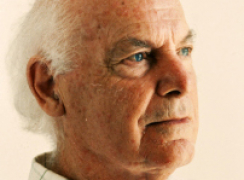
Andrija Puharich

 
A long time ago I remember reading Puharichs interesting book Beyond Telepathy, a copy of which I took from the British Society for Psychical Research. At the time, I found his theoretical ideas about the MCC, or Mobile Center of Conciousness of great interest.
 
There is also an interesting link to an official website on Andrija Puharich
 
 
RS.


From Wikipedia, the free encyclopedia
Jump to: navigation, search
Andrija Puharich
BornFebruary 19, 1918
Chicago, Illinois
DiedJanuary 3, 1995
Dobson, North Carolina
Residence"Devotion" (R. J. Reynolds Family Estate)
OccupationInventor, Scientist, Physician
Andrija Puharich, MD - (born Karel Puharić, February 19, 1918 - January 3, 1995) was a medical and parapsychological researcher, medical inventor and author, who is perhaps best known as the person who brought Israeli Uri Geller and Dutch-born Peter Hurkos (1911-1988) to the United States for scientific investigation.

Contents

 [hide] 

Biography [edit]

Born in Chicago, Illinois, he was the son of poor Yugoslav immigrants. His father had entered the U. S. in 1912 as a stowaway. At home Karel's parents always called him "Andrija," which apparently wasn't his name at birth but just his parents' nickname for him. When Karel, as a young boy, started attending school, his parents enrolled him under the name "Henry Karl Puharich," feeling he would be more easily accepted with that name than with the foreign-sounding name "Karel Puharić."[1] Thereafter he often signed his name as "Henry Karl Puharich." He didn't start using his nickname "Andrija" as his first name until sometime in the later part of his life.
In 1947, Puharich graduated from the Northwestern University School of Medicine. His residency was completed at Permanente Hospital in California, where he specialized in Internal Medicine. Puharich was a U.S. Army officer in the early 1950s. During that time, he was in and out of Edgewood Arsenal Research Laboratories and Camp Detrick, meeting with various high-ranking officers and officials, primarily from the Pentagon, CIA, and Naval Intelligence.[2] The Edgewood Arsenal is currently officially called the Edgewood Area of Aberdeen Proving Ground.
Of his many books, Puharich wrote a supportive biography of Uri Geller, a paranormal case he investigated with the help of Itzhak Bentov, among others. Before that he investigated favorably the Brazilian psychic surgeon Zé Arigó. He met the Dutch psychic Peter Hurkos and brought him to the United States to participate in scientific experiments in parapsychology. He also investigated Mexican psychic surgeon Pachita. He encouraged a rational assessment of people with paranormal faculties and applied scientific methods to investigations of what were their startling and often unpredictable and elusive skills or abilities. One of his books is The Sacred Mushroom, Key to the Door of Eternity, in which he describes his work with psychics, and his own skepticism of them, in some detail.
Two of the most famous of Puharich's over 50 patents were devices that assist hearing - the "Means For Aiding Hearing" U.S. Patent 2,995,633 and "Method And Apparatus For Improving Neural Performance In Human Subjects By Electrotherapy" U.S. Patent 3,563,246". He was also granted a U.S. Patent 4,394,230 in 1983 for a "Method and Apparatus for Splitting Water Molecules." His research included studying the influence of extremely low frequency ELF electromagnetic wave emissions on the mind, and he invented several devices allegedly blocking or converting ELF waves to prevent harm.
Dr Andrija Puharich played himself on Perry Mason, in the episode The Case of the Meddling Medium, in 1961.

Personal life [edit]

While working in Mexico, Puharich married and later divorced the future Baltimore outsider art promoter Rebecca Alban Hoffberger.

References [edit]

  1. ^ http://www.uri-geller.com/books/maverick/maver2.htm - H. G. M. Hermans, Memories of a Maverick (Published by Pi, 3140 AA Maassluis, P. O. Box 11, The Netherlands), Chapter 2 ("Early Life and Adolescent")
  2. ^ A Terrible Mistake: The Murder of Frank Olson and the CIA'S Secret Cold War Experiments by H.P.Albarelli Jr. - pg 53 First Edition 2009 (book)

Bibliography [edit]

  • Effects of Tesla's Life and Electrical Inventions (Essay on Nikola Tesla)
  • The Sacred Mushroom early work of psycho-ethno-botany, connected religion to psychoactive fungi
  • Beyond Telepathy, intro by Ira Einhorn
  • Uri: A Journal of the Mystery of Uri Geller. Anchor Press / Doubleday (1974) ISBN 0-385-00992-5
  • The Iceland Papers, Editor
  • Magnetic Model of Matter.
  • ELF Magnetic Model Of Matter And Mind
  • Origin Of Life
  • Art Of Healing
  • Tesla's Magnifying Transmitter

Patents [edit]

These are but a few of Puharich's patents:
Google Patent Search For Puharich

External links [edit]


Tuesday, 12 February 2013

Peter Hurkos

From Wikipedia, the free encyclopedia


Jump to: navigation, search


Peter Hurkos
Peter Hurkos (born Pieter van der Hurk on 21 May 1911 in Dordrecht, the Netherlands; died 1 June 1988 in Los Angeles, California) was a Dutchman who allegedly manifested extra-sensory perception (ESP) after recovering from a head injury and coma caused by a fall from a ladder when aged 30.[1][2] During World War II, he was a member of the Dutch Resistance and was imprisoned in Buchenwald. With the help of businessman Henry Belk and parapsychologist Andrija Puharich, Hurkos became a popular entertainer known for performing psychic feats before live and television audiences.
Hurkos once described his psychic impressions in this way: "I see pictures in my mind like a television screen. When I touch something, I can then tell what I see."[3]

[edit] Testing and analysis

Hurkos openly stated in a 1960 episode of One Step Beyond, after giving a lecture at MIT to a scientific panel, that he would participate in any scientific experiment under any circumstances.[4][5] However, author and stage magician James Randi contends that Hurkos refused to allow his skill to be tested by scientists except for one session with Dr. Charles Tart of the University of California at Davis. Dr. Tart's tests were negative.
Andrija Puharich, MD, a noted physician and researcher of ESP was so impressed by the stories about Hurkos that he invited Hurkos to the USA in 1956 to study what seemed to be Hurkos’ unique psychic abilities under laboratory conditions. Hurkos was studied at Dr. Puharich’s Glen Cove, Maine, medical research laboratory under what Dr. Puharich considered to be very tightly controlled conditions. The results convinced Dr. Puharich that Hurkos’ psychic abilities were far greater than any he had ever tested (before or thereafter) . . . a remarkable 90% accuracy. After two and one-half years of testing Hurkos, Dr. Puharich said, “I am convinced that Peter Hurkos is the greatest of anyone I have ever tested as a psychic. His abilities are so far reaching that he hasn’t even scratched the surface of what he can do with his abilities and mind."
Hurkos in his later years admitted that his psychic TV Screen was such that he could not control when it came "on" or turned "off." As a result, when it was "off" Hurkos used cold reading techniques to convince his audience of his psychic powers. Sometimes without warning, his psychic TV screen would turn "on" and he would suddenly be able to uncover facts and history about those he was interviewing.
In his early career as a psychic entertainer, Hurkos purported that he employed his psychic powers to discern details of audience members' private lives that he could not otherwise have known. The Skeptical Inquirer published a transcription of such a reading in their fall 1978 issue:
Hurkos: I see an operation.
Subject: [no response]
Hurkos: Long time ago.
Subject: No. We have been lucky.
Hurkos: [somewhat angrily] Think! When you were a little girl. I see worried parents, and doctor, and scurrying about.
Subject: [no response]
Hurkos: [confidently] Long time ago.
Subject: [yielding] I cannot remember for certain. Maybe you are right. I'm not sure.
James Randi analyzed this and other transcripts of Hurkos performances and professed to have identified a number of standard cold reading techniques. For example, Hurkos might begin with something seemingly personal but actually quite common: a surgery. Hurkos would not specify that the subject underwent surgery—it could be any recent surgery of personal relevance to the subject. If this approach failed, Randi maintains, Hurkos would qualify the statement with the phrase "long time ago." At this point, any operation to any family member or friend in the subjects's own life would have been a "hit" and yet would have looked psychic because an operation is thought of as a private matter. Randi adds that the tone in Hurkos's voice was also significant: Hurkos presented himself as confident and knowing and characterized the subject as obstinate.
Other common techniques included guessing numbers of people in families (easy enough if you pick a typical number and allow yourself to add frequent visitors or exclude family members who have moved away from home as needed to match the target, as Hurkos did), including nonsense words in his presentation that could be interpreted by the subject to have any one of many meanings, and guessing on the importance of common names, which could be permutated as needed until he got a hit. (He most commonly used the name "Ann," which would give him a hit with anybody who had a relative or friend or teacher or boss or co-worker named Ann, Anna, Anastasia, etc., at any point in his or her life.)
During the 1970s, Hurkos sold readings for $200 each.[citation needed] His official site claims that he found a crashed plane by looking at an upside-down map for the late General Omar Bradley.[citation needed]

[edit] Refuted claims

Hurkos and his supporters maintained that he was a great psychic detective. By 1969, he cited the successful solution of 27 murder cases in 17 countries. However, in some cases the detectives assigned to these cases countered that Hurkos contributed no information unobtainable from newspapers and, in some cases, that he took no part in the investigations whatsoever. In response to Hurkos's claim that he located the stolen "Stone of Scone," Home Secretary Chuter Ede declared:
The gentleman in question whose activities have been publicized (though not by the police) was among a number of persons authorized to come to Westminster Abbey to examine the scene of the crime. He was not invited by the police, his expenses have not been refunded by the Government, and he did not obtain any result whatsoever.
Hurkos also claimed to have identified the Boston Strangler, and he did in fact travel to Boston and spend time with the police there. However, he was not of help to them. Several days after he concluded his consultation, he was arrested (and eventually convicted) for impersonating a police officer. Hurkos allegedly posed as a police officer in order to gather information that he could later claim to be psychic revelations.
In the case of John Norman Collins, he sometimes claimed the killer was blond and at other times brown-haired so that he could claim victory either way. He made other claims about the killer that were simply wrong. He claimed to have identified Charles Manson to police, but this was not true; Manson was identified by his supporter Susan Atkins to a cellmate while she was in jail for a different crime. In fact, Hurkos had been to the Tate residence to do a "reading," but his guesses, including descriptions of how the "killings erupted during a black magic ritual known as 'goona goona,'" were inaccurate.[6]

[edit] Popularization

Despite refutations, Hurkos remained famous. He has several successful television specials, including:
  • Japan: The Greatest Psychic in The World . . . Peter Hurkos, a six-hour two-part special on TV-TOKYO and NET-TV filmed at Dr. Puharich's lab in Dobson, North Carolina, where Hurkos was specifically tested for this special, and also on location in Japan
  • The Netherlands: Peter Hurkos, a four-part nine-hour special for TROS television, highlighting Hurkos's attempt to use his abilities to help Dutch millionaire Maup Caransa find his former kidnappers[citation needed]
He also appeared three times on The Tonight Show Starring Johnny Carson.[citation needed] His story was told on the television program One Step Beyond as "The Peter Hurkos Story: Parts 1 and 2".[4][5]
Numerous periodicals reported Hurkos's exploits throughout his lifetime: Time, Newsweek, Omni, Life, True, Reader's Digest, Playboy, The National Enquirer, Ladies Home Journal, et al. Hurkos himself published three books: Psychic (Bobbs-Merrill), The Psychic World of Peter Hurkos, (Doubleday), and Peter Hurkos: I Have Many Lives (Doubleday). Various authors have described and examined various details of Hurkos's life and alleged ESP in more than 75 published books.
He also appeared in several motion pictures as himself, including The Amazing World of Psychic Phenomena (Sunn International), Mysterious Monsters (David Wolper), and Now I Lay Me Down to Sleep (Paramount). George Voskovec portrayed Hurkos in The Boston Strangler, the 1968 film adaptation of Gerold Frank's 1966 book of the same name. His life may also have been the basis for the Stephen King novel The Dead Zone.
Hurkos's hobbies included gardening and oil painting. At one time, one of his paintings was on display in New York's Museum of Modern Art.[citation needed] The personal art collection of Ronald Reagan reportedly includes multiple Hurkos paintings, as does the General Omar N. Bradley Museum in Carlisle, Pennsylvania.[citation needed]
At the time of his death, Peter Hurkos resided in Studio City, Los Angeles, California. He failed to predict accurately the date of his own death: Although he prophesied that he would die on 17 November 1961, he did not die until 1 June 1988, at Cedars-Sinai Hospital in West Hollywood, California.

[edit] See also

[edit] References

[edit] Sources

  • Ramsland, Katherine. "Chapter 6: Enter the Psychic." John Norman Collins: The Co-Ed Killer.
  • Randi, James. An Encyclopedia of Claims, Frauds, and Hoaxes of the Occult and Supernatural. St. Martin's Press, 1995.
  • Randi, James. Flim-Flam! Psychics, ESP, Unicorns, and other Delusions. Prometheus Books, 1982: pp. 270–272.

[edit] External links


      Blogger Reference Link  http://www.p2pfoundation.net/Multi-Dimensional_Science

"Scientific Mysticism" of Michael Whiteman

  The previous post gave reference to the book below by an academic. It is similiar but not identical to the ideas of my paradigm known as ...