Showing posts with label ions. Show all posts

Friday, 25 October 2013

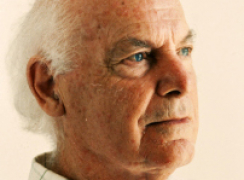
Dean Radin

A noted researcher in parapsychology. RS

Source Reference http://www.deanradin.com/NewWeb/deanradin.html


I thank John Zeuli for taking the above photo in August 2005.


New (June 2013 update): Evidence for psi and Supernormal book.
Ultra Short Bio: Dean, Chief Scientist, IONS.
Very Short Bio: Dean Radin, PhD, is Chief Scientist at the Institute of Noetic Sciences (IONS) and Adjunct Faculty in the Department of Psychology at Sonoma State University. Before joining the research staff at IONS in 2001, he held appointments at AT&T Bell Labs, Princeton University, University of Edinburgh, and SRI International, where he worked on a classified program investigating psychic phenomena for the US government. He is author or coauthor of over 200 technical and popular articles, a dozen book chapters, and three books including the award-winning The Conscious Universe (HarperOne, 1997), Entangled Minds (Simon & Schuster, 2006), and most recently, Supernormal (Random House, 2013).

Short Bio: Dean Radin, PhD, is Chief Scientist at the Institute of Noetic Sciences (IONS) and Adjunct Faculty in the Department of Psychology at Sonoma State University. His original career track as a concert violinist shifted into science after earning a BSEE degree in electrical engineering, magna cum laude with honors in physics, from the University of Massachusetts, Amherst, and then an MS in electrical engineering and a PhD in psychology from the University of Illinois, Urbana-Champaign. For a decade he worked on advanced telecommunications R&D at AT&T Bell Laboratories and GTE Laboratories. For over two decades he has been engaged in consciousness research. Before joining the research staff at IONS in 2001, he held appointments at Princeton University, University of Edinburgh, University of Nevada, and several Silicon Valley think-tanks, including Interval Research Corporation and SRI International, where he worked on a classified program investigating psychic phenomena for the US government.
He is author or coauthor of over 200 technical and popular articles, a dozen book chapters, and several books including the bestselling The Conscious Universe (HarperOne, 1997) and Entangled Minds (Simon & Schuster, 2006). These books have remained in print since they were first published and they've been translated into ten foreign languages. His latest book, Supernormal (Random House, 2013), will be published in July 2013. His technical articles have appeared in journals ranging from Foundations of Physics and Physics Essays to Psychological Bulletin and Journal of Consciousness Studies; he was featured in a New York Times Magazine article; and he has appeared on dozens of television shows ranging from the BBC’s Horizon and PBS's Closer to Truth to Oprah and Larry King Live. He has given over 250 interviews and talks, including invited presentations at Harvard (medical), Stanford (medical and statistics), Cambridge (physics), and Princeton (psychology), for industries including Google and Johnson & Johnson, and for government organizations including the US Navy and DARPA. In 2010, he spent a month lecturing in India as the National Visiting Professor of the Indian Council of Philosophical Research, a program in the Indian government's Ministry of Human Resource Development.
Extended Bio: I was born on February 29th. For my 13th birthday celebration I rented a roller skating rink for an evening, invited all my friends, and we ate hot dogs, cup cakes, and shared a Spiderman-themed birthday cake. I am looking forward to my 21st birthday in 2036, when I can finally buy a beer.
My first career interest, at chronological age 4, was to be "jet propelled." It took many years before I could better articulate what I meant by that, but that's how I responded when adults asked what I wanted to be when I grew up. My next career interest was the classical violin, which I started at age 5 and continued to play for the next 20 years, the last five as a professional. Then I switched to fiddle and 5-string banjo and played in bluegrass bands for a number of years. Between gigs, I pursued other interests and graduated with a degree in electrical engineering, magna cum laude with senior honors in physics, from the University of Massachusetts (Amherst), a masters in electrical engineering focusing on cybernetics and control systems from the University of Illinois, Urbana-Champaign, and then a PhD in psychology, also from UIUC. For my dissertation I developed and tested what may have been the first computer-based, artificial-intelligence enhanced, touch typing training system.
For a decade after my PhD I worked at AT&T Bell Laboratories and later at GTE Laboratories on advanced telecommunications R&D. Projects included designing the human interfaces to network operations centers in the US and Japan, developing a rapid prototyping system for complex human-computer interface designs (before there were personal computers), and studying ways of enhancing brainstorming and creativity in industry. While at Bell Labs, for fun I wrote a series of humorous articles for the science spoof magazine, Journal of Irreproducible Results. One of those articles later almost accidentally started World War III in a way that would have appealed to Stanley Kubrick's Dr. Strangelove.
Throughout my formative years and first jobs, I never forgot my original interest in being jet propelled. Ultimately I understood that what I was trying to express as a child was an overriding fascination about the outer limits of inner space -- the depths and capacities of the human mind. As a pre-teen I read everything I could find on mythology, fairy tales, folklore, eastern philosophy, western psychology, and lots of science fiction. Around age 12, as my interests in science and engineering grew, I started to conduct experiments on hypnosis and psychic (or "psi") phenomena. In hindsight, I think these interests were probably encouraged by growing up in an artistic family and bolstered by practicing the violin one to two hours a day for many years.
While at Bell Labs I started to publish some of my psi experiments. Then I attended the annual conferences of the Parapsychological Association and the Society for Scientific Exploration, and to give presentations at their annual meetings. I was delighted to find groups of scientists who were as interested in these phenomena as I was, and the contacts I made eventually led to my gaining appointments to conduct psi research at Princeton University, University of Edinburgh, University of Nevada, SRI International and Interval Research Corporation. At SRI International I worked on a then secret US government-funded program of psi research. Portions of that program, now known by its last codename, Stargate, have since been declassified and accounts about it (some more accurate than others) can be found in many books. In 2000 I cofounded the Boundary Institute and in 2001 became Chief Scientist at the Institute of Noetic Sciences (IONS). I also hold an adjunct appointment in the Psychology Department at Sonoma State University and have served as a member of the Distinguished Consulting Faculty at Saybrook Graduate School.
I've now spent the majority of my professional career doing what the 4 year old Dean expressed as being jet propelled -- experimentally probing the far reaches of human consciousness, principally psi phenomena. Very few scientists are actively engaged in research on this perennially interesting topic. This is not because of a lack of interest. I've found that most scientists I've spoken to are very interested in psi phenomena, but science, like any social enterprise, has strictly enforced rules of publicly acceptable beliefs, and so it is not safe for one's scientific career to pursue highly controversial topics (that goes for many topics, not just psi). In addition, funding and controversy in science are inversely proportional, so even iconoclasts who don't care much about what other people think are severely resource limited. Perhaps because of my unusual choice of profession, and the risk that that choice entails, I was featured in a New York Times Magazine article in 1996.
My interest in psi was originally motivated out of a child's intuitive sense that the mind is far more mysterious and powerful than we know. Through education and experience I've also come to appreciate that these experiences are also responsible for most of the greatest inventions, artistic and scientific achievements, creative insights, and religious epiphanies throughout history. Understanding this realm of human experience thus offers more than mere academic interest -- it touches upon the very best that the human intellect and spirit have had to offer. I discovered while working on these topics that I enjoy the challenge of exploring the frontiers of science, and that I am comfortable tolerating the ambiguity of not knowing the "right answer," which is a constant companion at the frontier.
After studying these phenomena as a scientist for about 30 years, I've concluded that some psychic abilities are genuine, and as such, there are important aspects of the prevailing scientific worldview that are seriously incomplete. I've also learned that many people who claim to have unfailingly reliable psychic abilities are often delusional or mentally ill, and that there will always be reprehensible con artists who claim to be psychic and charge huge sums for their "services." These two classes of so-called psychics are the targets of celebrated prizes offered by magicians for demonstrations of psychic abilities. Those prizes are safe because the claimed abilities of these people either do not exist at all, or they're much weaker than sincere claimants may wish to believe. There is of course a huge anecdotal literature about psychic abilities, but the evidence that convinced me is the accumulated laboratory performance by people who do not claim to possess special abilities, collected under controlled conditions and published in peer-reviewed scientific journals.
There is ample room for scholarly debate about these topics, and I know a number of informed scientists whom I respect who have reached different conclusions. But I've also learned that those who loudly assert with great confidence that there isn't any scientifically valid evidence for psychic abilities just don't know what they're talking about. In addition, the hysterical rants one finds in various online "skeptical" forums appear to be motivated more by fundamentalist beliefs of the scientistic or religious kind than by a rational assessment of the relevant literature. Regarding religion, I was raised in a Jewish family but religion played no part in my life, and I remain agnostic. I do maintain a daily meditation practice, primarily because the evidence in favor of meditation's health benefits are so strong that I feel it would be foolish to not meditate.
You may contact me via email as dean at noetic dot org, but due to the huge volume of emails I receive, I can't promise to reply.
 
 
Last update April 2013.

Friday, 28 June 2013

Dean Radin


I thank John Zeuli for taking the above photo in August 2005.


New (June 2013 update): Evidence for psi and Supernormal book.
Ultra Short Bio: Dean, Chief Scientist, IONS.
Very Short Bio: Dean Radin, PhD, is Chief Scientist at the Institute of Noetic Sciences (IONS) and Adjunct Faculty in the Department of Psychology at Sonoma State University. Before joining the research staff at IONS in 2001, he held appointments at AT&T Bell Labs, Princeton University, University of Edinburgh, and SRI International, where he worked on a classified program investigating psychic phenomena for the US government. He is author or coauthor of over 200 technical and popular articles, a dozen book chapters, and three books including the award-winning The Conscious Universe (HarperOne, 1997), Entangled Minds (Simon & Schuster, 2006), and most recently, Supernormal (Random House, 2013).
Short Bio: Dean Radin, PhD, is Chief Scientist at the Institute of Noetic Sciences (IONS) and Adjunct Faculty in the Department of Psychology at Sonoma State University. His original career track as a concert violinist shifted into science after earning a BSEE degree in electrical engineering, magna cum laude with honors in physics, from the University of Massachusetts, Amherst, and then an MS in electrical engineering and a PhD in psychology from the University of Illinois, Urbana-Champaign. For a decade he worked on advanced telecommunications R&D at AT&T Bell Laboratories and GTE Laboratories. For over two decades he has been engaged in consciousness research. Before joining the research staff at IONS in 2001, he held appointments at Princeton University, University of Edinburgh, University of Nevada, and several Silicon Valley think-tanks, including Interval Research Corporation and SRI International, where he worked on a classified program investigating psychic phenomena for the US government.
He is author or coauthor of over 200 technical and popular articles, a dozen book chapters, and several books including the bestselling The Conscious Universe (HarperOne, 1997) and Entangled Minds (Simon & Schuster, 2006). These books have remained in print since they were first published and they've been translated into ten foreign languages. His latest book, Supernormal (Random House, 2013), will be published in July 2013. His technical articles have appeared in journals ranging from Foundations of Physics and Physics Essays to Psychological Bulletin and Journal of Consciousness Studies; he was featured in a New York Times Magazine article; and he has appeared on dozens of television shows ranging from the BBC’s Horizon and PBS's Closer to Truth to Oprah and Larry King Live. He has given over 250 interviews and talks, including invited presentations at Harvard (medical), Stanford (medical and statistics), Cambridge (physics), and Princeton (psychology), for industries including Google and Johnson & Johnson, and for government organizations including the US Navy and DARPA. In 2010, he spent a month lecturing in India as the National Visiting Professor of the Indian Council of Philosophical Research, a program in the Indian government's Ministry of Human Resource Development.
Extended Bio: I was born on February 29th. For my 13th birthday celebration I rented a roller skating rink for an evening, invited all my friends, and we ate hot dogs, cup cakes, and shared a Spiderman-themed birthday cake. I am looking forward to my 21st birthday in 2036, when I can finally buy a beer.
My first career interest, at chronological age 4, was to be "jet propelled." It took many years before I could better articulate what I meant by that, but that's how I responded when adults asked what I wanted to be when I grew up. My next career interest was the classical violin, which I started at age 5 and continued to play for the next 20 years, the last five as a professional. Then I switched to fiddle and 5-string banjo and played in bluegrass bands for a number of years. Between gigs, I pursued other interests and graduated with a degree in electrical engineering, magna cum laude with senior honors in physics, from the University of Massachusetts (Amherst), a masters in electrical engineering focusing on cybernetics and control systems from the University of Illinois, Urbana-Champaign, and then a PhD in psychology, also from UIUC. For my dissertation I developed and tested what may have been the first computer-based, artificial-intelligence enhanced, touch typing training system.
For a decade after my PhD I worked at AT&T Bell Laboratories and later at GTE Laboratories on advanced telecommunications R&D. Projects included designing the human interfaces to network operations centers in the US and Japan, developing a rapid prototyping system for complex human-computer interface designs (before there were personal computers), and studying ways of enhancing brainstorming and creativity in industry. While at Bell Labs, for fun I wrote a series of humorous articles for the science spoof magazine, Journal of Irreproducible Results. One of those articles later almost accidentally started World War III in a way that would have appealed to Stanley Kubrick's Dr. Strangelove.
Throughout my formative years and first jobs, I never forgot my original interest in being jet propelled. Ultimately I understood that what I was trying to express as a child was an overriding fascination about the outer limits of inner space -- the depths and capacities of the human mind. As a pre-teen I read everything I could find on mythology, fairy tales, folklore, eastern philosophy, western psychology, and lots of science fiction. Around age 12, as my interests in science and engineering grew, I started to conduct experiments on hypnosis and psychic (or "psi") phenomena. In hindsight, I think these interests were probably encouraged by growing up in an artistic family and bolstered by practicing the violin one to two hours a day for many years.
While at Bell Labs I started to publish some of my psi experiments. Then I attended the annual conferences of the Parapsychological Association and the Society for Scientific Exploration, and to give presentations at their annual meetings. I was delighted to find groups of scientists who were as interested in these phenomena as I was, and the contacts I made eventually led to my gaining appointments to conduct psi research at Princeton University, University of Edinburgh, University of Nevada, SRI International and Interval Research Corporation. At SRI International I worked on a then secret US government-funded program of psi research. Portions of that program, now known by its last codename, Stargate, have since been declassified and accounts about it (some more accurate than others) can be found in many books. In 2000 I cofounded the Boundary Institute and in 2001 became Chief Scientist at the Institute of Noetic Sciences (IONS). I also hold an adjunct appointment in the Psychology Department at Sonoma State University and have served as a member of the Distinguished Consulting Faculty at Saybrook Graduate School.
I've now spent the majority of my professional career doing what the 4 year old Dean expressed as being jet propelled -- experimentally probing the far reaches of human consciousness, principally psi phenomena. Very few scientists are actively engaged in research on this perennially interesting topic. This is not because of a lack of interest. I've found that most scientists I've spoken to are very interested in psi phenomena, but science, like any social enterprise, has strictly enforced rules of publicly acceptable beliefs, and so it is not safe for one's scientific career to pursue highly controversial topics (that goes for many topics, not just psi). In addition, funding and controversy in science are inversely proportional, so even iconoclasts who don't care much about what other people think are severely resource limited. Perhaps because of my unusual choice of profession, and the risk that that choice entails, I was featured in a New York Times Magazine article in 1996.
My interest in psi was originally motivated out of a child's intuitive sense that the mind is far more mysterious and powerful than we know. Through education and experience I've also come to appreciate that these experiences are also responsible for most of the greatest inventions, artistic and scientific achievements, creative insights, and religious epiphanies throughout history. Understanding this realm of human experience thus offers more than mere academic interest -- it touches upon the very best that the human intellect and spirit have had to offer. I discovered while working on these topics that I enjoy the challenge of exploring the frontiers of science, and that I am comfortable tolerating the ambiguity of not knowing the "right answer," which is a constant companion at the frontier.
After studying these phenomena as a scientist for about 30 years, I've concluded that some psychic abilities are genuine, and as such, there are important aspects of the prevailing scientific worldview that are seriously incomplete. I've also learned that many people who claim to have unfailingly reliable psychic abilities are often delusional or mentally ill, and that there will always be reprehensible con artists who claim to be psychic and charge huge sums for their "services." These two classes of so-called psychics are the targets of celebrated prizes offered by magicians for demonstrations of psychic abilities. Those prizes are safe because the claimed abilities of these people either do not exist at all, or they're much weaker than sincere claimants may wish to believe. There is of course a huge anecdotal literature about psychic abilities, but the evidence that convinced me is the accumulated laboratory performance by people who do not claim to possess special abilities, collected under controlled conditions and published in peer-reviewed scientific journals.
There is ample room for scholarly debate about these topics, and I know a number of informed scientists whom I respect who have reached different conclusions. But I've also learned that those who loudly assert with great confidence that there isn't any scientifically valid evidence for psychic abilities just don't know what they're talking about. In addition, the hysterical rants one finds in various online "skeptical" forums appear to be motivated more by fundamentalist beliefs of the scientistic or religious kind than by a rational assessment of the relevant literature. Regarding religion, I was raised in a Jewish family but religion played no part in my life, and I remain agnostic. I do maintain a daily meditation practice, primarily because the evidence in favor of meditation's health benefits are so strong that I feel it would be foolish to not meditate.
You may contact me via email as dean at noetic dot org, but due to the huge volume of emails I receive, I can't promise to reply.


home Conscious Universe Entangled Minds Supernormal Activities Bio
 

Friday, 31 May 2013

Parapsychology, and the TED "Controversy".

May 2013

• News@IONS

• IONS Conference
• Media Store
• Featured Partners   


In recent weeks a public controversy has emerged over scientific research into the nature of consciousness. It involves IONS scientists, as well as some of our colleagues, and may reflect shifting attitudes about frontier research, so we want to share a little about it with you here.

TED, the popular conference organizer with the tag line "ideas worth spreading," recently removed videos of two TEDx talks from their official YouTube channel and then cancelled a TEDx event. The censored talks and cancelled event had a common theme—exploring the possibility that consciousness extends beyond the brain. TED's justification for their actions was that the contributors were promoting "pseudo-science." The videos were talks presented by Rupert Sheldrake and Graham Hancock, and the event presenters included Russell Targ, Larry Dossey, and IONS' Marilyn Schlitz.

TED's actions, based on recommendations from its anonymous "Science Board," kicked off a heated Internet discussion and shed light on how some segments of the scientific mainstream tend to stifle conversation on the nature of consciousness, including the kind of cutting-edge research that IONS conducts. However, the enormous attention this controversy has received, and the discussion it generated, may signal a shift towards more openness to including the possibility of non-local consciousness into scientific dialogues.

"Based on the thousands of comments generated by TED's action, I think it is clear that the majority of TED fans were very upset with TED," said IONS Chief Scientist Dean Radin, "and contrary to TED's complaint that these people were legions of woo-woo fans, many of the commenters explicitly said that they were quite skeptical of this line of research and that their primary concern was about TED's act of censorship, because the scientific process requires open dialog, otherwise it isn't science any more."

Radin is part of a group of scientists, headed by Deepak Chopra, who pushed back hard on TED's recent moves with open letters on the Huffington Post, and in many commentaries published on the web. They argued that the history of science shows that scientific breakthroughs often come from researchers working outside the mainstream, so attempting to censor frontier science runs contrary to the very spirit of scientific exploration. Neil Theise, MD, commented, "Sheldrake and Hancock may be wrong in their ideas, but we do not yet know. Even if they are, the creativity of their work and their insistence on looking at aberrations and exceptions is certainly of value, at least to point the way to the kinds of creative explorations TED hopes to foster."

In response to the massive outpouring of public comments, the videos of Rupert Sheldrake and Graham Hancock were eventually re-posted by TED, but on their lower-profile TED Blog. TED revoked the license for TEDx West Hollywood's planned conference "Brother, Can You Spare a Paradigm?" but that program ultimately went ahead without TED's sponsorship.

It is encouraging to see these issues discussed in a public forum, and to witness the strong support for more open conversation and inclusion. To explore this issue in more depth, you can use the links in the preceding paragraphs, or start here: Dear TED, Is It 'Bad Science' or a 'Game of Thrones'? 


Blogger Reference Link  http://www.p2pfoundation.net/Multi-Dimensional_Science


Monday, 4 February 2013

A Tale of Two Sciences: Memoirs of a Dissident Scientist

  • Book Excerpt

  •  

    The meaning of “science" has changed over the years. The word is derived from the Latin scientia, which has as its primary meaning “knowing“ or “knowledge“ – and so is very broad in scope. However, the definition of “science“ in a current dictionary of the English language (Webster’s) is “knowledge obtained by study and by practice, or a department of systematized knowledge, or a branch of study concerned with observation and facts, especially with the establishment of verifiable general laws, chiefly by induction and hypotheses,“ which is much more restrictive. Science now suggests a very sophisticated and detailed form of knowledge that one learns, typically at a university, over a period of years.
    In the process of becoming professionalized, science has become compartmentalized. It is now organized into many disciplines: physics, chemistry, biology, behavioral science, etc., each with its own subdisciplines. That is all well and good – except that some topics may not fit neatly into these prescribed boxes. There’s the rub. Should one ignore those topics, or should one try to modify the boxes? I advocate the latter. I would like to see a less restrictive, and more flexible, interpretation of the word “science“ – one that will include unconventional topics as well as the conventional ones.
    Malcolm Longair, a distinguished astrophysicist, warns that “it is difficult to be taken very seriously as a scientist if you mix up real science with quasi-scientific pursuits such as parapsychology, UFOs, extrasensory perception, etc.“ (Longair, 1984.) To the orthodox scientific community, “real science“ is “PC“ (politically correct), and topics such as those just mentioned are “non-PC “ (not politically correct). However, my goal [in this book] is to argue that no topic is (or is not) intrinsically “scientific“ – it is the research on the topic that may or may not so qualify.
    The scientific community can, if it wishes, take the “quasi“ out of “quasi-scientific.“ This may be worthwhile, since a professional response to such challenges may pay unforeseen dividends, possibly leading to new scientific techniques applicable to other areas of research or to a new scientific perspective that is broader than our current one. For any such topic, there are three possible outcomes: (a) a consensus that the purported phenomenon has no reality; (b) a conclusion that the phenomenon is real and, on close inspection, is found to be explicable in terms of current scientific theory; or (c) a conclusion that the phenomenon is real, but it is an anomaly in the sense that it does not conform to current scientific theory. Any one of these conclusions (especially the third) would represent an advance in human knowledge.
    The word “anomaly,“ according to Webster, is derived from the Greek an  [meaning “not“] and homalos  [meaning “even“] and signifies a “deviation from the common rule,“ or “something out of keeping, especially with accepted notions of fitness or order.“ In referring to an anomaly in science, we think first of the former, manifestly intellectual, definition – a result in scientific research that does not conform to expectations based on the prevalent theory. However, many readers will be aware that anomalies also have a sociological import;  they may be “out of keeping with accepted notions of fitness or order.“ An anomaly will primarily present an intellectual challenge, but it may secondarily comprise a political challenge, since the advocate of an anomaly is challenging the authority of those advocating the relevant orthodoxy. However, “Many times in the history of human thought, a belief once heretical has become a universally accepted truth“ (Mallone, 1959).
    Anomalies should be the lifeblood of science. Niels Bohr once said that “progress in science is impossible without a paradox,“ and Richard Feynman (1956) has remarked that “the thing that doesn’t fit is the thing that is most interesting.“
    The crucial point to note about anomaly is that it is a relative concept, not an absolute concept. A result is an anomaly only with respect to a given theory or hypothesis. In scientific research, it would typically be an experimental or observational result that is not in accord with current theory. Therein lies its importance: An anomaly provides a test of a theory. As Feynman’s remark implies, it is much more important to search for facts that do not agree with current theory than to find further facts that do agree with that theory. If a certain fact, which is incompatible with a given theory, can be firmly established, then that theory must be modified or abandoned. . . .
    Different anomalies evoke very different responses from the scientific community. I suggest that we distinguish three categories, which we may refer to as “OK Anomalies,“ “Not-OK Anomalies,“ and “Sleeping Anomalies.“
    • An “OK Anomaly“ is one that has been discovered by an established scientist, preferably using expensive equipment, and that appears to be an anomaly that scientists can cope with.
    • A “Not-OK Anomaly“ is one that is not obviously resolvable and presents an unwelcome challenge to established scientists, possibly (but not necessarily) because it has been discovered by a nonscientist.
    • A “Sleeping Anomaly“ is one that has not yet been generally recognized as an anomaly.
    A list of current Not-OK Anomalies would contain many topics that are generally dismissed as bogus by the scientific community [as Malcolm Longair explained above]. Young scientists aspiring to tenure, tread cautiously – and inconspicuously! . . .
    Of course, facing the unknown is nothing new in science, and “to deny the existence of what cannot be explained would leave very little to work with“ (Birch, 1973). Those who think about science do not regard our current scientific knowledge as absolute and immutable. Witness the following remarks:
    Carl Sagan (1973): I would like to return to the question of possible new or alternative laws of physics. [Maybe] there are new laws of nature to be found even under familiar circumstances. I think it is a kind of intellectual chauvinism to assume that all the laws of physics have been discovered by the year of our meeting.
    Vladimir Ginzburg (1973): Science of course never ends. There will always be new laws and clarifications. When we say some law of physics is valid, we always bear in mind that it is true within certain limits of applicability.
    Edgar Mitchell (1993): There are no unnatural or supernatural phenomena, only very large gaps in our knowledge of what is natural . . . We should strive to fill those gaps of ignorance.
    What lies beyond the blue horizon may be just more of our familiar and comfortable terrain, but, on the other hand, it may not. It may be something new. Even so, what may be a new model of reality in the twenty-first century may in turn become the old model of reality in the twenty-second century.

    The preceding was excerpted from A Tale of Two Sciences: Memoirs of a Dissident Scientist (Copyright @2009) by Peter Sturrock, with permission from the author.

    Notes
    M. S. Longhair, Theoretical Concepts in Physics (New York: Cambridge University Press, 1984), p. 23.
    S. H. Mallone, S.H., the article “Heresy” (1959) in Encyclopedia Britannica.
    R. Feynman, The Relation of Science and Religion, Lecture Series on Engineering and Science XIX, June 1956.
    F. Birch, Address on the Award of The Gold Medal of the Royal Astronomical Society (1973), The Observatory 93, 218.
    C. Sagan, Communication with Extraterrestrial Intelligence, ed. C. Sagan (Cambridge, MA: MIT Press, 1975) p. 206.
    V. L. Ginzburg, ibid, p. 208.
    E. Mitchell, Publication of the Institute of Noetic Sciences, November 14, 1993.

    From Issue Three, October 2010   Noetic Now Journal

    A Tale of Two Sciences: Memoirs of a Dissident Scientist
    I would like to see a less restrictive, and more flexible, interpretation of the word "science" – one that will include unconventional topics as well as the conventional ones.

    About the Author
     

    "Scientific Mysticism" of Michael Whiteman

      The previous post gave reference to the book below by an academic. It is similiar but not identical to the ideas of my paradigm known as ...