Showing posts with label astral. Show all posts

Thursday, 18 April 2024

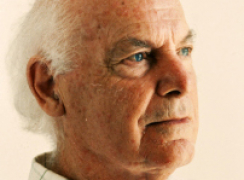
William Buhlman and out-of-body experiences


William Buhlman


AUTHOR OF:

HIGHER SELF NOW! 

ADVENTURES IN THE AFTERLIFE

ADVENTURES BEYOND THE BODY

THE SECRET OF THE SOUL

The author's forty years of extensive personal out-of-body explorations give him a unique and thought provoking insight into this subject. His first book, Adventures beyond the Body chronicles his personal journey of self-discovery through out-of-body travel, and provides the reader with the preparation and techniques that can be used for their own adventure.

He has conducted an international out-of-body experience survey that includes over 16,000 participants from forty-two countries. The provocative results of this survey are presented in his book, The Secret of the Soul. This cutting edge book explores the unique opportunities for personal growth and profound spiritual awakenings that are reported during out-of-body experiences.

His third book is titled Adventures in the Afterlife. William was inspired to explore the afterlife a result of his confrontation with mortality following a cancer diagnosis in 2011. His lucid dreams and out of body experiences during his treatment and recovery provided mind bending visions that were so illuminating that he felt compelled to journal his experience. Insights that are provided in this book will assist the reader to navigate the many thought responsive environments in the afterlife.

William's book, Higher Self Now!, reflects on the actions we can take today to enhance our transition from a physical environment to the non physical world. With his wife, Susan, William wrote this book with the deep desire to help inform readers about the continuing reality of our existence and all that it implies. As a lifelong explorer through self-induced out-of-body experiences and meditation, he has written Part One of this book, which explores our opportunities for spiritual awakening, the multidimensional continuum of consciousness and the journey of soul that continues through our life, death and beyond. As a hospice volunteer and a certified end-of-life doula, Susan has written Part Two, which examines the transition we call death, suggesting a new paradigm for assisting our loved ones—and ourselves—in making the transition experience an effective launch pad for a profound spiritual journey.

Over the past two decades William has developed an effective system to experience safe, self initiated out-of-body adventures. He conducts an in-depth 4 week online workshop titled, Adventures beyond the Body, Mastering the Out-of-Body Experience. This unique workshop provides the steps, intention and techniques designed for controlled out-of-body exploration. Each participant will experience a comprehensive array of proven OBE methods including the target technique, inner motion, visualization, chakra and energy body activation. In addition, hypnotic, shamanic and early morning methods will be practiced.

As a certified hypnotherapist, William incorporates various methods in his workshops to explore the profound nature of out-of-body experiences and the benefits of accelerated personal development. Through lectures, workshops and his books the author teaches the preparation and techniques of astral projection and spiritual exploration.

The author brings a refreshing look to how we can use out-of-body experiences to explore our spiritual identity and enhance our intellectual and physical lives. William is best known for his ability to teach people how to have profound spiritual adventures through the use of out-of-body experiences. In addition, he has developed an extensive series of audio and video programs that are designed to expand awareness and assist in the exploration of consciousness. William has appeared on numerous television and radio shows worldwide. William's books are currently available in ten languages.

Connect

Wednesday, 5 December 2012

Some Links on the Spirit World.

From Wikipedia, the free encyclopedia


Jump to: navigation, search

Spirit world may refer to:

[edit] In religion

[edit] In gaming and media

[edit] See also


Tuesday, 4 December 2012

Who was Robert Crookall?

by Bob Lepak
((lepak@adelphia.net))
Copyright © 1996, Bob Lepak, all rights reserved

Dr. Crookall, a geologist, became a well respected investigator of out of body experiences. He produced numerous manuscripts which were extremely well referenced. In his writings he had a predilection for digressing and, consequently, often repeated himself within individual books. In fact, much of the same information is found in several of his books, however, the approach he utilizes for many of them differs. To the average reader many of his books could be considered a bit on the laborious side but his consistent attention to detail was outstanding.
Often he broke his writings into separate sections that dealt with specific aspects of the out of body experience. Topics found throughout his writings include (1) Testimonies from astral projectors, deathbed observers, clairvoyants, the pseudo-dead (NDE´s ?), mediums and the supposed discarnate, (2) Cooperation between the living and the newly dead, (3) Comparisons with major religious literature, (4) Stages of astral projection, (5) The astral cord, and (6) Various types of nonphysical bodies and realities. He used a number of terms that are vestiges of psychic and astral projection literature from the late 19th and early 20th centuries.
Based on information he collected Crookall deduced the existence of at least four planes or realities. He believed that we each possess a specific body designed to operate best in each of the separate realities. That is, each body interpenetrates the others but has the ability, under proper circumstances, to leave the successively denser bodies behind and journey into the plane that it is best suited for. He referred to these withdrawals by various names such as births, dissociations, sheddings and loosenings. In his hierarchy the densest matter is that which makes up the physical body which obviously operates in the physical world. Next is the more subtle body called the vehicle of vitality, also called the etheric or vital body. Even more subtle is the soul body, also called the emotional or psychical body. At the top of this progression is the spiritual body. This has also been called the divine, cosmic or celestial body.
He believed that the vehicle of vitality was a vital link between the physical body and soul body. According to him this may be the subconscious self and the part that operates in most dreams. The corresponding world for this body he often called Hades, Sheol, Bardo or Greyworld. However, he did not consider this body to be a vehicle of consciousness. He believed that the soul body possessed a super-conscious mind which is responsible for psychic phenomena like telepathy, clairvoyance, telekinesis and other phenomena. He believed the spiritual body was the eternal self or oversoul that was responsible for mystical experiences, transcendence and selflessness. The place of animation for this body is the true heaven.
While the foregoing may seem a bit tedious I would direct your attention to the easiest of his works to digest. For the most part they contain numerous brief anecdotes about individual out of body experiences. Dr. Crookall collected them over many years and often went to great lengths to get follow up information. They are quick to read. The books are :
Astral Projection : A Record of Out of Body Experiences; Casebook for Astral Projection; The Study and Practice of Astral Projection; and More Astral Projections, Analyses of Case Histories. All of them are listed below.
A word about the list of publications that follows. It has been compiled from many sources and is as accurate as I can get it for now. You can see that many books have been reissued. Many are now available from, or at least listed with, various online book companies. The capitalized titles are those I am still looking to obtain. If anyone knows of any other Crookall publications I would greatly appreciate the detailed information, including where you found it and where it may be available. If you find any errors feel free to let me know. Also, if you have any biographical information it would be welcome. Please email me if you want.


PUBLICATIONS BY ROBERT CROOKALL
Crookall, Robert, Casebook for Astral Projection, 545-746, Citadel Press, 1972, Reprints 1980 (ISBN : 0806560061) and 1986 (ISBN : 0806507306).
Crookall, Robert, DREAMS OF HIGH SIGNIFICANCE, Darshana International, Moradabad, India, 1974.
Crookall, Robert, During Sleep - The Possibility of Co-operation Between the Living and the Dead, Theosophical Publishing House, London, 1964 (ISBN : 0821601709).
Crookall, Robert, ECSTACY : THE RELEASE OF THE SOUL FROM THE BODY, Darshana International, Moradabad, India, 1973.
Crookall, Robert, Events on the Threshold of the Afterlife, Clues as to the Greatest of All Enigmas, Darshana International, Moradabad, India, 1967.
Crookall, Robert, EXPERIENCES ON THE THRESHOLD OF THE AFTER LIFE, Darshana, International, Moradabad, India, 1969.
Crookall, Robert, Intimations of Imortality, James Clark, London, 1965.
Crookall, Robert, LIFE, CHEAT OR A SACRED BURDEN ?, Darshan a International, Moradabad, India, 1976.
Crookall, Robert, MORE ASTRAL PROJECTIONS, ANALYSES OF CASE HISTORIES, Aquarian Press, London, 1964.
Crookall, Robert, Out of the Body Experiences, A Fourth Analysis of the Mystic Arts, Citadel Press, 1970, Reprint 1986, 1992 (ISBN : 0806513837).
Crookall, Robert, OUT-OF THE BODY EXPERIENCES AND SURVIVAL, Churches Fellowship for Psychical and Spiritual Studies, London, 1969.
Crookall, Robert, OUT-OF-THE-BODY EXPERIENCES AND SURVIVAL, In : Pearce-Higgins, JD and Whitby, GS (Editors), Life, Death and Psychical Research, pages 66-68, Rider, London, 1973 (ISBN : 009115809), Samuel Weiser (ISBN : 0091158117).
Crookall, Robert, Psychic Breathing, Cosmic Vitality from the Air, Newcastle Publishing Company, 1979, Reprints 1981, 1985 (ISBN : 0878770801), Borgo Press, 1985 (ISBN : 0893706809).
Crookall, Robert, The Interpretation of Cosmic and Mystical Experiences, James Clark, London, 1969 (ISBN : 0227677293).
Crookall, Robert, THE JUNG-JAFFE VIEW OF OUT-OF-THE-BODY EXPERIENCES, World Fellowship Press, 1970 (ISBN : 0902742000).
Crookall, Robert, THE MECHANISMS OF ASTRAL PROJECTION, Darshana International, Moradabad, India, 1968.
Crookall, Robert, The Next World - and the Next, Ghostly Garments, Theosophical Publishing House, London, 1966.
Crookall, Robert, The Study and Practice of Astral Projection, Citadel Press, 1960, Reprint 1988, Lyle Stuart 1977, (ISBN : 0806505478).
Crookall, Robert, The Supreme Adventure, The Analyses of Psychic Communication, James Clark, London, 1961, Reprint 1975.
Crookall, Robert, The Supreme Adventure, The Analyses of Psychic Communication, Lutterworth Press, Reprint 1987.
Crookall, Robert, The Techniques of Astral Projection, Denouement After Fifty Years, Aquarian Press, London, 1964.
Crookall, Robert, WHAT HAPPENS WHEN YOU DIE ?, Gerrards Cross, England : Smythe, 1968 (ISBN : 0900675845).


Bob Lepak, March 10, 1996
((lepak@adelphia.net))
Copyright © 1996, Bob Lepak, all rights reserved
>>> Ring-Tor (Engl.)<<<
Ring-Tor (German main index)

Wednesday, 31 October 2012

Seven Planes....


Lessons in Theosophy


Lesson 7, Planes of Existence
(Physical, Astral, etc.)


      Theosophy teaches that there are different planes of reality in the universe, such as the physical plane, the astral plane, etc. There are a total of seven planes of existence.

      The seven planes of existence, from the highest to the lowest, are:
  • Adi Plane
  • Anupadaka Plane
  • Atman Plane
  • Buddhic Plane
  • Mental Plane
  • Astral Plane
  • Physical Plane
      Various — and sometimes confusing — naming systems are used in Theosophical literature. Here is a chart.


      The first naming system (Adi, Anupadaka, etc.) in the first vertical column is from Sanskrit. The second naming system (Mahaparanirvana, etc.) is from Buddhism. The third system (Divine, Spiritual, etc.) was devised early in the 1900's by Theosophical writers, to be more easily used and understood by English speakers. These Lessons In Theosophy will use the names in the first column. (The name Nirvana is retained, and used along with Atma, as the word Nirvana is more well-known in the Western world.)

      There are seven Planes, each with seven sub-planes, making for a total of 49 sub-planes. Note that the very bottom sub-plane is that of the solid objects in our universe, the next highest is the sub-plane of liquid objects, and the next highest is the sub-plane of gaseous objects.


---

      A human being is considered to have parts of their total being existing on different planes simultaneously. For example, It is understood that people live in physical bodies, yet their emotions are said to exist on the astral plane, and their mental abilities are said to exist on the mental plane. The different aspects all exist simultaneously, each only a part of the total being that is a human.

      Other aspects of a human being are called the Monad, Atma, Buddhi, the Manas, etc., each on a different Plane of Existence. The aspects will be explained in detail in Lesson 11.

      Here is a chart showing the triple-aspects of both the Logos, and a human being, taken from the book Man Visible and Invisible.


      See also the charts The First Principles of Theosophy, page 166,page 200, and page 305.

      The triangles in the diagram may be confusing. The upper triangle, the manifestations of the Logos, will be explained in Lesson 19.

-- The Adi Plane --

      The Adi Plane is the first plane. It is the plane where the 
Logos resides.


-- The Anupadaka Plane --

      The Anupadaka Plane is the second plane. It is the plane where the seven 
Dhyani-Chohan reside. The Anupadaka plane of existence is also where a person’s Monad resides.

      The Anupadaka Plane is also know as Parinirvana. (see 
chart)


~~~


      The Adi and Anupadaka Planes are such high levels of consciousness, it has been said that the human mind cannot comprehend what existence these Planes must be like.
      [The Adi Plane and the Anupadaka Plane] “...will not be touched by the majority of mankind in this evolution at all — two planes which are mere names for us, names conveying no definite meaning, so high are those spheres beyond our loftiest imaginings. These are that which is spoken of as Paranirvana [Anupadaka] and that which is still higher, Mahaparanirvana [Adi]. What these states are we cannot even dream. [There are] seven stages of the Cosmos. Humanity as a majority is to conquer and occupy five of them, and some of humanity’s children will reach to the yet higher that remain; but for the bulk of our race its evolution is within the five-fold universe [the five planes below Adi and Anupadaka].” (Annie Besant,The Path of Discipleship, paragraph 86 online or page 118 hardcopy)


-- The Atma (Nirvana) Plane --

      The Atma Plane is the third plane. It is where our 
Atma resides. Life on the Nirvanic Plane is described in Lesson 5.

      The chart on The First Principles of Theosophy, page 305, describes the Atma Plane as the location of a human’s spirit.


-- The Buddhi Plane --

      The Buddhi Plane is the fourth plane. It is where our Buddhi Principle resides.

      [The Buddhic Plane is a “place”] “...which man shall occupy ere the Manvantara closes, that region which is now open to the waking consciousness only in the last stage of discipleship that I spoke to you about yesterday; into this the Seventh Race of men shall climb and this shall occupy. In that extended consciousness there is no separation that divides man from man; each knows himself to be one with others; feels as they feel, thinks as they think, knows as they know - a consciousness that stretches out to embrace myriads; and then the brotherhood of man becomes an accomplished fact. There the essence of things is seen, and not only the appearances; there realities are seen, and not only phenomena. The one Self is recognised that lives in all; hatred is for evermore impossible to the man who knows.” (Annie Besant, The Path of Discipleship, paragraph 112 online or pages 148-149 hardcopy)
      The chart on The First Principles of Theosophy, page 305, describes the Buddhi Plane as the location of a human’s intuition.


-- The Mental Plane --


      The Mental Plane is the fifth highest (or third lowest) plane. It is further divided into the Upper Mental Plane and the Lower Mental Plane. The Upper Mental Plane is where our causal body resides.

      The Mental Plane is divided into seven sub-planes. The upper three sub-planes of the Mental Plane are distinguished from the lower four sub-planes, and is called the “Higher Mental Plane,” or “Higher Manas.” The “Lower Mental Plane,” also called “Lower Manas,” is often referred to as “Devachan” in Theosophical literature.

      Note that the term “Lower Mental Body” is not used. It is simply called the “Mental Body” (an aspect of a human being at this level).

      The chart on The First Principles of Theosophy, page 305, describes the Upper Mental Plane as the location of a human’s abstract thoughts, and the Lower Mental Plane as the location of a human’s concrete thoughts.

      When a person dies, they become fully conscious in the astral body. After a certain time, the astral body disintegrates, and the person then becomes conscious on the mental plane. (C. Jinarajadasa, First Principles of Theosophy, pages 139-140 online or hardcopy)

      The mental plane is also called Heaven. The phrase “Seventh Heaven” in English refers to the seventh and highest sub-plane of the mental plane.

      C. Jinarajadasa writes;
      “The seven sub-planes of the heaven world [the Mental Plane] form two great divisions; the three higher sub-planes make the higher heaven, and the four lower sub-planes make the lower heaven. The lower heaven world is also known as ‘Devachan’, the abode of Bliss, or the place of intense joy because in its four lower sub-divisions are found souls after death in conditions of happiness described in the various religions as ‘Heaven’. Here too are found those animals who, before death, became ‘individualized’, and attained to the stature of a human soul. On the lowest sub-plane live those men and women and children in whom affection predominated in the character when on earth (however limited may have been its manifestation, owing to adverse circumstances), and they dwell in bliss for centuries in happy communion with those to love whom was the highest possible heaven of earthly dreams. On the next higher sub-plane are those who added to affection a devotion to some definite religious ideal; on the sub-plane above, the men and women who delighted to express their dreams of love and devotion in philanthropic action; on the fourth sub-plane are those who, with all these beautiful attributes, added philosophic, artistic or scientific interests to their soul's manifestations when on earth.

      “In the three higher sub-planes, in the higher heaven, ever live all the souls who compose our humanity. Here each lives as the ‘individuality’, as the totality of capacity and consciousness evolved throughout the long course of evolution. From here, as the individuality, each soul descends into incarnation, putting forth only a part of himself as the ‘personality’, to experiment with life on lower planes.
(1) On the highest sub-plane live the Adepts and their higher pupils;

(2) on that next below, the souls whose higher evolution is attested by their inborn culture and natural refinement when in earthly bodies;

(3) and on the third sub-plane are the vast majority of the 60,000 millions of souls who form the mass of our, as yet, backward humanity.” (C. Jinarajadasa, First Principles of Theosophy, page 141 online or hardcopy)
      Here on the Physical Plane, we exchange ideas by having discussions through the use of language. This does not happen on the Mental Plane. Rather, thoughts are thrown like lightning bolts. Whole concepts, such as entire musical symphonies are transferred from person to person in an instant.
      “In the mental world one formulates a thought and it is instantly transmitted to the mind of another without any expression in the form of words. Therefore on that plane language does not matter in the least; but helpers working in the astral world, who have not yet the power to use the mental vehicle, must depend on ... [formulating] the thought in words.” (Charles Leadbeater, The Inner Life, page 264online or hardcopy)
      Imagine, if you will, attending a lecture on the Mental Plane.
      “If in those far-off days [from now, when we become conscious on the Mental Plane,] there should be an orator and an audience, how different then would be the; oratory and how different would be the effect on the people. Instead of their hearing words, articulate sounds that reach the ears, and convey so imperfectly and inadequately but a small portion of the thought, they would see thought as it really is; thought springing out before their eyes radiant in color, beautiful in sound, exquisite in shape, and they would be spoken to as it were in music, they would be spoken to in color and in form, until the whole hall would be full of perfect music and perfect colour and perfect shapes. For that is the oratory of the future when men have conquered that higher plane of conscious­ness and of life. Do you think I dream? I tell you there are those today who can go to that plane of consciousness and know it and feel it and see it, who are behind the veils that blind the majority and shut out from their view the wider possibilities of life.” (Annie Besant, The Path of Discipleship, paragraph 110 online or page 146 hardcopy)
      The activites on the Mental Plane have a strong impact on our lives here on the Physcial Plane.
      "All the greatest intellectual thoughts come from [the Mental Plane down to us] through the astral. The mightiest mental agencies for helping man in the physical world today are being sent down from the [Mental] region by those who are able to function there. The disciples of the Masters are there in waking consciousness, working for the helping of man, working, for the raising of humanity; and every one who has passed those great portals of Initiation, about which ... I spoke to you, lives in that region working there for the helping of man. The disciple may work in the physical world; but he works far more in the higher and more effective region. There his greatest activities are carried on; there his furthest-reaching services are rendered. And when the majority of men rise to that region, how numerous will be the workers, how vast the congregation of the helpers! Only a few hundreds are functioning there today for the helping of the millions of mankind, and the work is imperfectly done because of the small number of the workers. But when the bulk of humanity rises there how swift will be the growth out of the lower stages in men. Mankind will be elevated with a speed that we can scarcely imagine today." (Annie Besant, The Path of Discipleship, paragraph 111 online or pages 147-148 hardcopy)
For further reading on the Mental Plane:

-- The Astral Plane --


      The Astral Plane is the sixth highest (or second lowest) plane. It is the plane where each of our Astral Bodies reside. The chart on The First Principles of Theosophy, page 305, describes the Astral Plane as the location of a human's emotions and impulses.

George Arundale wrote;
      “In the astral world exist temporarily all those physical entities, men and animals, for whom sleep involves a separation of the physical body for a time from the higher bodies. While we "sleep", we live in our astral bodies, either fully conscious and active, or partly conscious and semi-dormant, as the case may be, according to our evolutionary growth; when we "wake", the physical and the higher bodies are interlocked again, and we cease to be inhabitants of the astral world.” (C. Jinarajadasa, First Principles of Theosophy, pages 139-140 online or hardcopy)
      When a person dies, they become fully conscious in the astral body, and “live” on the astral plane, until they move on to a higher plane. Charles Leadbeater calls the Astral Plane
      “... the state into which man enters immediately after death — the Hades or under-world of the Greeks, the purgatory or intermediate state of Christianity....” (Charles Leadbeater, (The Astral Plane, It's Scenery, Inhabitants and Phenomena, Paragraph 1)
      The Astral Plane is where our auras, or astral bodies reside. Our auras have specific colors, which have specific meanings.
      “... we must familiarize ourselves with the general meaning of the various shades of color in ... [our auras, our astral bodies].” (Charles Leadbeater, Man Visible and Invisible,paragraph 131 online or hardcopy)

      “...round every man there is visible to the trained eye ... what is called an aura, which shows the development of the mind, the nature of the character, which gives definite information as to the stage of advancement reached by the soul that dwells in that body, and as to the characteristics and attributes of that soul. Every one of you bears around him this record of his own state, the clearly seen evidence of the stage that he occupies in evolu­tion; round each one of you there is this atmos­phere that shows your thoughts, that shows your character, that is as legible to the trained eye as are the physical features to the physical eye, and is far more instructive as regards the character of the man.” (Annie Besant, The Path of Discipleship, paragraph 105 online orpages 138-139 hardcopy)
      The auras of children are of special interest. Here is some information on the auras of ahildren, and how we should act while raising our children.
      “...when a young child comes into the world and passes through the early stages of its growth, there is this peculiarity about its aura: it brings with it the karmic outcomes of its past, but a large number of the mental and moral tendencies that it brings over from the past are present in it in germ and not in full fructification. If you take the aura of a young child it is comparatively clean; its colours are pure and transparent, not dense and muddy and thick as they are in grown-up men and women; within that aura lie the germs of tendencies which may be developed. Some are good and some are evil. The trained eye, distinguishing these characteristics, might cultivate the good and starve out the evil by bringing suitable influences to bear on the child. If you want a healthy plant from a seed, you must take it and put it into good soil, and you must water it and let the sunshine play on it. All the essentials of the plant are in the seed, but all the plant is not yet in manifestation, and according to the soil that you give it, the care you take of it, the air that plays upon it, the sunshine that warms it - according to these will be the greater or the less development of the seed; it may be made to grow into great beauty or it may be stunted and dwarfed in its growth. So it is to a great extent with the little child. A child is born; it has in it the germ, say, of anger, of hot and passionate temper. Suppose that those around it are endowed with know­ledge and wisdom, they will know how to deal with it. It should never be allowed to hear an angry word, it should never be allowed to see a passionate action. Every one around it should be gentle and loving and self-controlled; and there should never be sent to the germ that is within the child the stimulating force of the anger of older people that is like a force to make it grow more rapidly, to intensify it and force it to fructification. You should take care that round the children there should be influences that will stimu­late all that is good, all that is noble, and all that is pure. And if you did that for every child humanity would go forward at a racing speed, whereas it goes forward with the gait of a cripple at the present time.” (Annie Besant, The Path of Discipleship, paragraph 105 online or pages 139-140 hardcopy)
      When we achieve the ability to see auras, all aspects of our life will be affected. Here are two small examples, the punishing of criminals and the killing of animals. (Other examples are to be found in the book.)
      “We shall not punish our criminals but cure them; we shall not slay them but educate them. We shall be able to see the very point at which help is needed; and there will be wisdom to reform instead of anger to punish. Not only will society change by thus working on the very natures of men, but the entire outside world will also change its appearance; all the animal world will come under the moulding power of man. He will no longer be a tyrant and oppressor as he is now; but he will be a helper and educator and teacher of the lower animal world. He will do what he was meant to do - be the helper and the trainer of the brute, and not its ill-user and its oppressor, as he so largely is today. I need not say that forms of cruelty will gradually fade away; no longer will animal blood stain the earth as it stains it so deeply now; no longer will animals fly from man with dread and horror, knowing him as enemy instead of recognising him as friend; for we shall be passing onwards towards a golden age when all living things shall love instead of hate.” (Annie Besant, The Path of Discipleship, paragraph 109 online or pages 145-146 hardcopy)
      The astral plane consists of seven sub-planes. There, people gravitate to, and spend time on the sub-plane that corresponds to their level of spiritual advancement. These sub-planes very from the Lowest, Hell, to the highest, “Astral Heaven”.
      “Numbering these subdivisions from the highest and least material downwards, we find that they naturally fall into three classes, divisions 1, 2, and 3 forming one such class, and 4, 5, and 6 another, while the seventh and lowest of all stands alone. The difference between the matter of one of these classes and the next would be commensurable with that between a solid and a liquid, while the difference between the matter of the subdivisions of a class would rather resemble that between two kinds of solid, such as, say, steel and sand. Putting aside for the moment the seventh, we may say that divisions 4, 5, and 6 of the astral plane have for their background the physical world in which we live, and all its familiar accessories. Life on the sixth division is simply like our ordinary life on this earth, minus the physical body and its necessities....” (Charles Leadbeater, Man Visible and Invisible, paragraph 16 online or hardcopy)
      Leadbeater continues, writing about traveling from one astral plane to another. This refers to the experience after death, when we spend time on one plane, burn off the astral atoms that belong to that plane, which allows us to become conscious on the next higher astral plane. The process ends when we burn off astral atoms at the lower levels, allowing us to become conscious on the highest astral plane.
      “ ... while as [our post-death astral body] ascends through the fifth and fourth divisions it becomes less and less material, and is more and more withdrawn from our lower world and its interests.” (Charles Leadbeater, Man Visible and Invisible,paragraph 16 online or hardcopy)
There is no fatigue on the astral plane.
      “So far as we are at present aware the astral body does not appear to be susceptible to fatigue. The ordinary man while possessing a physical body naturally never has the opportunity of working for any length of time consecutively upon the astral plane, for his nights of astral work alternate with days of physical work. I knew, however, of one case of a man who, having the right to take a rapid reincarnation, had to wait upon the astral plane twenty-five years for the special conditions which he required. He spent the whole of this time in working for the help of others, without any intermission except the occasional attendance at classes held by pupils of our Masters; and he assured me that he had never felt the slightest sense of fatigue — that in fact he had forgotten what it meant to be tired.

      “We all know that excessive or long-continued emotion tires us very quickly in ordinary life, and since emotion is an expression of the astral, that may perhaps lead some to suppose that fatigue of the astral body is possible. I think, however, that it will be found that what is subject to fatigue is merely the physical organism through which everything in us which manifests on this plane must pass. What we call mental fatigue is a parallel case. There is no such thing as fatigue in the mind; what we call by that name is only fatigue of the physical brain through which that mind has to express itself.” (Charles Leadbeater, The Inner Life, page 175 online orhardcopy)
      Our thoughts are actual objects, thought-forms that exist on the astral plane. Thinking bad thoughts and sending bad thought-forms can cause trouble.
      “...every one of you who generates an impure or revengeful or angry or sordid thought, sends out that thought into the world of society as a living force, as an active entity, which plays upon society, which is taken in by the weakest, by the most receptive, by the least developed, so that out of those thoughts of so-called respectable men there are scattered the seeds of crime through the lower masses of the people, and the sins of these which show out in actions belong very largely to the Karma of those whose thoughts have given them birth. That is not known as widely as it should be known. It is not believed as it should be believed. Every man who feels revenge sends out into the astral world a power for destruction; and when some weak creature comes along with a bad Karma behind him, and bad circumstances surrounding him, with impulses which are not under his control and passions which are stronger than his mind, these evil thoughts come down upon him, all these angry thoughts from men living in respectable conditions in society, and if he be stimulated by some wrong, maddened by some injury, these impel him to strike a blow which we call murder; though he holds the knife in his physical hand, the blow is largely struck by the thoughts of many men whose revengeful feelings are of the essence of murder, although they appear not in outward form. You will not get rid of crimes in the lower strata of society until you purify the thoughts of the higher classes, of those who are educated and can understand the nature of things. And when all this is seen and known, when the astral world lies open to men’s vision, there will be a new force available to help and to raise mankind; for men will no longer disbelieve in the power of thought, they will then appreciate their responsibility for the thoughts they generate, and will send out loving and helping influences instead of the degrading influences that go out so often today.” (Annie Besant, The Path of Discipleship,paragraph 104 online or pages 136-137 hardcopy)

~~~


For further reading on the Astral Plane:


-- The Physical Plane --

      The Physical Plane is the seventh plane. It is the plane where our physical bodies reside.


-- In Conclusion: The Seven Planes --

      Each of the seven Planes of Existence has its own attributes, and each Plane impacts upon humans in its own way. A solid foundation in understanding the different Planes is key to understanding more advanced Theosophical concepts. It is hoped that the reader will click on the links in the chart of any terms that need further explanation.

      C. Jinarajadasa, in his book First Principles of Theosophy, explains in detail the seven Planes of Existence. The book's fifth chapter, “The Invisble Worlds” (Jinarajadas's name for the Planes) offers an in-depth explanation:

The same book has a chart of the seven Planes on page 200:
      C. W. Leadbeater, in his book “Man Visible and Invisible”, talks about the seven Planes in Chapter II, “The Planes of Nature,” Plate II, “Planes of Nature,” and Plate IV, “Involution and Evolution”.
Next: Lesson 8, The Reincarnation Cycle
http://users.ez2.net/nick29/theosophy/lessons07.htm
REF LINK 

"Scientific Mysticism" of Michael Whiteman

  The previous post gave reference to the book below by an academic. It is similiar but not identical to the ideas of my paradigm known as ...