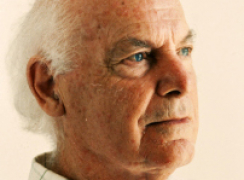
Rudolf Steiner
Translation: Frank Thomas Smith
This is the first of three lectures given in the Berlin branch of the Theosophical Society on May 26, 1904. Rudolf Steiner was the general secretary of the German Theosophical Society until he broke with the Theosophists in 1913 and formed the Anthroposophical Society. This lecture was published in German by the Rudolf Steiner Verlag, Dornach, Switzerland, in 2001. This is the only English translation to my knowledge. Tr.The lecture cycle on the basic elements of Theosophy that I recently announced will have to be given later at a more appropriate time. I have postponed those lectures and decided for now to dedicate Thursdays to the subject of cosmology, the evolution of the world, that is, the teaching about the inception of the world and the shaping of the human being within this world in a theosophical sense.I am aware that this involves the most difficult chapter of theosophical teaching, and I can inform you that several of our branches have decided not to even touch upon this chapter because it is too difficult. Nevertheless, I have decided to do so, because I believe that the indications I am able to give may be useful to many of you. Even though we cannot cover the subject completely at once, we can nevertheless receive indications that will serve to allow us to penetrate more deeply into the material later.Those of you who have been involved in the theosophical movement for a long time will know that these questions – How did the world begin? How did it evolve to the point were human beings can inhabit it? – are the first ones taken up in the theosophical movement. Not only one of the first books that brought the attention of the west to the ancient world view, “Isis Unveiled” by H. P. Blavatsky, treated the questions about the beginning and evolution of the world, but also the book to which we owe the majority of our oldest followers, “Esoteric Buddhism”, by Sinnet. How does a solar system form? How did the planets and the star groups come into existence? How did our Earth develop? What stages did it go through and which ones still stand before it? These questions are dealt with in depth in “Esoteric Buddhism”. Then at the end of the 1880s Blavatsky’s “The Secret Doctrine” appeared, and in the first volume it deals with the question: How did the world system evolve? – and in the second volume: How did the human race evolve on Earth?I only need to point to one thing in order to show the difficulties involved. When you open the first volume of Blavatsky’s “Secret Doctrine”, you find that certain assertions in Sinnet’s “Buddhism” are described as erroneous and are partially corrected. The theosophical writers misunderstood some of these things and some of them were incorrectly described. Therefore Mrs. Blavatsky corrected them. She said that a kind of Babylonian speech confusion occurred and that the leading personalities [of the Theosophical Society] were not really knowledgeable concerning these questions. You all know that exalted masters who are far beyond our average development imparted the teachings in “The Secret Doctrine”. Already before the “Secret Doctrine” a book appeared in which Sinnet, the author of “Esoteric Buddhism”, published a series of letters from a Mahatma. We see from this the difficulties in understanding this secret doctrine, and we understand how Sinnet and Blavatsky, so diligent in receiving this teaching, were downright desperate at the difficulty in understanding it. "Oh", one of the teachers said, "you are accustomed to grasp things with a different intellect and so cannot understand what we have to say even though you make a great effort to do so". If we consider this statement, the difficulty becomes apparent. Misunderstandings arise everywhere that cosmology is taught. Having explained all that, I ask your indulgence if I now try to contribute something about this teaching.I would like to begin by clarifying the position of theosophical cosmology in relation to modern science and its methods. Some could say: look at the advances our astronomers have made; we can attribute that to the telescopes, the mathematical and photographic methods that have given us knowledge of distant stars. Present day science with its thorough methods seems – in their opinion – to be the only reliable source of knowledge about the evolution of the world system. They feel they have the right to ridicule whatever is said from the other side concerning this subject. Many an astronomer will object: What you theosophists tell us about astronomy is ancient wisdom that the Chaldeans or Veden priests taught and that belongs to the oldest stores of wisdom that humanity possesses; but what meaning can what was said thousands of years ago have when it is only since Copernicus that astronomy has acquired a relatively firm basis. Therefore, what Blavatsky says in “The Secret Doctrine” seems only to contradict what our telescopes and so forth make clear to us astronomers. But the theosophist does not need to contradict what the astronomer claims. It isn’t necessary, although there are theosophists who think they must fight against present day astronomy in order to make room for their own teaching. I know very well that the leaders of the theosophical movement think they can instruct astronomers. I would like to illustrate the theosophists’ [correct] attitude in respect to astronomers with one simple example.Take a poet whose work gives us pleasure. This poet may find a biographer who will try to explain the inner spiritual aspects of the poet’s being. There is, however, another possibility – the physiological, the scientific way. Let’s say that a natural scientist studies the poet. He will only take into consideration the poet’s physiological and physiognomic characteristics; he studies him from the natural scientific point of view, and will tell us what he can see and combine with a natural scientific understanding. We as theosophists would say that this investigator describes the poet from the standpoint of the physical plane. He won’t say a word about what we call the poet’s biography – the soul-spiritual aspect. So we would have two coexisting ways of describing the poet, which do not need to contradict each other at all. Why shouldn’t the natural scientific and the soul-spiritual coexist and each be relevant in its own way? One doesn’t have to contradict the other.It is the same with natural scientific cosmology, with what our astronomers tell us about the structure of the world and the evolution of the world system. They will say what their physical senses reveal to them. Alongside this, however, the soul-spiritual way of looking at things is possible, and when we look at it this way, we will never collide with astronomy; on the contrary, both ways of thinking will sometimes support each other. When, for example, scientific brain physiology was far less advanced than it is now, there were authors who wrote biographies of important people. The astronomer cannot therefore object that that the esoteric way of thinking is antiquated and impossible just because Copernicus gave astronomy a new basis. The esoteric sources are completely different; they existed long before the eye learned to observe the heavens through telescopes and before the stars could be photographed. Copernican and esoteric research have quite different things to say; and the force of the one in the human soul is not dependent on the other. The force that gives us information about the soul-spiritual aspects goes so far back that no historian can tell us when this way of describing the world structure began. It is not possible to discover how the spiritual leaders came upon these esoteric views.Esoteric schools existed in Europe before the founding of the Theosophical Society in 1875. The knowledge was only disseminated in small circles, however. A strict rule stated that the knowledge was not to pass beyond the walls of the schools. If someone wanted to enter a school, he had to work hard on himself before the first truths were communicated to him. It was held that a person had to make himself ready before receiving these truths. There were many degrees in the schools through which one had to pass – trial grades; and whoever was considered not ready had to prepare himself further. If I described those degrees to you, the strictness of the trials would make you dizzy. The things about the evolution of the world were considered to be the most important and were communicated only to those who had reached the highest degrees. During the 17th century, which had a great influence on culture, this knowledge was in the hands of the Rosenkreuz (Rose Cross) movement, which was originally based on oriental knowledge, and this knowledge was passed on to the European adepts in the various degrees. At the end of the 18th century and especially at the beginning of the 19th century, these esoteric schools disappeared from the European cultural scene and the last Rosenkreuz adepts withdrew to the Orient. It was the era in which men were to organize life according to external knowledge; the invention of the steam engine, scientific research into cell biology and so on came about. Esoteric wisdom had nothing to contribute then and those who had reached the highest points of this wisdom, the highest grades, withdrew to the Orient. Although there were esoteric schools later on, they do not interest us much now; but I must mention them because Mrs. Blavatsky and Mr. Sinnet, when they received cosmological knowledge from the Tibet-Buddhist esoteric schools, went to the basic sources.A long spiritual development in Europe had brought the European brain, the European thinking ability, to such a point that difficulties arose for the understanding of esoteric truths. These truths were understood only through great exertion. When this knowledge was first made public partly by “Esoteric Buddhism”, partly by “The Secret Doctrine”, the followers of the esoteric schools took notice, and it seemed to them a mistake that the strict rule not to let anything go beyond the walls of the schools had been broken. The followers of the theosophical movement knew, however, that it was necessary to make some of these things known. Western science could not accept what they said because no one was able to prove what Mrs. Blavatsky and Sinnet had written. Especially puzzling was the beautiful cosmological song that comes from the so-called Dzyan verses1, which introduce both volumes of Madame Blavatsky’s book. The authenticity of these verses, which relate the history of the universe, was challenged; no scientific investigator could make anything of them; it all seemed a slap in the face of everything European scholars knew. There was one researcher, an orientalist named Max Müller2, whom I greatly respect, who energetically stood up for oriental wisdom. Everything he was able to learn about oriental wisdom he made available to Europe. But neither Max Müller nor any other scientist could do anything with what Madame Blavatsky proclaimed. They all said that the contents of “The Secret Doctrine” were pure fantasy. The scholars had never found anything like it in Indian documents.Madame Blavatsky said that the place where she had obtained her secrets still contained great treasures of ancient literature, but that the most important parts of this wisdom had been kept protected from western eyes. Even the little that was revealed wasn’t understood because of the European way of thinking; the commentary that contained the key to understanding was lacking. The books that showed how the individual propositions were to be understood were carefully hidden by the native Tibetan instructors – at least that’s what Madame Blavatsky said. But other thinkers claimed that this literature testifies that an ancient wisdom existed that went far beyond anything the world knows about spiritual matters today. The oriental wise men say that ancient wisdom is contained in those books, which they have carefully protected, and that this ancient wisdom has not been handed down by people like us, but they derive from higher beings, that they derive from divine sources. The Orientals speak of a divine ancient wisdom. But Max Müller said in a lecture to his students that it is not possible to verify that such an ancient wisdom exited. When a great Brahmin Sanskrit scholar heard about this from Mrs. Blavatsky, he said: Oh, if only Max Müller were a Brahmin and I could take him to a temple; I could convince him there that a divine wisdom exists.The things that Blavatsky revealed through the Dzyan verses are in part from such hidden sources. If Mrs. Blavatsky had invented these verses by herself we would be facing an even greater wonder.We are not obliged, however, to take the esoteric messages about the origin of the world from the old writings. There are forces in man that enable him to observe and investigate the truths himself, when he develops these forces in the right way. And what one can experience in this way agrees with what Mrs. Blavatsky brought from the Far East. It turns out that the occultists in Europe also protected knowledge that the teacher passed on from generation to generation without ever entrusting it to books. The occultists could therefore assess what Blavatsky indicated in “The Secret Doctrine” according to their own knowledge, especially what they had acquired through their own capabilities. It was tested and confirmed3, but it is nevertheless difficult for the European occultist to come to terms with it. I will just mention one point: European esoteric knowledge is in a very definite way determined by Christian and Cabbalistic influences and has therefore taken on a one-sided character. If we take this into consideration though, and go back to the basis of this knowledge, full agreement with what has been revealed through Mrs. Blavatsky is possible.Although a kind of verification of what Mrs. Blavatsky told us about cosmology was possible, it is difficult to make the scholars understand what is meant when the origin of the world is spoken of based of esoteric knowledge. It is of course amazing what the scholars have accomplished in deciphering the old documents, how they struggle to decipher the Babylonian cuneiform characters and the Egyptian hieroglyphics; but Max Müller said that these inscriptions give no indication about the origin of the world. We see how the scholars work around the edge of things and don’t get to the core. I am not criticizing the great care and the exact mosaic work the scholars have performed. I will only point to the books that have appeared concerning the Bible-Babel arguments4. That is all fine mosaic work, but the scholars are stuck at the periphery. One feels that they have no idea of how to arrive at the key to these mysteries. It is like when one begins to translate a book written in a foreign language. At first it is imperfect. It’s the same with the translations of the old creation myths by our scholars. These are mutilations of the ancient teachings that were handed down from generation to generation. Only those who reached a certain degree of initiation could know something about them. At the end of these lectures I will come back to this.Initiates are those who have attained knowledge of these things through their own experience. You may ask: what is an initiate anyway? In Theosophy and in the esoteric societies so much is said about so-called initiates. An initiate is one who has developed to a high degree the force that slumbers in every person – and which can be developed by every person. The initiate has cultivated these forces and adapted them to the point that he can understand what kind of forces in the universe are the subjects of what I want to explain. Well, you will say: we are always told that such occult forces exist which slumber in men, but that doesn’t make it certain. That is the result of a misunderstanding. The mystic, the occultist, does not assert anything that a scholar cannot assert in his field. Let’s say that someone tells you a mathematical truth. If you haven’t studied mathematics you don’t have the necessary knowledge to verify this truth. No one will deny that to judge a mathematical truth the necessary capacities must be attained first. No authority can decide about such a truth, only the individual who has experienced it can judge. And only someone who has experienced an esoteric truth can judge it. Our contemporaries, however, demand that the occultist prove what he says to the satisfaction of every average intelligence. They stand by the sentence: what is true must be provable and everyone must be able to understand it. The occultist, however, asserts nothing else than what any other scholar asserts in his own field, and he demands nothing more than every mathematician also demands.You could ask: why are occult truths reported today? The previous method used by the esoteric schools was to keep them in small groups. This method is still used by the occultists of the “right”. Whoever has experience and can read the signs of the times, however, knows that this is no longer correct. And the fact that it is no longer correct is the reason for the origin of the theosophical world movement. What is most developed in our times is understanding. We thank the advances in industry and technology to our combining thinking with the senses. This understanding, or intellectualism, celebrated its greatest triumphs in the 19th century. Intellectual thinking has never been so strongly developed as it is today. I said that the oriental wise men possessed an ancient wisdom, but it was in a completely different form than that of today’s thinking. The great teachers of the Orient did not have this cleverness of logical thinking, this pure logic; they didn’t need it. Therefore it was difficult to understand them. They had intuition, inner vision. True intuition is not acquired through logical thinking; rather a truth appears directly before the spirit of the person concerned. He knows it. It doesn’t need to be proven to him.The Teachers of the theosophical movement now have the right to impart a certain part of this esoteric wisdom. We have the right to clothe in the modern form of thinking the wisdom that has been imparted to us in the form of intuition. Thought is a force like electricity, like steam power, like the power of heat. And whoever receives the thoughts that are taught within the theosophical movement and devotes himself to them without being mistrustful from the start, in him these thought are a force. The listeners don’t realize it at first; the seed begins to grow later. No theosophical teacher asks anything more than to be heard. He doesn’t demand blind faith, only listening. Neither believing acceptance nor unbelieving rejection are correct standpoints. The listener should only consider the thoughts conveyed to him, free from belief or doubt, free from Yes or No. He must be “neutral” and allow the teachings to work “on probation”. Whoever does this has not only thoughts flowing into him, but also a spiritual power that acts.People find the easiest access through thinking because Western European culture has developed this capacity to such an extent. Even the most faithful church-going Christians cannot imagine to what extent people believed earlier. This source of conviction no longer flows. Today we must fructify our thought in a completely different way. In the past spiritual communications had to be imparted in secret esoteric schools because thinking was not cultivated as it is today. Today we must combine spirituality with the force of thinking, by which we kindle the thoughts so they live. The spiritual speaker speaks in a different way to his listeners than does a common speaker. He speaks so that a kind of spiritual fluid, a spiritual force flows from him. The listener should be objective, without a Yes or No; he should live with this thought, meditate on it and let it work in him. Then a force will be lighted in him.Today we must announce esoteric truths about the origin and evolution of the world in the form of European thinking and science. These lectures will describe in this way the conditions that preceded the formation of our earth. We will be led back to the most ancient times where, in the grayest light of dawn, those beings formed who later developed into human beings. We will be led to the stage where this human being was imbued with earthly forces, were he was surrounded by earthly matter, to the point were he now stands. We will learn and see the pre-earthly and earthly evolution of our world, and how Theosophy gives us an outlook into the future. We will see where the evolution of the world is going. We want to show all that without opposing the ideas of today’s astronomers. If we develop the forces that slumber in us, we will see for ourselves the great goal to which we are heading: the acquisition of cosmological wisdom. We will consider this cosmological wisdom in the next lectures.
Lectures 2 and 3 will appear in the next issues of Southern Cross Review.
1 Later, the Tibetologist David Reigel identified these verses as a part of the “Kui-Te” books, probably also as the fifth, esoteric part of the “Kalachakra-Tantra” with the title “Jnana”.
2 Max Müller, 1823-1900, one of the most well-known orientalism, speech and religion experts. He was a member of the Theosophical Society, as long as it stood on a purely Indian philosophical basis.
3 An obvious reference to “The Transcendental Universe, 6 lectures on occult science, theosophy and the Catholic faith”, London 1893/94.
4 Friedrich Delitzsch, 1850-1922, Professor of Assyrology and Semitic languages, found a certain relationship between the Old Testament and Assyrian creation myths (“Bibel und Babel”, Leipzig 1902). His lectures on the subject generated vehement arguments and many articles contradicting him.

Home


 Rudolf Steiner (1861-1925) is an important occult philosopher. An Austrian, he was greatly influenced by
 "