Showing posts with label researchers. Show all posts

Saturday, 30 March 2013

Memories of Near Death Experiences: More Real Than Reality?


Researchers have demonstrated that the physiological mechanisms triggered during near death experiences (NDE) lead to a more vivid perception not only of imagined events in the history of an individual but also of real events which have taken place in their lives. (Credit: © petarpaunchev / Fotolia)


Mar. 27, 2013/ Science Daily

— University of Liège researchers have demonstrated that the physiological mechanisms triggered during NDE lead to a more vivid perception not only of imagined events in the history of an individual but also of real events which have taken place in their lives! These surprising results - obtained using an original method which now requires further investigation - are published in PLOS ON
Seeing a bright light, going through a tunnel, having the feeling of ending up in another 'reality' or leaving one's own body are very well known features of the complex phenomena known as 'Near-Death Experiences ' (NDE), which people who are close to death can experience in particular. Products of the mind? Psychological defence mechanisms? Hallucinations? These phenomena have been widely documented in the media and have generated numerous beliefs and theories of every kind. From a scientific point of view, these experiences are all the more difficult to understand in that they come into being in chaotic conditions, which make studying them in real time almost impossible. The University of Liège's researchers have thus tried a different approach.
Working together, researchers at the Coma Science Group (Directed by Steven Laureys) and the University of Liège's Cognitive Psychology Research (Professor Serge Brédart and Hedwige Dehon), have looked into the memories of NDE with the hypothesis that if the memories of NDE were pure products of the imagination, their phenomenological characteristics (e.g., sensorial, self referential, emotional, etc. details) should be closer to those of imagined memories. Conversely, if the NDE are experienced in a way similar to that of reality, their characteristics would be closer to the memories of real events.
The researchers compared the responses provided by three groups of patients, each of which had survived (in a different manner) a coma, and a group of healthy volunteers. They studied the memories of NDE and the memories of real events and imagined events with the help of a questionnaire which evaluated the phenomenological characteristics of the memories. The results were surprising. From the perspective being studied, not only were the NDEs not similar to the memories of imagined events, but the phenomenological characteristics inherent to the memories of real events (e.g. memories of sensorial details) are even more numerous in the memories of NDE than in the memories of real events.
The brain, in conditions conducive to such phenomena occurring, is prey to chaos. Physiological and pharmacological mechanisms are completely disturbed, exacerbated or, conversely, diminished. Certain studies have put forward a physiological explanation for certain components of NDE, such as Out-of-Body Experiences, which could be explained by dysfunctions of the temporo-parietal lobe. In this context the study published in PLOS ONE suggests that these same mechanisms could also could also 'create' a perception - which would thus be processed by the individual as coming from the exterior - of reality. In a kind of way their brain is lying to them, like in a hallucination. These events being particularly surprising and especially important from an emotional and personal perspective, the conditions are ripe for the memory of this event being extremely detailed, precise and durable.
Numerous studies have looked into the physiological mechanisms of NDE, the production of these phenomena by the brain, but, taken separately, these two theories are incapable of explaining these experiences in their entirety. The study published in PLOS ONE does not claim to offer a unique explanation for NDE, but it contributes to study pathways which take into account psychological phenomena as factors associated with, and not contradictory to, physiological phenomena.


       Blogger Reference Link  http://www.p2pfoundation.net/Multi-Dimensional_Science

Tuesday, 12 March 2013

The AWARE Study


The AWARE (AWAreness during REsuscitation) study is the first launched by the Human Consciousness Project, a multidisciplinary collaboration of international scientists and physicians who have joined forces to study the relationship between mind and brain during clinical death, and is led by Dr. Sam Parnia, a world-renowned expert on the study of the human mind and consciousness during clinical death, together with Dr Peter Fenwick and Professors Stephen Holgate and Robert Peveler of the University of Southampton. The team will be working in collaboration with more than 25 major medical centers throughout Europe, Canada, and the United States.
Although the study of death has traditionally been considered a subject for theology or philosophy, recent advances in medicine have finally enabled a scientific approach to understanding the ultimate mystery facing humankind. “Contrary to popular perception,” Dr. Parnia explains, “death is not a specific moment. It is actually a process that begins when the heart stops beating, the lungs stop working, and the brain ceases functioning – a medical condition termed cardiac arrest, which from a biological viewpoint is synonymous with clinical death.”
“During a cardiac arrest, all three criteria of death are present. Subsequently, there is a period of time, ranging from a few seconds to an hour or longer, in which emergency medical efforts may succeed in restarting the heart and reversing the dying process. What people experience during this period of cardiac arrest provides a unique window of understanding into what we are all likely to experience during the dying process.”
A number of recent scientific studies carried out by independent researchers have demonstrated that 10-20 per cent of people who go through cardiac arrest and clinical death report lucid, well structured thought processes, reasoning, memories, and sometimes detailed recall of events during their encounter with death.
“The remarkable point about these experiences,” according to Dr. Parnia, “is that while studies of the brain during cardiac arrest have consistently shown that there is no measurable brain activity, these subjects have reported detailed perceptions that indicate the contrary—namely, a high level of consciousness in the absence of detectable brain activity. If we can objectively verify these claims, the results would bear profound implications not only for the scientific community, but for the way in which we understand and relate to life and death as a society.”
During the AWARE study, physicians will use the latest technologies to study the brain and consciousness during cardiac arrest. At the same time, they will also be testing the validity of out of body experiences and claims of being able to see and hear during cardiac arrest through the use of randomly generated hidden images that are not visible unless viewed from specific vantage points above.
The study is being funded by the UK Resuscitation Council, the Horizon Research Foundation, and the Nour Foundation in the United States.

Home»Research Zone »AWARE Study


Some more details from Facebook.


The AWARE (AWAreness during REsuscitation) study is the first launched by the Human Consciousness Proj...
ect and is led by Dr. Sam Parnia, a world-renowned expert on the study of the human mind and consciousness during clinical death, together with Dr Peter Fenwick and Professors Stephen Holgate and Robert Peveler of the University of Southampton. The team will be working in collaboration with more than 25 major medical centers throughout Europe, Canada, and the United States.

During the AWARE study, physicians will use the latest technologies to study the brain and consciousness during cardiac arrest. At the same time, they will also be testing the validity of out of body experiences and claims of being able to see and hear during cardiac arrest through the use of randomly generated hidden images that are not visible unless viewed from specific vantage points above.

The AWARE study will be complemented by the BRAIN-1 (Brain Resuscitation Advancement International Network - 1) study, in which researchers will conduct a variety of physiological tests in cardiac arrest patients, as well as cerebral monitoring techniques that aim to identify methods to improve the medical and psychological care of patients who undergo cardiac arrest. The studies are being funded by the UK Resuscitation Council, the Horizon Research Foundation, and the Nour Foundation in the United States.


Blogger Reference Link  http://www.p2pfoundation.net/Multi-Dimensional_Science
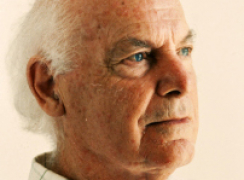
"Scientific Mysticism" of Michael Whiteman

  The previous post gave reference to the book below by an academic. It is similiar but not identical to the ideas of my paradigm known as ...