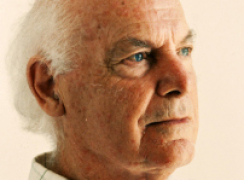
Though Arthur Koestler was an author, and journalist he also, had some serious interest in parapsychology. Hence, his inclusion here. Incidently, I, once, met by chance the woman who acted as his carer before the suicide of himself, and his wife.
RS.
From Wikipedia, the free encyclopedia
The native form of this personal name is Kösztler Artúr. This article uses the Western name order.
| Arthur Koestler | |
|---|---|
 Koestler in 1948 | |
| Born | Kösztler Artúr 5 September 1905 Budapest, Austria-Hungary |
| Died | 1 March 1983 (aged 77) London, England |
| Occupation | Novelist, essayist, journalist |
| Nationality | Hungarian, British |
| Ethnicity | Jewish |
| Citizenship | Naturalized British subject |
| Period | 1934–1983 |
| Subjects | Fiction, non-fiction, history, autobiography, politics, philosophy, psychology, parapsychology, science |
| Notable work(s) | Darkness at Noon The Thirteenth Tribe |
| Notable award(s) | Sonning Prize (1968) CBE (1972) |
| Spouse(s) | Dorothy Ascher (1935–50) Mamaine Paget (1950–52) Cynthia Jefferies[1] (1965–83) |
Contents[hide] |
Life[edit]
"[Koestler] began his education in the twilight of the Austro-Hungarian Empire, at an experimental kindergarten in Budapest. His mother was briefly a patient of Sigmund Freud's. In interwar Vienna he wound up as the personal secretary of Vladimir Jabotinsky, one of the early leaders of the Zionist movement. Traveling in Soviet Turkmenistan as a young and ardent Communist sympathizer, he ran into Langston Hughes. Fighting in the Spanish Civil War, he met W. H. Auden at a "crazy party" in Valencia, before winding up in one of Franco's prisons. In Weimar Berlin he fell into the circle of the infamous Comintern agent Willi Münzenberg, through whom he met the leading German Communists of the era: Johannes Becher, Hanns Eisler, Bertolt Brecht. Afraid of being caught by the Gestapo while fleeing France, he borrowed suicide pills from Walter Benjamin. He took them several weeks later when it seemed he would be unable to get out of Lisbon, but didn't die. Along the way he had lunch with Thomas Mann, got drunk with Dylan Thomas, made friends with George Orwell, flirted with Mary McCarthy, and lived in Cyril Connolly's London flat. In 1940, Koestler was released from a French detention camp, partly thanks to the intervention of Harold Nicolson and Noël Coward. In the 1950s, he helped found the Congress for Cultural Freedom, together with Mel Lasky and Sidney Hook. In the 1960s, he took LSD with Timothy Leary. In the 1970s, he was still giving lectures that impressed, among others, the young Salman Rushdie."
Anne Applebaum, reviewing Michael Scammell: Koestler: The Literary and Political Odyssey of a Twentieth-Century Skeptic[3]
Origins and early life[edit]
Koestler was born in Budapest to Henrik and Adele Koestler (née Jeiteles). He was an only child. His father Henrik Koestler, of Jewish and Hungarian descent, was born on 18 August 1869 in the town of Miskolc in northeastern Hungary. According to Koestler's authorized biography, Henrik's father, Leopold Koestler, was a soldier in the Austro-Hungarian Army who Magyarised his name to "Lipot".[4] In 1861 he married Karolina Schon, the daughter of a prosperous timber merchant. Henrik left school at age 16 and took a job as an errand boy with a firm of drapers. He taught himself English, German and French, and eventually became a partner in the firm. He then set up his own business importing textiles into Hungary.[5]Arthur's mother, Adele Koestler (née Jeiteles) was born on 25 June 1871 into a prominent Jewish family in Prague. Among her ancestors were Mishel Loeb, a prominent 18th-century physician and essayist, whose son Judah became a well-known poet. Beethoven set some of his poems to music. Her father, Jacob Jeiteles, moved the family to Vienna, where Adele grew up in relative prosperity until about 1890. Faced with financial difficulties, her father abandoned his wife and daughter and emigrated to the United States. Adele and her mother moved from Vienna to Budapest to stay with Adele's married sister.
Henrik Koestler met Adele in 1898, married her in 1900, and on 5 September 1905, Arthur, their only child, was born. The Koestlers lived in spacious, well-furnished, rented apartments in various predominantly Jewish districts of Budapest. During Arthur's early years they employed a cook/housekeeper as well as a foreign governess. His primary school education started at an experimental private kindergarten founded by Laura Striker (née Polanyi). Her daughter Eva Striker later became Koestler's lover, and they remained friends all his life.
The outbreak of World War I in 1914 deprived his father of foreign suppliers, and his business collapsed. Facing destitution, the family moved temporarily to a boarding house in Vienna. When the war ended, the family returned to Budapest. Arthur witnessed the short-lived Hungarian Bolshevik Revolution of 1919, the temporary occupation of Budapest by the Romanian Army, and the White Terror under the right-wing regime of Admiral Horthy. In 1920 the family returned to Vienna, where Henrik set up a successful new import business.
In September 1922, Arthur enrolled at the Vienna Polytechnic University to study engineering, joining a Zionist duelling student fraternity.[6] When Henrich's business failed, Koestler stopped attending lectures, and was expelled for non-payment of the fees. In March 1926 Koestler wrote a letter to his parents telling them that he was going to Palestine for a year to work as an assistant engineer in a factory, for the purpose of gaining experience which would help him find a job in Austria. On 1 April 1926, he left Vienna for Palestine.[7]
1926–1931 Palestine, Paris, Berlin and Polar flight[edit]
After arriving, for a few weeks Koestler lived in a kibbutz, an agricultural collective. His application to join the collective (Kvutzat Heftziba) was rejected by its members.[8] For the next twelve months, he supported himself by menial jobs in the cities of Haifa, Tel Aviv and Jerusalem. Frequently penniless and starving, he often depended on friends and acquaintances for survival.[9] He occasionally wrote or edited broadsheets and other publications, mostly in German. In the spring of 1927, he left Palestine briefly, to run the Secretariat of Jabotinsky's Revisionist Party in Berlin.Later that same year, through a friend, Koestler obtained the position of Middle East correspondent for the prestigious Berlin-based Ullstein-Verlag group of newspapers. He returned to Jerusalem, where for the next two years, he produced detailed political essays, as well as some lighter reportage, for his principal employer and for other newspapers. He travelled extensively, interviewed heads of state, kings, presidents and prime ministers[10] and greatly enhanced his reputation as a journalist.
On June 1929, while on leave in Berlin, Koestler successfully lobbied at Ullstein for a transfer away from Palestine.[11] In September he was sent to Paris to fill a vacancy in the bureau of the Ullstein News Service. A year later, in 1931, he was called to Berlin and appointed science editor of Vossische Zeitung and science adviser to the Ullstein newspaper empire.[12] The same year he was Ullstein's choice to represent the paper on board the Graf Zeppelin airship's Polar flight, which carried a team of scientists and the Polar aviator Lincoln Ellsworth to 82 degrees North (thus not to the North Pole) and back. Koestler was the only journalist on board: his live wireless broadcasts and subsequent articles and lecture tours throughout Europe brought him further kudos. Soon after, he was appointed foreign editor and assistant editor-in-chief of the mass-circulation Berliner Zeitung am Mittag.[13][14] In 1931 Koestler, encouraged by Eva Striker, and impressed by what he believed to be the achievements of the Soviet Union, became a supporter of Marxism-Leninism; and on 31 December 1931, he applied for membership in the Communist Party of Germany.[15]
The 1930s[edit]
Koestler wrote a book on the Soviet Five-Year Plan, but it did not meet with the approval of the Soviet authorities and was never published. In 1932 he traveled in Turkmenistan and Central Asia, reviewing conditions. In September 1933 he returned to Paris and for the next two years was active in anti-Fascist movements; he wrote propaganda under the direction of Willy Muenzenberg, the Comintern's chief propaganda director in the West.In 1935 he married Dorothy Ascher, a fellow Communist activist (they separated amicably in 1937).[16] In 1936, during the Spanish Civil War he undertook a visit to General Francisco Franco's headquarters in Seville on behalf of the Comintern using the London daily News Chronicle as cover.[17] He had to escape when recognised and denounced as a Communist by a former German colleague. Back in France he wrote L'Espagne Ensanglantée, which was later incorporated into his book Spanish Testament. In 1937 he returned to Loyalist Spain as a war correspondent of News Chronicle but was captured by the Nationalist rebels. From February until June, he was imprisoned under sentence of death. He was eventually exchanged for a 'high value' Nationalist prisoner held by the Loyalists, the wife of one of Franco's ace fighter pilots. He is one of the few authors to have been sentenced to death and witnessed death row. He wrote about this in Dialogue with Death.
After his release, Koestler returned to France, where he agreed to write a sex encyclopaedia to support himself. It was published to great success under the title The Encyclopœdia of Sexual Knowledge under the pseudonyms of "Drs. A. Costler, A. Willy, and Others".[18] In July 1938, he finished work on his novel The Gladiators. Later that year he resigned from the Communist Party and started work on a new novel that in 1941 was published in London with the title Darkness at Noon. That same year, 1938, he became editor of Die Zukunft (The Future), the German weekly paper in Paris.[19]
In 1939 he met and formed an attachment to the British sculptor Daphne Hardy. They lived together in Paris, and she translated the manuscript of Darkness at Noon from German into English in early 1940. She smuggled it out of France when they left ahead of the German occupation, and arranged for its publication after reaching London that year.
The war years, 1940–45[edit]
After the outbreak of World War II, Koestler was detained for several months in Le Vernet Internment Camp among other 'undesirable aliens', mostly refugees.[20] They released him in early 1940 due to strong British pressure. (Koestler described the period 1939 to 1940 and his incarceration in Le Vernet in his memoir Scum of the Earth.) Shortly before the German invasion of France, to get out of the country he joined the French Foreign Legion. He deserted in North Africa, and tried to get back to England.[21] While waiting to gain passage on a ship out of Lisbon, he heard a false report that the ship on which Hardy was travelling had sunk, and that she and his manuscript were lost. He attempted suicide, but survived.Arriving in England without an entry permit, Koestler was imprisoned by the British pending examination of his case. He was still in prison when his book Darkness at Noon was published in early 1941, which Hardy had arranged. Immediately upon release, he volunteered for army service. While awaiting his call-up papers he wrote Scum of the Earth (January–March 1941), the first book he wrote in English. For the next twelve months, he served in the Pioneer Corps.

Daphne Hardy, who had been doing war work in Oxford, joined Koestler in London in 1943, but they parted company a few months later. They remained good friends until Koestler's death.[24]
In December 1944, he travelled to Palestine with accreditation from The Times newspaper. There he had a clandestine meeting with Menachem Begin; the head of the Irgun terrorist organisation, who was wanted by the British armed forces and had a £500 bounty on his head. Koestler tried to persuade him to abandon militant attacks and accept a two-state solution for Palestine, but failed. Many years later, Koestler wrote in his memoirs: “When the meeting was over, I realised how naïve I had been to imagine that my arguments would have even the slightest influence.”[25]
Staying in Palestine until August 1945, Koestler collected material for his next novel Thieves in the Night. When he returned to England, Mamaine Paget, whom he had started to see before going out to Palestine, was waiting for him.[26][27]
The post-war years[edit]
1945–55[edit]

Soon after his return from the U.S., war broke out between the newly declared State of Israel and the neighbouring Arab states. Koestler was accredited by several newspapers: American, British and French, and travelled to Israel to report on the war.[28] Mamaine Paget went with him. They arrived in Israel on 4 June and stayed there until October.[29] Later that year they decided to leave England for a while and move to France. News that his long-pending application for British nationality had been granted reached him in France in late December. Early in the new year (1949), he returned to London to swear the oath of allegiance to the British Crown.[30] In January 1949 Koestler and Mamaine moved to a house he bought in France, where he wrote a contribution to The God That Failed and finished work on Promise and Fulfilment. The book received poor reviews in both the U.S. and in England. His other book published in 1949 was Insight and Outlook. This too received lukewarm reviews.
In July he commenced work on the first volume of his autobiography, Arrow in the Blue. He hired a new part-time secretary, Cynthia Jefferies, who eventually became his third wife. In the autumn he started work on The Age of Longing, on which he continued to work until mid-1950.
Having reached agreement with his first wife, Dorothy, for an amicable divorce, their marriage was annulled on 15 December 1949.[31] This cleared the way for his marriage to Mamaine Paget,[32] which took place on 15 April 1950 at the British Consulate in Paris.[33]
In June he delivered a major anti-Communist speech at the Congress for Cultural Freedom, an organisation funded by the Central Intelligence Agency, in Berlin. In the autumn he went to the United States on a lecture tour, during which he lobbied for permanent resident status in the U.S. At the end of October, on impulse, he bought a small island with a house on it on the Delaware River near New Hope, Pennsylvania, with the intention of living there at least for part of each year.[34]
In January 1951 a dramatised version of Darkness at Noon, by Sidney Kingsley, opened in New York. Critics loved the play and it won the New York Drama Critics' Award. Koestler donated all royalties from the play to a fund he set up to help struggling authors, “Fund for Intellectual Freedom" (FIF)[35] In 1951 the last of his political works, The Age of Longing, was published. In it he examined the political landscape of post-war Europe and the problems facing the continent.
In August 1952, his marriage to Mamaine collapsed. They separated but remained close until her sudden and unexpected death in June 1954.[36][37] The book Living with Koestler: Mamaine Koestler's Letters 1945-51, edited by Mamaine's twin sister Celia Goodman, gives an insight into their lives together. He decided to make his permanent home in England. In May 1953 he bought a three-storey Georgian town house on Montpelier Square in London, and sold his houses in France and the United States.
The first two volumes of his autobiography, Arrow in the Blue, which covers his life up to December 1931 when he joined the German Communist Party, and The Invisible Writing, which covers the years 1932 to 1940, were published in 1952 and 1954, respectively. A collection of essays, The Trail of the Dinosaur and Other Essays, on the perils facing Western civilisation, was published in 1955.
On 13 April 1955, Janine Graetz, with whom Koestler had an on-off relationship over a period of years, gave birth to his daughter.[38] She was called Cristina, and despite repeated attempts by Janine to persuade him to show some interest in her, Koestler had almost no contact with his daughter throughout his life.
Koestler's main polemic during 1955 was his campaign for the abolition of capital punishment and hanging. In July he started work on Reflections on Hanging.
1956–75[edit]
Although Koestler resumed work on Kepler's biography in 1955 it was not published until 1959, and in the interim it acquired the title The Sleepwalkers. The emphasis of the book changed to 'A history of Man's Changing Vision of the Universe', which also became the book's subtitle. Copernicus and Galileo were added to Kepler as the major subjects of the book. Early in 1956 he arranged for Cynthia to have an illegal abortion.[39] Later in the year as a consequence of the Hungarian Uprising he was busy organising anti-Soviet meetings and protests.In June 1957 Koestler gave a lecture at a symposium in Alpbach, Austria, and fell in love with the village; he bought land there, had a house built and for the next twelve years used it as a place for summer vacations and for organising symposia. In May 1958 he had a hernia operation.[40] In December he left for the East – India and Japan – and was away until early 1959. The resulting book was The Lotus and the Robot.
In early 1960, on his way back from a conference in San Francisco, he interrupted his journey at the University of Michigan, Ann Arbor, where some experimental research was going on with hallucinogens. He tried psilocybin and had a "bad trip". Later, when he arrived at Harvard to see Timothy Leary he experimented with more drugs, but was not enthusiastic about that experience either.[41] In November 1960 he was elected to a Fellowship of The Royal Society of Literature. Koestler's book The Act of Creation came out in May 1964. In November he undertook a lecture tour of various universities in California. In 1965 he married Cynthia in New York,[42] and moved to California, where, at the Center for Advanced Study in the Behavioral Sciences at Stanford, he participated in a series of seminars.
Koestler spent most of 1966 and the early months of 1967 working on The Ghost in the Machine. In his article Return Trip to Nirvana, published in 1967 in the Sunday Telegraph, Koestler wrote about the drug culture and his own experiences with hallucinogens. The article also challenged the defence of drugs in Aldous Huxley's The Doors of Perception. In April 1968, Koestler was awarded the Sonning Prize “For outstanding contribution to European culture”. The Ghost in the Machine was published in August of same year and in the autumn he received an honorary doctorate from Queen's University, Kingston, Canada. In the later part of November the Koestlers flew to Australia for a number of television appearances and press interviews.
At the end of the decade, Koestler was elated to learn that the British House of Lords had finally consented to the abolition of hanging, for which he had been campaigning for many years. The first half of the 1970s saw the publication of four more of his books: The Case of the Midwife Toad (1971), The Roots of Coincidence and The Call-Girls (both in 1972), and The Heel of Achilles: Essays 1968-1973 (1974). In the New Year Honours List for 1972, he was made a Commander of the Order of the British Empire (CBE).
Final years, 1976–83[edit]
Early in 1976 Koestler was diagnosed with Parkinson's disease. The trembling of his hand made writing progressively more difficult.[43] He cut back on overseas trips and spent the summer months at the farmhouse in Denston, Suffolk, which he had bought in 1971. That same year saw the publication of The Thirteenth Tribe, about the hypothetical Khazar origins of European Jewry.In 1978 he published Janus: A Summing Up. Two years later, in 1980, he was diagnosed also with chronic lymphocytic leukaemia. Walking and writing became an effort and Koestler's physical condition visibly deteriorated[44] but he kept on working. His book Bricks to Babel was published that year. His final book, Kaleidoscope: Essays from Drinkers of Infinity and The Heel of Achilles: Essays 1968-1973 and some later pieces and stories was published the following year, 1981.
During the final years of his life he established the KIB Society (with Brian Inglis and Tony Bloomfield), to sponsor research "outside the scientific orthodoxies" (which, after his death, was renamed The Koestler Foundation), and in his capacity as Vice President of the Voluntary Euthanasia Society, later renamed Exit, he wrote a pamphlet on suicide, outlining the case both for and against, with a section dealing specifically with how best to do it.[45]
Koestler and Cynthia killed themselves on the evening of 1 March 1983.[46][47]
Death and its controversies[edit]
Koestler had stated more than once that he was not afraid of being dead but was afraid of the process of dying.[48] He did not wish to suffer the indignity of losing control over his body or mind. His suicide was not unexpected among close friends. Shortly before his suicide, his doctor had discovered a swelling in the groin which indicated a metastasis of the cancer. He and his wife killed themselves on 1 March 1983[49][50][51] with an overdose of barbiturates (Tuinal), taken with alcohol.[52] Their bodies were discovered on the morning of 3 March, by which time they had been dead for thirty-six hours.Koestler's suicide note:[53]
To whom it may concern. The purpose of this note is to make it unmistakably clear that I intend to commit suicide by taking an overdose of drugs without the knowledge or aid of any other person. The drugs have been legally obtained and hoarded over a considerable period. Trying to commit suicide is a gamble the outcome of which will be known to the gambler only if the attempt fails, but not if it succeeds. Should this attempt fail and I survive it in a physically or mentally impaired state, in which I can no longer control what is done to me, or communicate my wishes, I hereby request that I be allowed to die in my own home and not be resuscitated or kept alive by artificial means. I further request that my wife, or a physician, or any friend present, should invoke habeas corpus against any attempt to remove me forcibly from my house to hospital. My reasons for deciding to put an end to my life are simple and compelling: Parkinson's Disease and the slow-killing variety of leukaemia (CCI). I kept the latter a secret even from intimate friends to save them distress. After a more or less steady physical decline over the last years, the process has now reached an acute state with added complications which make it advisable to seek self-deliverance now, before I become incapable of making the necessary arrangements. I wish my friends to know that I am leaving their company in a peaceful frame of mind, with some timid hopes for a de-personalised after-life beyond due confines of space, time and matter and beyond the limits of our comprehension. This 'oceanic feeling' has often sustained me at difficult moments, and does so now, while I am writing this. What makes it nevertheless hard to take this final step is the reflection of the pain it is bound to inflict on my surviving friends, above all my wife Cynthia. It is to her that I owe the relative peace and happiness that I enjoyed in the last period of my life – and never before.The note was dated June 1982. Below it appeared the following:
Since the above was written in June 1982, my wife decided that after thirty-four years of working together she could not face life after my death.Further down the page appeared Cynthia's own farewell note:
I fear both death and the act of dying that lies ahead of us. I should have liked to finish my account of working for Arthur – a story which began when our paths happened to cross in 1949. However, I cannot live without Arthur, despite certain inner resources. Double suicide has never appealed to me, but now Arthur's incurable diseases have reached a stage where there is nothing else to do.The funeral was held at the Mortlake Crematorium in South London on 11 March.[46]
The first controversy arose about why he allowed or consented to his wife's simultaneous suicide. She was only fifty-five years old and believed to be in good health. In a typewritten addition to her husband's suicide note, Cynthia Koestler wrote that she could not live without her husband. Reportedly, few of their friends were surprised by this admission, apparently perceiving that Cynthia lived her life through her husband's and that she had no "life of her own".[54] Her absolute devotion to Koestler can be seen clearly in her partially completed memoirs.[55]
According to a profile of Koestler by Peter Kurth:[56]
All their friends were troubled by what Julian Barnes calls "the unmentionable, half-spoken question" of Koestler's responsibility for Cynthia's actions. "Did he bully her into it?" asks Barnes. And "if he didn't bully her into it, why didn't he bully her out of it?" Because, with hindsight, the evidence that Cynthia's life had been ebbing with her husband's was all too apparent.The second controversy was occasioned by the terms of his will. With the exception of some minor bequests, Koestler left the residue of his estate, about £1 million, to promote research into the paranormal through the founding of a chair in parapsychology at a university in Britain. The Trustees of the Estate had great difficulty finding a university willing to establish such a chair. Oxford, Cambridge, King's College London, and University College London, were approached and all refused. Eventually, the Trustees reached agreement with Edinburgh University to set up a chair in accordance with Koestler's request.[57]
Controversial personal life[edit]
Koestler's relations with women have been a source of controversy. In 1998, a biography of Koestler by David Cesarani alleged that Koestler had been a serial rapist, citing as evidence that the British feminist writer Jill Craigie had claimed that she had been one of his victims in 1951. Feminist protesters forced the removal of his bust from Edinburgh University.[58]In his biography Koestler: The Indispensable Intellectual (2009), Michael Scammell countered that Craigie was the only woman to go on record that she had been raped by Koestler, and had revealed this at a dinner party over 50 years after the alleged incident. Claims that Koestler had been violent were only added by Craigie later, although Scammell concedes that Koestler could be rough and sexually aggressive.
Others, including Cesarani, claim that Koestler had misogynistic tendencies. He reportedly engaged in numerous sexual affairs and generally treated the women in his life badly. As argued by Geoffrey Wheatcroft in a review of Cesarani's biography, philandering on this scale is neurotic: a man driven to copulate with as many women as possible not only has difficulty establishing happy relations with women, or regarding them as equals, but does not like women.[59][60][61]
Influence and legacy[edit]
"It is difficult to think of a single important twentieth-century intellectual who did not cross paths with Arthur Koestler, or a single important twentieth-century intellectual movement that Koestler did not either join or oppose. From progressive education and Freudian psychoanalysis through Zionism, communism, and existentialism to psychedelic drugs, parapsychology, and euthanasia, Koestler was fascinated by every philosophical fad, serious and unserious, political and apolitical, of his era."
– Anne Applebaum, The New York Review Of Books[3]
Koestler wrote several major novels, two volumes of autobiographical works, two volumes of reportage, a major work on the history of science, several volumes of essays and a considerable body of other writing and articles on subjects as varied as genetics, euthanasia, Eastern mysticism, neurology, chess, evolution, psychology, the paranormal and more.[64]
Politics and causes[edit]
Koestler embraced a multitude of political as well as non-political issues. Zionism, Communism, anti-Communism, voluntary euthanasia, abolition of capital punishment, particularly hanging, and the abolition of quarantining of dogs being re-imported into the United Kingdom are examples.Evolution[edit]
In his 1971 book The Case of the Midwife Toad he defended the biologist Paul Kammerer, who claimed to find experimental support for Lamarckian inheritance. According to Koestler Kammerer's experiments on the midwife toad may have been tampered with by a Nazi sympathizer at the University of Vienna. In the book he came to the conclusion that a kind of modified 'Mini-Lamarckism' may occur as an explanation for some limited and rare evolutionary phenomena.Koestler had criticised neo-Darwinism in a number of his books but he was not anti-evolution.[65] Biology professor Harry Gershenowitz described Koestler as a "popularizer" of science despite his views not being accepted by the "orthodox academic community".[66] According to an article in the Skeptical Inquirer Koestler was an "advocate of Lamarckian evolution — and a critic of Darwinian natural selection as well as a believer in psychic phenomena."[67]
Paranormal[edit]
Mysticism and a fascination with the paranormal imbued much of his later work. Koestler was known for endorsing a number of paranormal subjects such as extrasensory perception, psychokinesis and telepathy. His book The Roots of Coincidence (1974) claims the answer to such paranormal phenomena may be found in theoretical physics. The book mentions yet another line of unconventional research by Paul Kammerer, the theory of coincidence or synchronicity. He also presents critically the related writings of Carl Jung. More controversial were Koestler's levitation and telepathy studies and experiments.During the final years of his life he established the KIB Society (with Brian Inglis and Tony Bloomfield), to sponsor paranormal research (which, after his death, was renamed the Koestler Parapsychology Unit) and is located at the University of Edinburgh, in Scotland.[68]
Hallucinogens[edit]
In "Return Trip to Nirvana", published in the Sunday Telegraph in 1967, Koestler wrote about the drug culture and his own experiences with hallucinogens. He challenged the defence of drug use in Aldous Huxley's The Doors of Perception.Judaism[edit]
Koestler was Jewish by birth, but did not observe the religion. In an interview published in the London Jewish Chronicle in 1950, he argued that Jews should either immigrate to Israel or assimilate completely into their local cultures.[69][70][71]In The Thirteenth Tribe (1976), he advanced the controversial thesis that Ashkenazi Jews are not descended from the Israelites of antiquity, but from the Khazars, a Turkic people in the Caucasus. They were believed to have converted to Judaism in the 8th century and were later forced westward into present-day Russia, Ukraine and Poland. Koestler argued that a proof that Ashkenazi Jews had no biological connection to the biblical Jews would remove the racial basis of European anti-Semitism.
However, from studying DNA in sample populations, Rabbi Yaakov Kleiman suggested in 2000 that widely separated Jewish populations have a common origin that traces back to the Middle East.[72]
Languages[edit]
Koestler first learned Hungarian, but later at home, his family spoke mostly German. From his early years, he became fluent in both languages. It is likely that he picked up some Yiddish too, through contact with his grandfather.[73] By his teens, he was fluent in Hungarian, German, French, and English.[74]During his years in Palestine, Koestler became sufficiently fluent in Hebrew to write stories in that language, as well as create the world's first Hebrew crossword puzzle.[75] During his years in the Soviet Union (1932–33), although he arrived with a vocabulary of only 1,000 words of Russian, and no grammar, he picked up enough colloquial Russian to speak the language.[76]
His first novel, The Gladiators (1939), was the only one he wrote in Hungarian. He wrote his other works up to 1940 in German. After 1940, he wrote only in English. (L'Espagne ensanglantée was translated into French from German.[77])
Published works[edit]
Fiction (novels)[edit]
- 1934 (2013). Die Erlebnisse des Genossen Piepvogel in der Emigration
- 1939. The Gladiators, about the revolt of Spartacus.
- 1940. Darkness at Noon
- 1943. Arrival and Departure
- 1946. Thieves in the Night
- 1951. The Age of Longing
- 1972. The Call-Girls: A Tragicomedy with a Prologue and Epilogue. A novel about scholars making a living on the international seminar-conference circuit. ISBN 978-0-09-112550-9
Drama[edit]
- 1945. Twilight Bar.
Autobiography[edit]
- 1937. Spanish Testament.
- 1941. Scum of the Earth.
- 1942. Dialogue with Death.
- 1952. Arrow In The Blue: The First Volume Of An Autobiography, 1905–31, 2005 reprint, ISBN 0-09-949067-6
- 1954. The Invisible Writing: The Second Volume Of An Autobiography, 1932–40, 1984 reprint, ISBN 0-8128-6218-X
- 1984. Stranger on the Square co-written with Cynthia Koestler, published posthumously, edited and with an Introduction and Epilogue by Harold Harris, London: Hutchinson, 1984, ISBN 0-09-154330-4.
Other non-fiction[edit]
- 1934. Von weissen Nächten und roten Tagen. About Koestler's travels in the USSR. In his The Invisible Writing, Koestler calls the book Red Days and White Nights, or, more usually, Red Days. Of the five foreign language editions − Russian, German, Ukrainian, Georgian, Armenian − planned, only the German version was eventually published in Kharkov, Ukrainian S.S.R.. The edition is very rare.
- 1937. L'Espagne ensanglantée.
- 1941 Scum of the Earth. Memoir of his life in France before and after the outbreak of World War II, with a detailed account of his internment at Le Vernet, the French camp for aliens.
- 1942 (summer) Le yogi et le commissaire.
- 1945. The Yogi and the Commissar and other essays.
- 1949. The Challenge of our Time.
- 1949. Promise and Fulfilment: Palestine 1917–1949.
- 1949. Insight and Outlook.
- 1955. The Trail of the Dinosaur and other essays.
- 1956. Reflections on Hanging.
- 1959. The Sleepwalkers: A History of Man's Changing Vision of the Universe. ISBN 0-14-019246-8 An account of changing scientific paradigms.
- 1960. The Watershed: A Biography of Johannes Kepler. (excerpted from The Sleepwalkers.) ISBN 0-385-09576-7
- 1960. The Lotus and the Robot, ISBN 0-09-059891-1. Koestler's journey to India and Japan, and his assessment of East and West.
- 1961. Control of the Mind.
- 1961. Hanged by the Neck. Reuses some material from Reflections on Hanging.
- 1963. Suicide of a Nation.
- 1964. The Act of Creation.
- 1967. The Ghost in the Machine. Penguin reprint 1990: ISBN 0-14-019192-5.
- 1968. Drinkers of Infinity: Essays 1955–1967.
- 1970. The Age of Longing, ISBN 0-09-104520-7.
- 1971. The Case of the Midwife Toad, ISBN 0-394-71823-2. An account of Paul Kammerer's research on Lamarckian evolution and what he called "serial coincidences".
- 1972. The Roots of Coincidence, ISBN 0-394-71934-4. Sequel to The Case of the Midwife Toad.
- 1973. The Lion and the Ostrich.
- 1974. The Heel of Achilles: Essays 1968-1973, ISBN 0-09-119400-8.
- 1976. The Thirteenth Tribe: The Khazar Empire and Its Heritage, ISBN 0-394-40284-7.
- 1976. Astride the Two Cultures: Arthur Koestler at 70, ISBN 0-394-40063-1.
- 1977. Twentieth Century Views: A Collection of Critical Essays, ISBN 0-13-049213-2.
- 1978. Janus: A Summing Up, ISBN 0-394-50052-0. Sequel to The Ghost in the Machine
- 1980. Bricks to Babel. Random House, ISBN 0-394-51897-7. This 1980 anthology of passages from many of his books, described as "A selection from 50 years of his writings, chosen and with new commentary by the author", is a comprehensive introduction to Koestler's writing and thought.
- 1981. Kaleidoscope. Essays from Drinkers of Infinity and The Heel of Achilles, plus later pieces and stories.
Writings as a contributor[edit]
- The Encyclopœdia of Sexual Knowledge (1934) (In his autobiography The Invisible Writing, Koestler uses the ligature œ in the spelling of the word "Encyclopaedia".)
- Foreign Correspondent (1940) uncredited contributor to Alfred Hitchcock film produced by Walter Wanger
- The God That Failed (1950) (collection of testimonies by ex-Communists)
- Attila, the Poet (1954) (Encounter; 1954.2 (5)). On loan at the UCL library of the School of Slavonic & Eastern European Studies.
- UCL library online
- Beyond Reductionism: The Alpbach Symposium. New Perspectives in the Life Sciences (co-editor with J. R. Smythies, 1969), ISBN 0-8070-1535-0
- The Challenge of Chance: A Mass Experiment in Telepathy and Its Unexpected Outcome (1973)
- The Concept of Creativity in Science and Art (1976)
- Life After Death, (co-editor, 1976)
- Humour and Wit. I: Encyclopædia Britannica. 15th ed. vol. 9.(1983)
- humour – Encyclopædia Britannica (by Arthur Koestler)
Biographies of Koestler[edit]
- Atkins, J., 1956. Arthur Koestler.
- Buckard, Christian G., 2004. Arthur Koestler: Ein extremes Leben 1905–1983. ISBN 3-406-52177-0.
- Cesarani, David, 1998. Arthur Koestler: The Homeless Mind. ISBN 0-684-86720-6.
- Hamilton, Iain, 1982. Koestler: A Biography. ISBN 0-02-547660-2.
- Koestler, Mamaine, 1985. Living with Koestler: Mamaine Koestler's Letters 1945-51. ISBN 0-297-78531-1 or ISBN 0-312-49029-1.
- Levene, M., 1984. Arthur Koestler. ISBN 0-8044-6412-X
- Mikes, George, 1983. Arthur Koestler: The Story of a Friendship. ISBN 0-233-97612-4.
- Pearson, S. A., 1978. Arthur Koestler. ISBN 0-8057-6699-5.
- [Michael] (2009). Koestler: The Literary and Political Odyssey of a Twentieth-Century Skeptic. New York: Random House. p. 689. ISBN 978-0-394-57630-5. Unknown parameter
|note=ignored (help)
See also[edit]
- Herbert A. Simon
- Holism
- Holon (philosophy)
- Janus
- Politics in fiction
- German Writers in French Exile, 1933–1940, by Martin Mauthner (London, 2007), ISBN 9780853035404.
References[edit]
Key to abbreviations used for frequently quoted sources- ACK Stranger on the Square (A & C Koestler)
- AIB Arrow in the Blue (A Koestler)
- CG Living with Koestler: Mamaine Koestler's Letters 1945-51 (Celia Goodman, Ed.)
- GM Arthur Koestler: The Story of a Friendship (George Mikes)
- IW The Invisible Writing (A Koestler)
- ^ There is a discrepancy between the various biographers in the spelling of the surname. David Cesarani uses the spelling Jeffries, Iain Hamilton, Harold Harris (in his Introduction to Living with Koestler: Mamaine Koestler's Letters 1945–51, Celia Goodman in the same book and Mark Levene in Arthur Koestler spell it Jefferies.
- ^ A. & C. Koestler (ACK) Stranger on the Square, London: Hutchinson 1984, ISBN 978-0-09-154330-3, p. 10.
- ^ a b Did The Death Of Communism Take Koestler And Other Literary Figures With It? by Anne Applebaum, The Huffington Post, 26 January 2010
- ^ Scammell, Michael (2009). Koestler: The Literary and Political Odyssey of a Twentieth-Century Skeptic. New York: Random House. pp. 6–7 (Leopold Koestler), 7 (Zeiteles), 8–9 (parents' marriage), 10 (Koestler's birth). ISBN 978-0-394-57630-5.
- ^ Arthur Koestler, Arrow in the Blue (AIB), Collins with Hamish Hamilton, 1952, p. 21.
- ^ AIB p. 86.
- ^ AIB pp. 115–21.
- ^ AIB p. 125-32.
- ^ AIB pp. 137, 165.
- ^ Cesarani p57
- ^ AIB pp. 183–86.
- ^ AIB p. 212.
- ^ Cesarani pp. 69–70.
- ^ Hamilton, David. (Hamilton) Koestler, Secker & Warburg, London 1982, ISBN 0-436-19101-6, p. 14.
- ^ AIB pp. 303–04.
- ^ ACK p. 24.
- ^ Koestler, Dialogue with Death, London: Arrow Books, 1961, p. 7 (no ISBN).
- ^ IW p. 260.
- ^ IW p. 495.
- ^ IW p. 509.
- ^ ACK pp. 20–22.
- ^ ACK p. 28.
- ^ January 1944.
- ^ Celia Goodman, ed. (CG), Living With Koestler: Mamaine Koestler's Letters 1945–51, London: Weidenfeld and Nicholson, 1985, ISBN 0-297-78531-1, p. 7.
- ^ ACK p. 37.
- ^ ACK pp. 29–38.
- ^ CG p .21.
- ^ Hamilton, p. 146.
- ^ CG pp. 84 & 94.
- ^ Cesarani p. 325.
- ^ CG p. 120.
- ^ CG pp. 120 & 131.
- ^ CG p. 131.
- ^ Cesarani pp. 375–76.
- ^ ACK pp. 103-07.
- ^ ACK pp. 139–40.
- ^ CG p. 193.
- ^ Cesarani p. 425.
- ^ Cesarani, p. 443.
- ^ Cesarani p. 453.
- ^ Cesarani pp. 467–68.
- ^ Cesarani p. 484.
- ^ Cesarani p. 535.
- ^ Cesarani p. 542.
- ^ Cesarani pp. 542-43.
- ^ a b Cesarani p. 547.
- ^ George Mikes, Arthur Koestler: The Story of a Friendship, London: Andre Deutsch, 1983, p. 76. ISBN 0-233-97612-4
- ^ GM p. 75.
- ^ GM p. 76.
- ^ Cesarani p. 546.
- ^ ACK p. 11.
- ^ GM pp. 75–78.
- ^ GM pp. 78–79. (This information is in the public domain.)
- ^ ACK pp. 10–11.
- ^ ACK Part Two
- ^ "Koestler'S Legacy". Peterkurth.com. 3 March 1983. Retrieved 8 January 2010.
- ^ Cesarani p. 551.
- ^ "Women force removal of Koestler bust". BBC. 29 December 1998. Retrieved 19 July 2009.
- ^ a b Geoffrey Wheatcroft (20 November 1998). "The darkness at noon for Arthur Koestler was in his heart...". New Statesman. UK. Retrieved 8 January 2010.
- ^ Lister, David (23 February 1999). "Storm as Raphael defends rapist Koestler – News". The Independent (UK). Retrieved 8 January 2010.
- ^ "UK | Women force removal of Koestler bust". BBC News. 29 December 1998. Retrieved 8 January 2010.
- ^ See, for example, John V. Fleming, The Anti-Communist Manifestos: Four Books that Shaped the Cold War. Norton, 2009.
- ^ Theodore Dalrymple: Drinkers of Infinity http://www.city-journal.org/html/17_2_oh_to_be.html
- ^ Cesarani p. 557.
- ^ Can Genes Learn? Arthur Koestler Thinks So
- ^ Arthur Koestler's Osculation with Lamarckism and Neo-Lamarckism by Harry Gershenowitz
- ^ The Skeptical Inquirer. (1985). Committee for the Scientific Investigation of Claims of the Paranormal. p. 274
- ^ Koestler Parapsychology Unit
- ^ Michael Ignatieff, Isaiah Berlin, London: Chatto and Windus, 1998, p. 183.
- ^ Jewish Chronicle, 5 May 1950.
- ^ Arthur Koestler, "Judah at the Crossroads," in The Trail of the Dinosaur and Other Essays, London, 1955, pp. 106–142.
- ^ Kleiman, Yaakov (2004). DNA & Tradition: The Genetic Link to the Ancient Hebrews. Devora Publishing. p. 30. "The general Ashkenazi paternal gene pool does not appear to be similar to that of present-day Turkish speakers. This finding opposes the suggestion that most Ashkenazim are descended from the Khazars, the Turkish-Asian empire that converted to Judaism en masse in or about the 8th century C.E."
- ^ Cesarani pp. 20–21.
- ^ Hamilton p. 4.
- ^ AIB p. 153.
- ^ Cesarani p. 84.
- ^ IW, pp. 408–09.
External links[edit]
 | This article's use of external links may not follow Wikipedia's policies or guidelines. (January 2012) |
 | Wikiquote has a collection of quotations related to: Arthur Koestler |
 | Wikimedia Commons has media related to: Arthur Koestler |
- Koestler CBC Radio December 14, 2011: Interview with biographer Michael Scammell on the Ideas podcast.
- Road Warrior Article in December 2009 issue of the New Yorker. Differs with the Wikipedia entry on many features of Koestler's biography.
- E., Holuber: Dostoevsky's Grandson
- Remembering Arthur Koestler
- Autobiographical Video-Interview with Arthur Koestler in French with German sub-titles and comments
- 2007 City Journal article on Koestler
- Arthur Koestler Project
- Duncan Fallowell (Summer 1984). "Arthur Koestler, The Art of Fiction No. 80". The Paris Review.
- General Properties of Koestler's Open hierarchical Systems
- Hungarian site on Koestler
- Koestler's Legacy – Fortean Times article on the centenary of Koestler's birth
- Koestler Parapsychology Unit – Koestler and his third spouse left a large sum of money for research into parapsychology: this funded, among other things, the Koestler Parapsychology Unit at Edinburgh University
- Mystical Experiences of Arthur Koestler
- NNDB
- Online biography
- The Koestler Trust
- Arthur Koestler at Wikiquote
- C-SPAN Q&A interview with Scammell about Koestler: The Literary and Political Odyssey of a Twentieth-Century Skeptic, 10 January 2010
| ||
|
Categories:
- 1905 births
- 1983 deaths
- Arthur Koestler
- Parapsychologists
- British anti-communists
- British novelists
- British people of the Spanish Civil War
- British political writers
- Hungarian anti-communists
- Hungarian Jews
- Hungarian people of the Spanish Civil War
- Hungarian political writers
- Former communists
- Khazar studies
- Jewish novelists
- Historians of Jews and Judaism
- Commanders of the Order of the British Empire
- Writers who committed suicide
- Joint suicides
- People with Parkinson's disease
- Drug-related suicides in England
- Soldiers of the French Foreign Legion
- Consciousness researchers and theorists
- Hungarian people of Russian descent
- People from Pest, Hungary
- Mystics
- British people of Hungarian descent
- British people of Russian descent
- German-language writers
- British Jewish writers
- Yiddish-speaking people