Showing posts with label altered states of conciousness. Show all posts

Wednesday, 5 December 2012

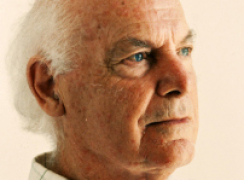
Charles Tart

Charles T. Tart (born 1937) is an American psychologist and parapsychologist known for his psychological work on the nature of consciousness (particularly altered states of consciousness), as one of the founders of the field of transpersonal psychology, and for his research in scientific parapsychology. He earned his Ph. D. in psychology from the University of North Carolina at Chapel Hill in 1963.[1]
His first books, Altered States of Consciousness (1969) and Transpersonal Psychologies (1975), became widely used texts that were instrumental in allowing these areas to become part of modern psychology.[1]

Contents

 [hide

[edit] Biography

Charles Tart was born in 1937 in Morrisville, Pennsylvania and grew up in Trenton, New Jersey. He was active in amateur radio and worked as a radio engineer (with a First Class Radiotelephone License from the Federal Communications Commission) while a teenager. As an undergraduate, Tart first studied electrical engineering at the Massachusetts Institute of Technology before transferring to Duke University to study psychology, on the advice of Dr Rhine of Duke. He received his doctoral degree in psychology from the University of North Carolina at Chapel Hill in 1963, and then received postdoctoral training in hypnosis research with Professor Ernest R. Hilgard at Stanford University.[1]
He is currently (2005) a Core Faculty Member at the Institute of Transpersonal Psychology (Palo Alto, California) and a Senior Research Fellow of the Institute of Noetic Sciences (Sausalito, California), as well as Professor Emeritus of Psychology at the University of California, Davis, where he served for 28 years, and emeritus member of the Monroe Institute board of advisors. Tart was the holder of the Bigelow Chair of Consciousness Studies at the University of Nevada in Las Vegas and has served as a Visiting Professor in East-West Psychology at the California Institute of Integral Studies, as an Instructor in Psychiatry at the School of Medicine of the University of Virginia, and a consultant on government funded parapsychological research at the Stanford Research Institute (now known as SRI International).[1]
He was also integral in the theorizing and construction of the automatic ESP testing device the ESPATEACHER machine that was built at the University of Virginia. He supports Joseph McMoneagle's remote viewing claims that McMoneagle has remote viewed into the past, present, and future and has predicted future events.[2]
As well as a laboratory researcher, Tart has been a student of the Japanese martial art of Aikido (in which he holds a black belt), of meditation, of Gurdjieff's work, of Buddhism, and of other psychological and spiritual growth disciplines. Tart believes that the evidence of the paranormal is bringing science and spirit together.[3] His primary goal is to build bridges between the scientific and spiritual communities, and to help bring about a refinement and integration of Western and Eastern approaches for knowing the world and for personal and social growth.
In his 1986 book Waking Up, he introduced the phrase "consensus trance" to the lexicon. Tart likened normal waking consciousness to hypnotic trance. He discussed how each of us is from birth inducted to the trance of the society around us. Tart noted both similarities and differences between hypnotic trance induction and consensus trance induction. He emphasized the enormous and pervasive power of parents, teachers, religious leaders, political figures, and others to compel induction. Referring to the work of Gurdjieff and others he outlines a path to awakening based upon self-observation.

[edit] Books authored or edited

  • Altered States of Consciousness (1969), editor. ISBN 0-471-84560-4
  • Transpersonal Psychologies (1975)
  • On Being Stoned: A Psychological Study of Marijuana Intoxication (1971)
  • States of Consciousness (1975)
  • Symposium on Consciousness (1975) With P. Lee, R. Ornstein, D. Galin & A. Deikman
  • Learning to Use Extrasensory Perception (1976)
  • Psi: Scientific Studies of the Psychic Realm (1977)
  • Mind at Large: Institute of Electrical and Electronic Engineers Symposia on the Nature of Extrasensory Perception (1979, with Harold E. Puthoff & Russel Targ)
  • Waking Up: Overcoming the Obstacles to Human Potential (1986)
  • Open Mind, Discriminating Mind: Reflections on Human Possibilities (1989)
  • Living the Mindful Life (1994).
  • Body Mind Spirit: Exploring the Parapsychology of Spirituality (1997). Examines the relationship between parapsychological abilities and human's spiritual nature, and was voted the March 1998 best metaphysical book selection of Amazon.Com.
  • Mind Science: Meditation Training for Practical People (2001).
  • States of Consciousness (2001). ISBN 0-595-15196-5
  • The End of Materialism: How Evidence of the Paranormal is Bringing Science and Spirit Together (2009)
He has had more than 250 articles published in professional journals and books, including lead articles in such scientific journals as Science and Nature.

[edit] Audio Interviews

[edit] Awards

  • Distinguished Contributions to Scientific Hypnosis, The Society of Psychological Hypnosis (Division 30 of the American Psychological Association), 2001.[5]
  • Abraham Maslow Award (given to an individual for an outstanding and lasting contribution to the exploration of the farther reaches of human spirit), The Society for Humanistic Psychology (Division 32 of APA), 2004.[6]
  • Charles Honorton Integrative Contributions Award, The Parapsychological Association, 2008.[7]

[edit] References

  1. ^ a b c d "Brief Biographical Data". paradigm-sys.com. April 10, 1998. http://www.paradigm-sys.com/ctt_bio.cfm. Retrieved 2008-07-22.
  2. ^ The Ultimate Time Machine: A Remote Viewer's Perception of Time and Predictions for the New Millennium by Joseph McMoneagle, Foreword by Charles T. Tart, Hampton Roads Publishing Co., Inc., 1998
  3. ^ The End of Materialism: How Evidence of the Paranormal is Bringing Science and Spirit Together by Charles T. Tart, New Harbinger Publications, 2009
  4. ^ http://www.somethingunknown.com/scientists.php Scientists featured in the film "Something Unkwnown..."
  5. ^ UC Davis News & Information :: Charles Tart
  6. ^ Abraham Maslow Award
  7. ^ Dr. Charles Tart Receives Award | Sofia University

[edit] External links


Stanley Krippner

From Wikipedia, the free encyclopedia


Jump to: navigation, search

Stanley Krippner (born October 4, 1932)[1] is an American psychologist, and an executive faculty member and Professor of Psychology at Saybrook University in San Francisco.[2] Formerly, Krippner was director of the Kent State University Child Study Center (of Kent, Ohio), and director of the Maimonides Medical Center Dream Research Laboratory (of Brooklyn, New York).[3]
Krippner is an internationally known humanistic psychologist, having written extensively on dreams, altered states of consciousness, hypnosis, shamanism, dissociation, and parapsychological subjects.[2][3][4] Krippner was an early leader in Division 32 of the American Psychological Association, the division concerned with humanistic psychology, serving as President of the division from 1980 - 1981.[5] He also served as president of division 30, the Society for Psychological Hypnosis, and is a Fellow of four APA divisions.

Contents

 [hide

[edit] Awards

In 2002, Krippner received the American Psychological Association (APA) Award for Distinguished Contributions to the International Advancement of Psychology. Other awards from the APA include the Award for Distinguished Contributions to Professional Hypnosis (2002), Senior Contributor Award (Division 17, Counseling Psychology) (2000), and the Charlotte and Karl Buhler Award (Division 32, Humanistic Psychology) (1992). Krippner also received The International Association for the Study of Dreams (IASD) Lifetime Achievement Award (2006), The Parapsychological Association's Outstanding Career Award (1998), The Dr. J.B. Rhine Award for Life-Time Achievement in Parapsychology (Andhra University, Visakhapatnam, India) (2002), the Pathfinder Award from the Association for Humanistic Psychology (1998), and the University of Georgia Bicentennial Award (1985).[2]

[edit] Books

[edit] Author

  • 1980 - Human Possibilities: Mind Research in the USSR and Eastern Europe (Anchor/Doubleday Books) ISBN 0-385-12805-3
  • 1976 - Song of the Siren: A Parapsychological Odyssey (Harper & Row) ISBN 0-06-064786-8
  • 1971 - Shamlet: The Tragicall Historie of Hamlet, Prince of Denmark (Exposition Press)

[edit] Co-author

  • 2010 - Haunted by Combat: Understanding PTSD in War Veterans, Rev. ed. (New Epilogue, with Daryl S. Paulson). (Rowman & Littlefield)
  • 2007 - Haunted by Combat: Understanding PTSD in War Veterans, Including Women, Reservists, and Those Coming Back from Iraq (with Daryl S. Paulson). (Praeger Security International)
  • 2006 - The Mythic Path, 3rd ed. (with David Feinstein). (Energy Psychology Press)
  • 2004 - Becoming Psychic: Spiritual Lessons for Focusing Your Hidden Abilities (with Stephen Kierulff). (New Page Books) ISBN 1-56414-755-X
  • 2002 - Extraordinary Dreams and How to Work with Them (with Fariba Bogzaran & Andre Percia de Carvalho). (SUNY Press)
  • 1997 - The Mythic Path (with David Feinstein). (Jeremy P. Tarcher/Putnam) ISBN 0-87477-857-3
  • 1993 - A Psychiatrist in Paradise: Treating Mental Illness in Bali (with Denny Thong and Bruce Carpenter) (White Lotus Press) ISBN 974-8495-77-9
  • 1992 - Spiritual Dimensions of Healing: From Tribal Shamanism to Contemporary Health Care (with Patrick Welch) (Irvington Publishers) ISBN 0-8290-2462-X
  • 1989 - Dream Telepathy: Experiments in Nocturnal ESP (with Montague Ullman and Alan Vaughan), 2nd ed. (McFarland Publishers) ISBN 1-57174-321-9
  • 1988 - Personal Mythology: The Psychology of Your Evolving Self (with David Feinstein) (Jeremy P. Tarcher) ISBN 0-87477-483-7
  • 1988 - Dreamworking: How to Use Your Dreams for Creative Problem-Solving (with Joseph Dillard). (Bearly Ltd.) ISBN 0-943456-25-8
  • 1987 - Zwischen Himmel und Erde: Spirituelles Heilen der Schamanen, Hexen, Priester und Medien (with Patrick Scott) (Chiron Verlag)
  • 1987 - Healing States (with Alberto Villoldo). (Fireside Books/Simon & Schuster) ISBN 0-671-63202-7
  • 1986 - La Science et les Pouvoirs Psychiques de l'Homme (with Jerry Solfvin) (Sand)
  • 1986 - The Realms of Healing (with Alberto Villoldo) (Celestial Arts Press) (rev. ed. 1977, 3rd ed. 1986) ISBN 0-89087-474-3
  • 1974 - Dream Telepathy: Experiments in Nocturnal ESP (with Montague Ullman and Alan Vaughan). (Macmillan)

[edit] Editor

  • 1990 - Dreamtime and Dreamwork: Decoding the Language of the Night (Jeremy P. Tarcher)
  • 1987-1997 - Advances in Parapsychological Research Vols. 4-8; 4(1984), 5(1987), 6(1990), 7(1994), 8(1997) (McFarland Publishing)
  • 1977-1982 - Advances in Parapsychological Research Vols. 1-3; 1(1977), 2(1978), 3(1982) (Plenum Press)
  • 1979 - Psychoenergetic Systems: The Interface of Consciousness, Energy and Matter (Gordon & Breach)

[edit] Co-editor

  • 2010 - Debating Psychic Experience: Human Potential or Human Illusion? (with Harris L. Friedman). (Praeger)
  • 2010 - Mysterious Minds: The Neurobiology of Psychics, Mediums, and Other Extraordinary People (with Harris L. Friedman). (Praeger)
  • 2009 - Perchance to Dream: The Frontiers of Dream Psychology (with Debbie Joffe Ellis). (Nova)
  • 2007 - Healing Stories: The Use of Narrative in Counseling and Psychotherapy (with Michael Bova, & Leslie Gray). (Puente)
  • 2007 - Healing Tales: The Narrative Arts in Spiritual Traditions (with Michael Bova, Leslie Gray, & Adam Kay). (Puente)
  • 2003 - The Psychological Impact of War Trauma on Civilians: An International Perspective (with Teresa M McIntyre). (Praeger)
  • 2000 - Varieties of Anomalous Experience: Examining the Scientific Evidence (with Etzel Cardena & Steven J. Lynn). (American Psychological Association)
  • 1999 - Dreamscaping (with Mark Waldman). Lowell House
  • 1997 - Broken Images, Broken Selves: Dissociative Narratives in Clinical Practice (with Susan Powers). (Brunner/Mazel)
  • 1977 - Future Science: Life Energies and the Physics of Paranormal Phenomena (with John White). (Anchor Books)
  • 1975 - The Energies of Consciousness: Explorations in Acupuncture, Auras, and Kirlian Photography (with Daniel Rubin). (Gordon & Breach)
  • 1974 - The Kirlian Aura: Photographing the Galaxies of Life (with Daniel Rubin). (Anchor Books)
  • 1973 - Galaxies of Life: The Human Aura in Acupuncture and Kirlian Photography (with Daniel Rubin). (Gordon & Breach)

[edit] Notes

  1. ^ "Stanley Krippner, Papers, 1953-1980". Kent State University. 7 February 2003. http://speccoll.library.kent.edu/other/krippner.html. Retrieved 15 October 2009.
  2. ^ a b c "Stanley C. Krippner: Award for Distinguished Contributions to the International Advancement of Psychology". The American Psychologist (American Psychological Association) 57 (11): 960–62. November 2002. doi:10.1037/0003-066X.57.11.960. PMID 12564208. http://psycnet.apa.org/index.cfm?fa=buy.optionToBuy&id=2002-08415-031&CFID=2019601&CFTOKEN=26058154. Retrieved 2009-10-14.
  3. ^ a b Melton, J. G. (1996). Stanley Krippner. In Encyclopedia of Occultism & Parapsychology. Gale Research. ISBN 978-0-8103-9487-2.
  4. ^ "Saybrook: Faculty". Saybrook Graduate School and Research Center. http://www.saybrook.edu/academics/faculty.asp?bio=9&letter=K. Retrieved 15 October 2009.
  5. ^ Aanstoos, C.; Serlin, I.; Greening, Thomas (2000). "History of Division 32 (Humanistic Psychology) of the American Psychological Association". In Dewsbury, Donald A.. Unification through Division: Histories of the divisions of the American Psychological Association, Vol. V. Washington, DC: American Psychological Association. http://www.apa.org/divisions/Div32/pdfs/history.pdf.

[edit] External links

Thursday, 22 November 2012

Altered States of Conciousness

From Wikipedia, the free encyclopedia


Jump to: navigation, search

An altered state of consciousness (ASC),[1] also named altered state of mind, is any condition which is significantly different from a normal waking beta wave state. The expression was used as early as 1966 by Arnold M. Ludwig[2] and brought into common usage from 1969 by Charles Tart:[3][4] it describes induced changes in one's mental state, almost always temporary. A synonymous phrase is "altered state of awareness".
Altered states of consciousness can be associated with artistic creativity.[5] They also can be shared interpersonally and studied as a subject of sociological research.[6]

Contents

 [hide

[edit] Causes

[edit] Accidental/pathological

An altered state of consciousness can come about accidentally through, for example, fever, infections such as meningitis,[7] sleep deprivation, fasting, oxygen deprivation, nitrogen narcosis (deep diving), psychosis,[8] temporal lobe epilepsy or a traumatic accident. Altered states of consciousness also occur in healthy women experiencing childbirth,[9] hence the introduction of the term gender-specific states of consciousness.[10]

[edit] Intentional/recreational/spiritual/religious

An ASC can sometimes be reached intentionally by the use of sensory deprivation, an isolation tank, sleep deprivation, lucid dreaming, hypnosis, meditation, prayer, or disciplines (e.g. Mantra Meditation, Yoga, Sufism, dream yoga, out-of-body experience or astral projection.)
ASCs can also be attained through the ingestion of psychoactive drugs such as alcohol and opiates, but more commonly with traditional hallucinogens of indigenous cultures, plants such as cannabis, psilocybin mushrooms, Peyote, and Ayahuasca. Other modern hallucinogens that some attempt to use for a similar purpose are (D)-methorphan, LSD-25, substituted phenethylamines, substituted tryptamines, and substituted amphetamines such as those listed in the books PiHKAL and TiHKAL by Dr. Alexander Shulgin, a former analytical organic chemist. These drugs are often noted as "designer drugs" by authorities and professionals or as "research chemicals" by the hallucinogen-use and distribution underground, as an attempt to avoid prosecution under the Federal Analogue Act.

[edit] States of consciousness

[edit] Typology

During an altered state of consciousness, brain waves occupy different categories of frequencies (i.e. Epsilon, Delta, Theta, Alpha, Beta, Gamma). These waves can be measured using an Electroencephalograph (EEG). Below is a list of wave types, along with their corresponding frequencies and states of consciousness:
  • Epsilon: 0.00–0.05 Hz
Epsilon wave patterns have not been heavily studied; however, they may be connected to intense meditative states.
Delta brainwave patterns characterize slow wave sleep.
  • Theta: 4–8 Hz Normal deep sleep state.
Theta waves are produced between dreams, and represent an "interlude" between dreams. The waves tend to last 15-30 minutes between REM states.
  • Alpha: 8–12 Hz Typical dream state.
Alpha waves can be seen in persons watching movies or television narratives in which they are fully engrossed, mostly unaware of their surroundings.
Beta waves correspond to normal conscious brain activity, ranging from calm and relaxed consciousness, to fight-or-flight panic.
As the ability to measure brainwave frequency has significantly improved with advances in digital technology, it has become possible and practical to measure brainwave frequencies beyond 30 Hz. As more is learned about these brainwaves, a change in classifications may occur. The beta-wave level of consciousness seems to extend well beyond 30 Hz, but frequencies of 90 Hz or more (gamma waves), are shown to be associated with coordination of signals across longer distances within the brain, facilitating the completion of complex actions or associations which require the simultaneous use of multiple brain regions.

[edit] See also

[edit] References

  1. ^ Bundzen PV, Korotkov KG, Unestahl LE (April 2002). "Altered states of consciousness: review of experimental data obtained with a multiple techniques approach". J Altern Complement Med 8 (2): 153–65. doi:10.1089/107555302317371442. PMID 12006123. 
  2. ^ "Altered States of Consciousness (presentation to symposium on 'Possession States in Primitive People')". Archives of General Psychiatry, volume 15 No. 3, September 1966. http://archpsyc.ama-assn.org/cgi/content/summary/15/3/225. Retrieved 29 September 2010. 
  3. ^ Tart, Charles T. (1969). Altered states of consciousness: a book of readings. New York: Wiley. ISBN 0-471-84560-4. 
  4. ^ Tart, Charles T. (2001). States of Consciousness. Backinprint.com. ISBN 0-595-15196-5. 
  5. ^ Lombardo GT (2007). "An inquiry into the sources of poetic vision: Part I -- the path to inspiration". J Am Acad Psychoanal Dyn Psychiatry 35 (3): 351–71. doi:10.1521/jaap.2007.35.3.351. PMID 17907906. http://www.extenza-eps.com/doi/abs/10.1521/jaap.2007.35.3.351. 
  6. ^ Spivak D. Altered states of society: a tentative approach // A World in Transition: Humankind and Nature. — Dordrecht: Kluwer Academic Publishers, 1999. — P. 33-42.
  7. ^ Oill PA (July 1976). "Infectious disease emergencies. Part 1: Patients presenting with an altered state of consciousness". West. J. Med. 125 (1): 36–46. PMC 1237177. PMID 782042. //www.ncbi.nlm.nih.gov/pmc/articles/PMC1237177/. 
  8. ^ Andrzej Kokoszka: States of consciousness: models for psychology and psychotherapy
  9. ^ Gruzdev N. V., Spivak D. L. An exploratory investigation into the association of neuroticization, cognitive style, and spirituality to reported altered states of consciousness in women experiencing childbirth // International Journal of Transpersonal Studies. — 2006. — Vol. 25, No. 1. P. 56-61.
  10. ^ Gender-specific altered states of consciousness / D. L. Spivak, N. P. Bechtereva, S. G. Danko, L. I. Spivak, K. Wistrand // International Journal of Transpersonal Studies. — 1998. — № 2. — P. 181-185.

[edit] Further reading

  • Bourguignon, Erika (1973). Religion, altered states of consciousness, and social change. Ohio State Univ. Press, Columbus. ISBN 0814201679 Full text
  • Hoffman, Kay (1998). The Trance Workbook: Understanding & using the power of altered states. Translated by Elfie Homann, Clive Williams, and Dr. Christliebe El Mogharbel. Translation edited by Laurel Ornitz. ISBN 0-8069-1765-2
  • Locke, R. G.; Kelly, E. F. (1985). "A Preliminary Model for the Cross-Cultural Analysis of Altered States of Consciousness". Ethos 13: 3. doi:10.1525/eth.1985.13.1.02a00010.  edit
  • James, William The Varieties of Religious Experience (1902) ISBN 0-14-039034-0
  • Roberts, T.B. (Ed.) (2001). Psychoactive Sacramentals: Essays on Entheogens and Religion. San Francisco: Council on Spiritual Practices.
ISBN 1-889725-02-1
  • Roberts, T.B. and P.J. Hruby. (1995–2002). Religion and Psychoactive Sacraments: An Entheogen Chrestomathy . Online archive. [1] ISBN 1-889725-00-5
  • Roberts, T.B. “Chemical Input—Religious Output: Entheogens.” Chapter 10 of Where God and Science Meet: Vol. 3: The Psychology of Religious Experience. Edited by Robert McNamara. Westport, CT: Praeger/Greenwood, 2006. ISBN 0-275-98788-4
  • Weinel, Jonathan. “Bass Drum, Saxophone & Laptop: Real-time psychedelic performance software.” eContact! 12.4 — Perspectives on the Electroacoustic Work / Perspectives sur l’œuvre électroacoustique (August 2010). Montréal: CEC.
  • Wier, Dennis R. Trance: From Magic to Technology. Transmedia, 1995. ISBN 1-888428-38-4

"Scientific Mysticism" of Michael Whiteman

  The previous post gave reference to the book below by an academic. It is similiar but not identical to the ideas of my paradigm known as ...