From Wikipedia, the free encyclopedia
For other people named Harry Price, see Harry Price (disambiguation).
| Harry Price | |
|---|---|
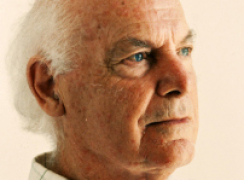
 A photograph of Harry Price, taken by paranormal hoaxer William Hope in 1922 | |
| Born | 17 January 1881 United Kingdom |
| Died | 29 March 1948 (aged 67) |
| Occupation | Psychic Researcher |
| Organization | Magic Circle National Laboratory of Psychical Research American Society for Psychical Research University of London Council for Psychical Investigation The Ghost Club |
Contents[hide] |
[edit] Early life
Although Price claimed his birth was in Shropshire, he was actually born in London in Red Lion Square[1] on the site of the South Place Ethical Society's Conway Hall.[2][3] He was educated in New Cross, first at Waller Road Infants School and then Haberdashers' Aske's Hatcham Boys School.[4] At 15, Price founded the Carlton Dramatic Society [5] and wrote small plays including a drama about his early experience with a poltergeist [6] which he said took place at a haunted manor house in Shropshire.[7]A few years later, Price came to the attention of the Press when he claimed an early interest in space-telegraphy. He set up a receiver and transmitter between Telegraph Hill, Hatcham and St Peter's Church Brockley and captured a spark on a photographic plate, though according to the most recent biography of Price by Richard Morris, this was nothing more than Harry writing a press release saying he had done the experiment as nothing was verified. The young Price also had an avid interest in coin collecting and wrote several articles for The Askean, the magazine for Haberdashers' School. In his autobiography, Search for Truth, written between 1941 and 1942, Price claimed he was involved with archaeological excavations in Greenwich Park, London but in earlier writings on Greenwich denied he had a hand in the excavation.[8]
From around May 1908 Price continued his interest in archaeology at Pulborough, Sussex where he had moved to before marrying Constance Mary Knight that August. As well as working for paper merchants Edward Saunders & Sons as a salesman he wrote for two local Sussex newspapers the West Sussex Gazette and the Southern Weekly News where he wrote about his remarkable propensity for discovering 'clean' antiquities. One of these, a silver ingot, was stamped around the time of the last Roman emperor Honorius, a few years after another celebrated Sussex archaeologist Charles Dawson found a brick at Pevensey Fort in Sussex which was purportedly made in Honorius' time. In 1910 Professor E.J Haverfield of Oxford University, the country's foremost expert on Roman history and a Fellow of the Royal Academy announced it a fake. [9] A report for the Proceedings of the Society of Antiquaries (number 23, pages 121-9) in the same year reported that:
'...the double axe type of silver ingot was well known and dated from late Imperial times but the one recovered from Sussex was an inferior copy of one found at the Tower of London, with alterations to give it an air of authenticity. Both the shape and lettering betrayed its origin.'
[edit] Interest in magic and conjuring
In his autobiography, Search for Truth, Price said the “Great Sequah” in Shrewsbury was "entirely responsible for shaping much of my life’s work",[4] and led to him acquiring the first volume of what would become the Harry Price Library, Price later became an expert amateur conjurer, joined the Magic Circle in 1922 and maintained a lifelong interest in stage magic and conjuring. His expertise in sleight-of-hand and magic tricks stood him in good stead for what would become his all consuming passion, the investigation of paranormal phenomena.[edit] Psychical research

The following year, Price made a formal offer to the University of London to equip and endow a Department of Psychical Research, and to loan the equipment of the National Laboratory and its library. The University of London Board of Studies in Psychology responded positively to this proposal. In 1934, the National Laboratory of Psychical Research, which held Price's collection, was reconstituted as the University of London Council for Psychical Investigation with C. E. M. Joad as Chairman and with Price as Honorary Secretary and Editor, although it was not an official body of the University.[14] In the meanwhile, in 1927, Price joined the Ghost Club, of which he remained a member until it (temporarily) closed in 1936.
In 1927, Price claimed that he had come into possession of Joanna Southcott's box, and arranged to have it opened in the presence of one reluctant prelate (the Bishop of Grantham, not a diocesan bishop but a suffragan of the diocese of Lincoln): it was found to contain only a few oddments and unimportant papers, among them a lottery ticket and a horse-pistol. His claims to have had the true box have been disputed by historians and by followers of Southcott.[15][16]

In 1934, the National Laboratory of Psychical Research took on its most illustrious case. £50 was paid to the medium Helen Duncan so that she could be examined under scientific conditions. A sample of Helen Duncan's ectoplasm had been previously examined by the Laboratory and found to be largely made of egg white. Price found that Duncan's spirit manifestations were cheesecloth that had been swallowed and regurgitated by Duncan. Price later wrote up the case in Leaves from a Psychist’s Case Book in a chapter called "The Cheese-cloth Worshippers".[18] During Duncan's famous trial in 1944, Price gave his results as evidence for the prosecution.
Price's psychical research continued with investigations into Karachi's Indian rope trick and the fire-walking abilities of Kuda Bux in 1935. He was also involved in the formation of the National Film Library (British Film Institute) becoming its first chairman (until 1941) and was a founding member of the Shakespeare Film Society. In 1936, Price broadcast from a supposedly haunted manor house in Meopham, Kent for the BBC and published The Confessions of a Ghost-Hunter and The Haunting of Cashen's Gap. This year also saw the transfer of Price's library on permanent loan to the University of London (see external links below), followed shortly by the laboratory and investigative equipment. In 1937, he conducted further televised experiments into fire-walking with Ahmed Hussain at Carshalton and Alexandra Palace, and also rented Borley Rectory for one year. The following year, Price re-established the Ghost Club, with himself as chairman, modernising it and changing it from a spiritualist association to a group of more or less open-minded sceptics that gathered to discuss paranormal topics. He was also the first to admit women to the club.
In the same year, Price conducted experiments with Rahman Bey who was 'buried alive' in Carshalton. He also drafted a Bill for the regulation of psychic practitioners. In 1939, he organised a national telepathic test in the periodical John O'London's Weekly. During the 1940s, Price concentrated on writing and the works The Most Haunted House in England, Poltergeist Over England and The End of Borley Rectory were all published.
[edit] Death and legacy
Price suffered a massive heart attack at his home in Pulborough, West Sussex and died almost instantly on 29 March 1948.[19]His archives were deposited with the University of London between 1976 and 1978 by his widow. They include his correspondence, drafts of his publications, papers relating to libel cases, reports on his investigations, press cuttings and photographs.[20]
[edit] Published works
- Revelations of a Spirit Medium, with Eric J. Dingwall, Kegan Paul, Trench, Trubner & Co. Ltd, London, hardback, 1922.
- Cold Light on Spiritualistic "Phenomena" - An Experiment with the Crewe Circle, Kegan Paul, Trench, Trubner & Co. Ltd, 1922.
- Stella C. An Account of Some Original Experiments in Psychical Research, Hurst & Blackett Ltd., hardback, 1925.
- Rudi Schneider: A Scientific Examination of his Mediumship, Methuen & Co. Ltd., hardback, 1930.
- Leaves from a Psychist’s Case Book, Victor Gollancz Ltd., hardback, 1933.
- Confessions of a Ghost-Hunter, Putnam & Co. Ltd., London, hardback, 1936.
- The Haunting of Cashen's Gap: A Modern "Miracle" Investigated - with R.S. Lambert, Methuen & Co. Ltd., hardback, 1936.
- Fifty Years of Psychical Research: A Critical Survey Longmans, Green & Co. Ltd., hardback, 1939.
- The Most Haunted House in England: Ten Years' Investigation of Borley Rectory, Longmans, Green & Co., hardback, 1940.
- Search for Truth: My Life for Psychical Research, Collins, London, hardback, 1942.
- Poltergeist Over England: Three Centuries of Mischievous Ghosts, Country Life Ltd., hardback, 1945.
- The End of Borley Rectory, Harrap & Co. Ltd., hardback, 1946.
[edit] See also
[edit] References
- ^ Hall (1978) pp.26-27,36-38
- ^ Harry Price: The Psychic detective by Richard Morris, Stroud, 2006
- ^ Hall (1978) pp.25-30
- ^ a b Tabori (1950) p.21
- ^ Tabori (1950) p.22
- ^ The Sceptic, performed 2 December 1898 at Amersham Hall
- ^ Tabori (1950) p.25
- ^ Hall (1978) pp.102-113
- ^ 'Harry Price: The Psychic detective by Richard Morris, Stroud, 2006
- ^ Leaves from a Psychist’s Case Book by Harry Price, Page 213.
- ^ Hall (1978) p.222
- ^ Tabori (1950) p.93
- ^ Hall (1978) pp.136-153
- ^ Hall (1978) p.169
- ^ Hall (1978) pp.154-160
- ^ a b Michael Ackland (2004). Henry Handel Richardson: a life. Cambridge University Press. p. 237. ISBN 0-521-84055-4.
- ^ a b Hall (1978) pp.160-170
- ^ Leaves from a Psychist’s Case Book by Harry Price, Pages 201-209.
- ^ Guiley, Rosemary (1994). The Guinness encyclopedia of ghosts and spirits. Guinness Publishing. p. 268. ISBN 0-85112-748-7.
- ^ Collection description of the Harry Price archive
[edit] Bibliography
- Harry Price, Biography of a Ghost Hunter by Paul Tabori, Athenaem Press, hardback, 1950.
- Leaves from a Psychist’s Case Book, by Harry Price, Victor Gollancz Ltd., hardback, 1933.
- Harry Price: The Psychic Detective by Richard Morris, Sutton Publishing hardback, 2006. ISBN 0-7509-4271-1.
- Trevor Hall (Oct 1978). Search for Harry Price. Gerald Duckworth and Company. ISBN 0-7156-1143-7.
[edit] External links
 | Wikimedia Commons has media related to: Harry Price |
- Harry Price Collection of Magical Literature at Senate House Library
- Harry Price archives
- Harry Price Website
|