Showing posts with label magician. Show all posts

Saturday, 9 March 2013

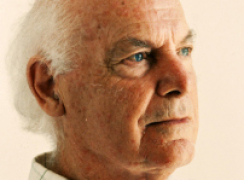
Kuda Bux

Kuda Bux (1906 - February 5, 1981) was an Indian mystic and magician. One of his most famous tricks was one in which he would cover his eyes with soft dough balls, blindfold himself, swath his entire head in strips of cloth, and yet still be able to see. He was also a fire walker. In his later life, he lost his eyesight to glaucoma.
He was one of the few who had the ability to use the part of the brain which most of use never ever think of. Kuda Bux was the subject of a 1950 film titled Kuda Bux, Hindu Mystic, and his apparent ability to see while blindfolded with dough balls strongly influenced British author Roald Dahl in the short story of Henry Sugar, who was taught to develop the same powers.
Observers noted that the unblindfolded Bux required reading glasses to read fine print. Whilst blindfolded Kuda Bux would read the dates on coins which are held on a spectator's hand, read the fine print of a magazine, thread a needle, duplicate words he had never seen written, shoot a bullseye with a pellet gun, and many other mysteries.
According to Robert Ripley, Kuda Bux performed an astonishing feat in Radio City, Manhattan, on August 2, 1938. According to this account, a hole 3 feet deep was dug in the Radio City parking lot and logs and bags of charcoal were set on fire in it. Kuda Bux, so the story goes, walked back and forth through the pit—twice. Ripley said, "Kuda Bux's feet were not even warm." There is newsreel footage of this event in the TV biography (distributed on VHS) Robert Ripley: Believe It or Not (TBS 1993).
According to Vincent J. Daczynski in 1935 he demonstrated fire walking in front of an audience of scientists from the University of London Council for Psychical Research and news reporters. He walked across a twelve foot pit of burning hot coals unscathed. Bux's feet were checked before and after the fire walking demonstration to verify that no protective chemicals, topical creams or herbs were used. It was a very windy day and the surface temperature of the fire was read at 806 degrees Fahrenheit. The body of the fire was measured at 2,552 degrees Fahrenheit which is hot enough to literally melt steel. After Kuda Bux's firewalking through the coals, a cameraman who had messed up some photographs of the event, asked for a retake. Kuda Bux obliged by repeating the firewalk once more. Again, his feet were checked before and after the fire walking demonstration.

[edit] References

[edit] External links

     Blogger Reference Link  http://www.p2pfoundation.net/Multi-Dimensional_Science

Wednesday, 5 December 2012

Eliphas Levi

From Wikipedia, the free encyclopedia


Jump to: navigation, search

Eliphas Levi
BornAlphonse Louis Constant
(1810-02-08)8 February 1810
France
Died31 May 1875(1875-05-31) (aged 65)
Eliphas Levi, born Alphonse Louis Constant (February 8, 1810 - May 31, 1875), was a French occult author and ceremonial magician.[1]
"Eliphas Levi", the name under which he published his books, was his attempt to translate or transliterate his given names "Alphonse Louis" into Hebrew although he was not Jewish.
His second wife was French sculptress Marie-Noémi Cadiot.

Contents

 [hide

[edit] Early life

Levi was the son of a shoemaker in Paris; he attended the seminary of Saint Sulpice and began to study to enter the Roman Catholic priesthood. However, while at the seminary he fell in love, and left without being ordained. He wrote a number of minor religious works: Des Moeurs et des Doctrines du Rationalisme en France ("Of the Moral Customs and Doctrines of Rationalism in France", 1839) was a tract within the cultural stream of the Counter-Enlightenment. La Mère de Dieu ("The Mother of God", 1844) followed and, after leaving the seminary, two radical tracts, L'Evangile du Peuple ("The Gospel of the People", 1840), and Le Testament de la Liberté ("The Testament of Liberty"), published in the year of revolutions, 1848, led to two brief prison sentences.

[edit] Career

In 1853, Levi visited England, where he met the novelist Edward Bulwer-Lytton, who was interested in Rosicrucianism as a literary theme and was the president of a minor Rosicrucian order.[2] Levi's first treatise on magic appeared in 1855 under the title "Dogme de la Haute Magie", followed a year later by the companion "Ritual de la Haute Magie". The two books were later combined into one book titled Dogme et Rituel de la Haute Magie, and was translated into English by Arthur Edward Waite as Transcendental Magic, its Doctrine and Ritual in 1910. Its famous opening lines present the single essential theme of Occultism and gives some of the flavor of its atmosphere:
Behind the veil of all the hieratic and mystical allegories of ancient doctrines, behind the darkness and strange ordeals of all initiations, under the seal of all sacred writings, in the ruins of Nineveh or Thebes, on the crumbling stones of old temples and on the blackened visage of the Assyrian or Egyptian sphinx, in the monstrous or marvelous paintings which interpret to the faithful of India the inspired pages of the Vedas, in the cryptic emblems of our old books on alchemy, in the ceremonies practised at reception by all secret societies, there are found indications of a doctrine which is everywhere the same and everywhere carefully concealed.(Introduction)
Although famous, the Introduction was not written until 1861 after the initial success of the first edition.
Levi began to write in succession Historie de la Magie in 1860. The following year, in 1861, he published a sequel to Dogme et Ritual, La Clef des Grands Mystères ("The Key to the Great Mysteries"). Further magical works by Lévi include Fables et Symboles ("Stories and Images"), 1862, Le Sorciere de Meudon ("The Witch of Meudon") 1865, and La Science des Esprits ("The Science of Spirits"), 1865. In 1868, he wrote Le Grand Arcane, ou l'Occultisme Dévoilé ("The Great Secret, or Occultism Unveiled"); this, however, was only published posthumously in 1898.
Lévi's version of magic became a great success, especially after his death. That Spiritualism was popular on both sides of the Atlantic from the 1850s contributed to this success. His magical teachings were free from obvious fanaticisms, even if they remained rather murky; he had nothing to sell, and did not pretend to be the inititate of some ancient or fictitious secret society. He incorporated the Tarot cards into his magical system, and as a result the Tarot has been an important part of the paraphernalia of Western magicians. He had a deep impact on the magic of the Hermetic Order of the Golden Dawn and later on the ex-Golden Dawn member Aleister Crowley. He was also the first to declare that a pentagram or five-pointed star with one point down and two points up represents evil, while a pentagram with one point up and two points down represents good. It was largely through the occultists inspired by him that Lévi is remembered as one of the key founders of the 20th century revival of magic.

[edit] Definition of Magic

Levi's works are filled with various definitions for "Magic" and the "Magician":
Magic
  • "To practice magic is to be a quack; to know magic is to be a sage."-from The Threshold of Magical Science
  • "Magic is the divinity of man achieved in union with faith..."-TMS
Magician
  • "He looks on the wicked as invalids whom one must pity and cure; the world, with its errors and vices, is to him God's hospital, and he wishes to serve in it."-KoM
  • "They are without fears and without desires, dominated by no falsehood, sharing no error, loving without illusion, suffering without impatience, reposing in the quietude of eternal thought..... a Magus cannot be ignorant, for magic implies superiority, mastership, majority, and majority signifies emancipation by knowledge. The Magus welcomes pleasure, accepts wealth, deserves honour, but is never the slave of one of them; he knows how to be poor, to abstain, and to suffer; he endures oblivion willingly because he is lord of his own happiness, and expects or fears nothing from the caprice of fortune. He can love without being beloved; he can create imperishable treasures, and exalt himself above the level of honours or the prizes of the lottery. He possesses that which he seeks, namely, profound peace. He regrets nothing which must end, but remembers with satisfaction that he has met with good in all. His hope is a certitude, for he knows that good is eternal and evil transitory. He enjoys solitude, but does not fly the society of man; he is a child with children, joyous with the young, staid with the old, patient with the foolish, happy with the wise. He smiles with all who smile, and mourns with all who weep; applauding strength, he is yet indulgent to weakness; offending no one, he has himself no need to pardon, for he never thinks himself offended; he pities those who misconceive him, and seeks an opportunity to serve them; by the force of kindness only does he avenge himself on the ungrateful..."-TMS
  • "Judge not; speak hardly at all; love and act."-KoM

[edit] Theory of magic

Levi identified three fundamental principles of magic:[3]
  1. That the material universe is only a small part of total reality, which includes many other planes and modes of consciousness. Full knowledge and full power in the universe are only attainable through awareness of these other aspects of reality. One of the most important of these levels or aspects of reality is the "astral light", a cosmic fluid which may be molded by will into physical forms.
    • "One can only define the unknown by its supposed and supposable relations with the known."-from The Key of the Mysteries
    • "The divine ideal of the ancient world made the civilization which came to an end, and one must not despair of seeing the god of our barbarous fathers become the devil of our more enlightened children."-KoM
  2. That human willpower is a real force, capable of achieving absolutely anything, from the mundane to the miraculous.
    • AXIOM 1:"Nothing can resist the will of man when he knows what is true and wills what is good."
    • AXIOM 9:"The will of a just man is the Will of God Himself and the Law of Nature."
    • AXIOM 20:"A chain of iron is less difficult to break than a chain of flowers."
    • AXIOM 21:"Succeed in not fearing the lion, and the lion will fear YOU. Say to suffering, 'I will that you shall become a pleasure,' and it will prove to be such-- and even more than a pleasure, it will be a blessing."
  3. That the human being is a microcosm, a miniature of the macrocosmic universe, and the two are fundamentally linked. Causes set in motion on one level may equally have effects on another.
    • "Man is the God of the world, and God is the man of Heaven."-KoM

Eliphas Levi's Tetragrammaton pentagram, which he considered to be a symbol of the microcosm, or human being.

[edit] Bibliography

  • Des Moeurs et des Doctrines du Rationalisme en France (Of the Moral Customs and Doctrines of Rationalism in France), 1839
  • La Mère de Dieu (The Mother of God), 1844
  • L'Evangile du Peuple (The Gospel of the People) 1840
  • Le Testament de la Liberté (The Testament of Liberty), 1848
  • Dogme et Rituel de la Haute Magie, (Transcendental Magic, its Doctrine and Ritual), 1855
  • Histoire de la Magie, (The History of Magic), 1860
  • La Clef des Grands Mystères (The Key to the Great Mysteries), 1861
  • Fables et Symboles (Stories and Images), 1862
  • La Science des Esprits (The Science of Spirits), 1865
  • Le Grand Arcane, ou l'Occultisme Dévoilé (The Great Secret, or Occultism Unveiled), 1868
  • Magical Rituals of the Sanctum Regnum, 1892, 1970
  • The Book of Splendours: The Inner Mysteries of Qabalism

[edit] See also

[edit] Notes and references

  1. ^ Christopher McIntosh, Eliphas Lévi and the French Occult Revival, 1972.
  2. ^ C. Nelson Stewart, Bulwer Lytton as Occultist 1996:36 notes that the one surviving letter from Lévi to Lytton "would appear to be addressed to a stranger or to a very distant acquaintance" (A.E. Waite).
  3. ^ Ellwood, Robert S. (1993). Islands of the Dawn. Honolulu: University of Hawaii Press. ISBN 0-8248-1487-8.

[edit] External links

Wednesday, 28 November 2012

Franz Bardon

Franz Bardon (December 1, 1909 – July 10, 1958), was a Czech stage magician and student and teacher of Hermetics. He was born in Opava, Austrian Silesia. During World War II Bardon was held in a concentration camp for refusing to participate in Nazi mysticism. Bardon was rescued by Russian soldiers who raided the camp. Bardon continued his work in the fields of Hermetics until 1958 when he was arrested and imprisoned in Brno Czechoslovakia. Bardon died on July 10, 1958 while in the custody of police.[1]

Contents

 [hide

[edit] Works

Bardon is best known for his three volumes on Hermetic magic. These volumes are Initiation Into Hermetics, The Practice of Magical Evocation and The Key to the True Quabbalah.
An additional fourth work attributed to him by the title of Frabato the Magician, supposed by many of his students to be a disguised autobiography. Though the book lists its author as Bardon, it was actually written by his secretary, Otti Votavova. While some elements of the story are based on Bardon's real life experience, most of the book was written as an occult novel with much embellishment on the part of Votavova.[2]
Bardon's works are most notable for their simplicity, their relatively small theoretical sections, and heavy emphasis on practice with many exercises. Students of his, such as William Mistele and Rawn Clark consider him to have written the best training programs of any magician of the 20th century. They were written with the intention of allowing students who wished to practice magic the means to do so if they could not study under a teacher.

[edit] Initiation Into Hermetics

Initiation into Hermetics provides step-by-step instruction in the form of practical exercises. These exercises are aimed at developing body, soul and spirit. The result of the practical exercises is the development of occult abilities which can be of benefit to the student, in as far as changing his existence for the better.
Bardon's training system is comprehensive. Initiation into Hermetics is divided into 10 practical steps. The program further subdivides each step into three areas – mental, astral, and physical – with the intent of developing all areas of the self simultaneously and in a balanced way. This is to ensure that the student maintain a balance of the three bodies, which accelerates progress in the long run and minimizes injury to oneself in the process of growth. Also, there occurs a purification of the personality, where the magician should become incapable of wishing harm to his fellow man. This is an important point, as the power of the magician increases, so his ability to do harm – even unintentionally, increases.
Mental exercises begin with simple observation of the mental contents and progress from there, with each subsequent exercise building on the previous. The Astral exercises focus on systematically cataloging the positive and negative aspects of the self and, later, transforming and purifying the negative aspects into positive. The Physical exercises stress physical health and development as well as the integration and use of the physical body and physical environment into magical techniques such as rituals.

[edit] The Practice of Magical Evocation

The Practice of Magical Evocation is Franz Bardon's second volume of The Holy Mysteries. In magical terms, the book is a practical guide to the proper evocation of and communication with divine entities existing in the atmospheric zones surrounding planets, stars, and moon as well as in the earth itself. It is a modern study of direct contact with the universal teachers – the other major works in the field are products of the Medieval, Renaissance, and Reformation periods. Beyond that it offers a glimpse into a complete magical universe. Bardon outlines a totally new and original hierarchy of magic, from the spirits of the four elements to those of the various planets, and even to each degree of the Zodiac. Included with the names and descriptions of the various entities are a collection of entirely unknown magical sigils, as well as an account of ancient Kabbalistic astrology.
Bardon's second work, dealing with the evocation of spirits, outlined first the symbolic meaning of the traditional ritual tools and temple designs, then goes on to describe a method of evoking spirits. In essence, the magician creates an environment hospitable to the entity in the temple or other medium of contact. They then enter a trance, projecting their consciousness into the sphere of the entity in question, and call it back. Bardon emphasized two points about doing this sort of thing: first, that one must complete the necessary prerequisites of the training program or no success was possible; secondly, that the magician must call the spirit back under their "divine authority", not as a peer, otherwise they are liable to be manipulated by the entity.

[edit] The Key to the True Kabbalah

In The Key to the True Kabbalah, Bardon demonstrates that mysticism of letters and numbers – the "true Kabbalah" – is a universal teaching of great antiquity and depth. Throughout the ages, adepts of every time and place have achieved the highest levels of magical attainment through the understanding of sound, color, number and vibration as embodied in the Kabbalah. This book, the third in Bardon's texts of Hermetic magic, is a practical guide to attainment.
The first two works, addressing the first two tarots, are pre-requisite to understanding and making use of the third work. Bardon himself says that it is
...quite up to the reader to study my books merely theoretically. In doing so, he will acquire a knowledge which he would not be able to get from any philosophical book. But knowledge is not yet wisdom. Knowledge depends on the development of the intellectual features of the spirit; wisdom, on the other side, necessitates the equable development of all four aspects of the spirit. Therefore knowledge is mere philosophy, which by itself alone can make a man neither a magician nor a Quabbalist. A learned man will be able to say a lot about magic, Quaballah, etc., but he will never be able to understand the powers and faculties rightly. With these few words I have explained to the reader the difference between the philosopher and the sage. —Franz Bardon, The Key to The True Kaballah, 1975, pages 12-13
The idea is that the True Kabbalah is not a mantic art, as some perceptions of it (primarily relating to gematria) suggest, but a method of empowering the letters of the alphabet to create magical effects through their combination. Bardon links this to the Tantra of the East, but the basis of this comparison is not quite clear. Like his second book on evocation, the student must finish at least the first eight steps of IIH to get any valid results or have equivalent training in a different system and avoid damage to the psyche which "...can cause a splitting of the personality, schizophrenia, with all its serious consequences." (Bardon, 1975, Page 55). Bardon expands on this real possibility with the following advice "
...someone who wants to apply the methods on the use of genuine kabbalah at once, out of mere curiosity or inconsiderateness, exposes himself to various dangers. For in practice he would get into contact with various powers which he would not be able to control and thus he would be in danger of ruining his health. Therefore, anyone not sufficiently prepared for this step is herewith warned in time. —The Key to The True Kaballah, Franz Bardon, copyright 1975, page 62
This damage to the psyche "...clearly shows how inexcusable it is if writings of Oriental origin are interpreted incorrectly and translated literally in an intellectual language" as Bardon has "...put the greatest secret into the kabbalist's hands, as in the practical application of the fourfold key, the key of realization by the word. Thousands of years this secret has been guarded." (Bardon, 1975, page 55 and page 112)

[edit] The Golden Book of Wisdom

This is only a fragment of a manuscript Bardon was working on but never completed. This book was supposed to have concerned the fourth leaf or trump card of the Tarot (the Emperor). There remains no complete transcript of the work.

[edit] Frabato the Magician

Though cast in the form of a novel, Frabato the Magician is in fact the spiritual autobiography of Franz Bardon. Frabato was the author's stage name during his career as a performing magician, and it is Frabato who occupies center stage in the novel as well. Set in Dresden, Germany, in the early 1930s, the story chronicles Frabato's magical battles with the members of a powerful and dangerous black lodge, his escape from Germany during the final desperate days of the Weimar Republic, and the beginning of the spiritual mission which was to culminate in Bardon writing his classic books on Hermetic magic. More than a novel, Frabato the Magician is itself a work of magic which gives insight into Bardon's other books as well as revealing the dark occult forces which lay behind the rise of the Third Reich.

[edit] Metaphysics

Bardon's metaphysical system commences with Initiation Into Hermetics and is expanded on in the subsequent volumes. The highest reality is the akasha, which is associated with both God and the platonic "world of ideas", and which gives rise to (and binds/balances) the four elements of earth, fire, air, and water. These four elements make up the sum of all forces and processes in each of the three worlds. Bardon also posited "electric" and "magnetic" forces, which are used more as terms for the universal active and passive forces, respectively. These are expressed in the positive and negative aspects of the four elements. Air and earth are both considered pseudo-elements as they arise only out of the interaction of fire and water.
The three worlds or "planes" are as follows: the mental plane is the highest reality, save for the undivided akasha, and is the true and eternal ego. Where the akasha is in a sense the world of ideas, it is the mental plane that sets these ideas in motion. The astral plane is the next one down and contains the archetypes of the physical world and to some extent the vital energy behind it; the physical world is the lowest of the planes and requires little explanation. Each of these worlds forms a matrix for the world below it. Since humans also have three bodies corresponding to their presence in each of the three worlds, severing the link between any two of these bodies will cause the dissolution of the lower forms (or death). Such things as astral projection are still possible as they only involve loosening the hold between the bodies.
Humans are considered to be special because they alone are "tetrapolar", or inherently containing all four elements, plus the fifth, the Akasha or Divine element. This concept is the basis of much of Bardon's training, which requires developing deficiencies and coming to a proper tetrapolar balance—only then could the initiate progress spiritually. Bardon repeatedly emphasizes that the initiate can only develop an understanding of himself and his universe within the scope of their awareness and spiritual maturity. Thus the more balanced, more evolved student has access to a more comprehensive reality and more magical power.

[edit] Notes

  1. ^ "In Memoriam" in Frabato the Magician, page 79.
  2. ^ Dieter Ruggeberg. "Foreword" in Frabato the Magician.

[edit] References

  • Franz Bardon; Gerhard Hanswille (translator) (2002). Kenneth Johnson. ed. Frabato the Magician: An Occult Novel. Salt Lake City, UT: Merkur Pub.. ISBN 1-885928-15-7.

[edit] External links


Saturday, 24 November 2012

Magician (paranormal)

From Wikipedia, the free encyclopedia


Jump to: navigation, search


John Dee and Edward Kelley evoking a spirit: Elizabethans who claimed magical knowledge
A magician is a practitioner of magic, the ability to attain objectives or acquire knowledge (and,or) wisdom using supernatural or nonrational means.[1]
Some modern magicians, such as Aleister Crowley and those who follow the traditions of the Hermetic Order of the Golden Dawn and Ordo Templi Orientis, describe magic in rational terms, using definitions, postulates and theorems.[2] Aleister Crowley said "the magician of the future will use mathematical formulas".[2]
The paranormal kind of magician (unlike the stage illusionist) can also be referred to as an enchanter, wizard, mage, magus, or thaumaturgist. These overlapping terms may be distinguished by some traditions or some writers. When such distinctions are made, sorcerers are more often practitioners of evocations or black magic,[citation needed] and there may be variations on level and type of power associated with each name.
Some names, distinctions, or aspects may have more of a negative connotation than others, depending on the setting and the context. (See also Magic and Magic and religion, for some examples.)

Contents

 [hide

[edit] Historical figures


"Alchemist Sędziwój" by Jan Matejko: alchemist, and pioneer chemist
Many illusionists attempting parlor tricks and sleight of hand receive the title of magician whether it be by label or self description through the many years. A wizard, in this case, is a person who claims to be aptly skilled in arts considered hidden or arcane.
Throughout history, there have been many who have claimed having secret knowledge was result of great often supernatural powers, insofar as certain platitudes alluding to an ability and knowledge of the occult (literally, "hidden") techniques oft felt could be of great import. Perhaps the oldest example of this is knowledge of the jealously guarded secret of the making and tending of fire.[3][4]
In particular the practice of Alchemy contains many elements that in the modern are now considered magical, awhile other sciences unknown by practitioners of the past have been incorporated into the study and application of chemistry.
Legends in medieval Europe attributed Virgil with prophetic powers, and sometimes more magical abilities, as in the fairy tale "Virgilius the Sorcerer" collected in The Violet Fairy Book. The figure of Faust appears to have been based on an actual alchemist, Johann Georg Faust, who was accused in his lifetime of practicing magic. Merlin a magician of Arthurian Legend is among many others of the multitudes of paganism gods made legend after the fact or in pure fiction.
The "Atsinganoi", early Romani people as described in the time of Constantine IX,[5] Heinrich Cornelius Agrippa occult writer and alchemist, John Dee, Queen Elizabeth's court astrologist, Alessandro Cagliostro and Aleister Crowley are examples.
See also Indirectly, Esoteric Christianity, Kabbalah, Renaissance magic, Mysticism, Merlin, and Grimoire.

[edit] Magicians

[edit] See also

[edit] References

  1. ^ "Magic (Sorcery)". Microsoft Encarta 2006 Premium. CD. Microsoft. 2006.
  2. ^ a b Crowley, Aleister. Magick (Book 4) (Introductions and Theorems). Weiser Books. ISBN ISBN 0-87728-919-0
  3. ^ "Fire". HighBeam Research. http://www.highbeam.com/doc/1E1-fire.html. Retrieved 2006-11-15.[dead link]
  4. ^ Paul Rincon (2004-04-29). "Early human fire skills revealed". London: BBC News. http://news.bbc.co.uk/1/hi/sci/tech/3670017.stm. Retrieved 2006-11-15.
  5. ^ Jeetan Sareen. "The Lost Tribes of India". Kuviyam. http://www.kuviyam.com/scr/index.asp?pLang=E&pHead=90&pMenu=1&pIssue=31. Retrieved 2006-11-15.

"Scientific Mysticism" of Michael Whiteman

  The previous post gave reference to the book below by an academic. It is similiar but not identical to the ideas of my paradigm known as ...