Showing posts with label nobel prize. Show all posts

Friday, 4 October 2013

Pioneer of the paranormal


The Nobel-prize-winning physicist Brian Josephson has studied the brain and the paranormal for 30 years. He tells Edwin Cartlidge that most physicists have an irrational prejudice against unorthodox areas of research.


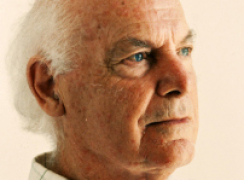
[photograph] Outside the mainstream -- Brian Josephson works in areas that are anathema to most physicists

It's no surprise when entering the office of a physics professor to find that space is at a premium, with books and research papers piled high on every available surface. In that respect, the office of Brian Josephson on the top floor of the Cavendish laboratory in Cambridge is no exception. But it would be wrong to conclude that Josephson is a typical physicist, and a quick glance at those books reveals why. With titles such as Consciousness explained and Clairvoyant reality, it is apparent that he is interested in subjects well beyond the scope of the average physicist.
Josephson is best known for his pioneering theoretical work on superconductivity, which led to the invention of the Josephson junction and earned him a share of the 1973 Nobel Prize for Physics. Josephson junctions are the key components in superconducting quantum interference devices (SQUIDs). which are widely used to make extremely sensitive measurements of magnetic fields. But these days, Josephson is the director of the "Mind-matter unification project" at the Cavendish. He spends his time thinking about how the brain works, investigating topics such as language and consciousness, and pondering the fundamental connections between music and the mind. Most controversially, as far as physicists are concerned, he carries out speculative research on the nature of paranormal phenomena, a field known as parapsychology.
Beyond quantum theoryJosephson's current work is based on the belief that quantum mechanics is not the ultimate theory of nature. "Future science will consider quantum mechanics as the phenomenology of particular kinds of organised complex system," he says. "Quantum entanglement would be one manifestation of such organisation, paranormal phenomena another. As yet, our understanding of such matters is very qualitative, but application of the skills of the physicist to such situations can be expected to yield more precise theories in due course."
Needless to say Josephson's views are not universally acclaimed in the physics community. Indeed, physicists were highly critical of a short passage that Josephson wrote to accompany a special set of stamps published by the Royal Mail to mark the 100th anniversary of the Nobel prize last year: "Quantum theory is now being fruitfully combined with theories of information and computation. These developments may lead to an explanation of processes still not understood within conventional science such as telepathy -- an area where Britain is at the forefront of research."
In an article in The Observer newspaper published at the time, David Deutsch, a quantum physicist at Oxford University, described Josephson's claim as "utter rubbish" and went on to say there is no evidence that paranormal phenomena actually exist. Asked by Physics World whether the paranormal might become a respectable area of research, Deutsch was still highly dismissive "One day Santa Claus might turn out to be a respectable area of research. All one can say is that there is no better evidence for the one than for the other."
Josephson, however, believes that such views stem from ignorance. He says that there is now strong evidence for the existence of parapsychological phenomena, pointing out that a number of trials designed to investigate telepathy -- communication between minds using means beyond those of the known senses -- have produced positive results. These include experiments [details of methodology] in which one person is asked to mentally "transmit" one of four photographic or video images to a second person. According to Josephson, the receiver correctly identifies the image about one third of the time, not a quarter of the time as would be expected through chance alone.
"The trouble is that the scientific community is not aware of these results because very little of this work is published in journals like Nature and Science," says Josephson. And the work is often ridiculed when it is published in respectable physics journals. He cites the example of a paper on quantum mechanics by Henry Stapp of the Lawrence Berkeley National Laboratory that contained a reference to parapsychology. Although this paper was published in Physical Review A in 1994, it was subsequently criticized in the letters pages of Physics Today. Josephson believes that the landmark 1935 paper by Einstein, Podolsky and Rosen setting out a hypothetical thought experiment in quantum mechanics was just as conjectural as Stapp's paper.
"Physicists have an emotional response when they hear anything connected with parapsychology," he says. "Their opinion of parapsychology research is not based on evaluation of the evidence but on a dogmatic belief that all research in this field is false."
Josephson believes the same is true of other unorthodox areas of research, such as cold fusion or homeopathy. The scientific community, he maintains, has been highly influenced by the views of the chemist Irving Langmuir, who argued that phenomena which are difficult to reproduce are not real. On the contrary, says Josephson, phenomena may legitimately be difficult to reproduce, such as those associated with neutrinos.
Defying conventionBrian Josephson was born in Cardiff in 1940 and carried out his Nobel-prize-winning work at the age of just 22 while studying for his PhD at Cambridge University. He predicted that a superconducting current can tunnel through an insulating junction, even when there is no voltage across it, and that the current will oscillate at a well-defined frequency when a voltage is applied. His calculations were published in Physics Letters forty years ago this July and were confirmed experimentally within nine months.
But Josephson was no one-hit wonder. As an undergraduate he published a paper in which he calculated a thermal correction to the Mössbauer effect that reconciled previously different measurements of gravitational red shifts reported by teams in the US and UK. According to one eminent physicist who knows Josephson, but who prefers to remain anonymous: "For a few years Josephson produced a number of very important papers, and he would have had a place in the history of physics even if he had not discovered the Josephson effect."
So what caused Josephson to abandon his conventional and highly fruitful line of research? After a year doing postdoctoral work at the University of Illinois in the mid-1960s, he returned to Cambridge where he started to think about how the brain works. He says he found this more fascinating than anything in physics at the time. He then became interested in Eastern mysticism and parapsychology, attending a conference in Toronto at which, he says, a psychic called Matthew Manning demonstrated paranormal spoon bending. "I began to sense that conventional science is inadequate for situations where the mind is involved, and the task of clarification became a major concern of mine," he recalls.
Josephson's interests moved away from mainstream physics research at about the time he won his Nobel prize. There was also, he says, a period in the 1970s when his ability to concentrate and do science was seriously disturbed, and that he was scientifically unproductive at the time. He took up meditation, which he now practises on a daily basis ever since, and says that this helps to him deal calmly with his critics in the physics community, and to clear away mental obstacles when trying to solve scientific problems. He adds that he believes his critics are misguided and narrow-minded, and points out that he has recently received two awards for his work on brain mechanisms, and has also been invited to present his ideas at prestigious conferences on information sciences and complex systems.
Pursuing the paranormal
Although parapsychology is not taken seriously by most physicists, it has become more respectable in the wider academic world, especially in psychology departments. About 50 people at universities in the UK have been awarded PhDs in parapsychology, and 15 of these have gone on to obtain permanent academic positions in university departments, according to Bernard Carr, a cosmologist at the University of London. Two years ago Carr, Josephson and others organized a conference entitled "Rational perspectives on the paranormal" in Cambridge (Physics World May 2000 p5).
"Even if one regards the probability of extrasensory perception being real as small, its significance if established would be so immense that it is surely worth investing some effort into studying it," says Carr.
Indeed, Josephson has no doubt about the importance of investigating the brain. "Ultimately," he says, "my work on the brain is more significant than my Nobel-prize winning research." Others would no doubt disagree.
Reprinted with permission from Physics World, May 2002, pp.10-11. Some links have been added to the original text.


More links:


Blogger Ref Link http://www.p2pfoundation.net/Multi-Dimensional_Science


Wednesday, 5 December 2012

Brian Josephson

From Wikipedia, the free encyclopedia


Jump to: navigation, search

Brian Josephson

photograph: Cavendish Laboratory
Born(1940-01-04) 4 January 1940 (age 72)
Cardiff, Wales
NationalityUnited Kingdom
FieldsPhysics
InstitutionsUniversity of Cambridge, Trinity College, Cambridge
Known forHis work in condensed matter physics, Josephson effect
Notable awardsNobel Prize for Physics (1973)
Brian David Josephson, FRS[1] (born 4 January 1940; Cardiff, Wales[2]) is a Welsh physicist. He became a Nobel Prize laureate in 1973[3] for the prediction of the eponymous Josephson effect.[2]
As of late 2007, he was a retired professor at the University of Cambridge, where he is the head of the Mind–Matter Unification Project in the Theory of Condensed Matter (TCM) research group. He is also a fellow of Trinity College, Cambridge.[4]

Contents

 [hide

[edit] Education

Brian Josephson attended Cardiff High School and then Cambridge University, where he gained a BA in 1960.[1] Whilst an undergraduate, he became notorious as a brilliant and self-assured student.[2] A former lecturer remembers the importance of being particularly precise if addressing a class that included Josephson; if a mistake was made, Josephson would not be afraid to politely point it out after the lecture.[2] As an undergraduate he published a paper in which he calculated a thermal correction to the Mössbauer effect that reconciled previously different measurements of gravitational red shifts reported by teams in the US and UK.[5] After completing his undergraduate degree he continued to study at Cambridge, and in 1964 was awarded his PhD in physics.[1] In the 1970s he learned Transcendental Meditation.[6]

[edit] Academic career

Josephson became a fellow of Trinity College, Cambridge in 1962[1] before moving to the United States to take a position as Research Assistant Professor at the University of Illinois.[1] He returned to Cambridge University in 1967 as an Assistant Director of Research at the Cavendish Laboratory and then a professor of physics in 1974,[1] a position he retained until his retirement in 2007.
Since 1983 Josephson has been appointed a Visiting Professor at various institutions including the Wayne State University in 1983,[1] the Indian Institute of Science in 1984[1] and the University of Missouri-Rolla in 1987.[1]
Josephson has been a member of the Theory of Condensed Matter (TCM) Group, a theoretical physics group at the Cavendish Laboratory, for much of his research career.[7] While working at TCM group he was jointly awarded the Nobel Prize in Physics in 1973 while still only a Reader in Physics. He shared the award with Japanese physicist Leo Esaki and American physicist Ivar Giaever, who each received 1/4 of the prize, with 1/2 going to Josephson.[8] Unusually, along with Josephson, neither Esaki nor Giaever held professorships at the time of the award. It is rare that academics ranked below professors win the prestigious prize.[9] In addition and also unusually, each of the three performed the relevant research prior to being awarded his PhD.
Josephson also directs the Mind–Matter Unification Project in the TCM Group.[10] He currently sits on the Advisory and Editorial Board of NeuroQuantology: An Interdisciplinary Journal of Neuroscience and Quantum Physics.[11]

[edit] Research

[edit] Josephson effect

Josephson is best known for his pioneering theoretical work on superconductivity, earning him a 1/2 share of the 1973 Nobel Prize for Physics.[5] Specifically, it was awarded for "his theoretical predictions of the properties of a supercurrent through a tunnel barrier, in particular those phenomena which are generally known as the Josephson effects",[8] which led to the invention of the Josephson junction. These junctions are key components in devices used to make highly sensitive measurements in magnetic fields.[5] Further use for his discoveries was realised by researchers at IBM who, by 1980, had assembled an experimental computer switch structure, which would permit switching speeds from 10 to 100 times faster than those possible with conventional silicon-based chips, vastly increasing data processing capabilities.[2]

[edit] Mind–Matter Unification Project

Josephson directed the Mind–Matter Unification Project, which he describes as: "a project concerned primarily with the attempt to understand, from the viewpoint of the theoretical physicist, what may loosely be characterised as intelligent processes in nature, associated with brain function or with some other natural process".[12] More generally, the research involves how the brain works, investigating topics such as language and consciousness, and pondering the fundamental connections between music and the mind.[5] It is based on the belief that quantum mechanics is not the ultimate theory of nature.[5] He maintains that "Quantum theory is not a complete picture of nature even though it is correct in its own domain".[13] He believes ideas such as complementarity in physics may also apply to biology.[13]
Despite his retirement Josephson continues to be active within the Mind-Matter Unification project.[12] Among his aims is to find mechanisms behind phenomena such as the possibility that organisms can learn to bias the statistics of supposedly random physical processes through having a better understanding of its patterns than non-living matter.[5]

[edit] Parapsychology

Josephson is one of the more well-known scientists who say that parapsychological phenomena may be real, and is also interested in the possibility that Eastern mysticism may have relevance to scientific understanding.[12] He has said that one of his guiding principles has been nullius in verba (take nobody's word, the motto of the Royal Society), saying that "if scientists as a whole denounce an idea, this should not necessarily be taken as proof that the said idea is absurd; rather, one should examine carefully the alleged grounds for such opinions and judge how well these stand up to detailed scrutiny."[5][12]
In 2001 Josephson's views on the paranormal were under the spotlight when he wrote about them in a booklet to accompany six special stamps to honour the 100th anniversary of the Nobel prize.[14] The Royal Mail had sent Josephson a request to write a small article about their award and the implication of research in their field they could use in conjunction with the special Nobel Centenary stamp issue.[14] He wrote the following:
"Physicists attempt to reduce the complexity of nature to a single unifying theory, of which the most successful and universal, the quantum theory, has been associated with several Nobel prizes, for example those to Dirac and Heisenberg. Max Planck's original attempts a hundred years ago to explain the precise amount of energy radiated by hot bodies began a process of capturing in mathematical form a mysterious, elusive world containing 'spooky interactions at a distance', real enough however to lead to inventions such as the laser and transistor. Quantum theory is now being fruitfully combined with theories of information and computation. These developments may lead to an explanation of processes still not understood within conventional science such as telepathy, an area where Britain is at the forefront of research."[12]
He came under criticism from several fellow physicists including David Deutsch, a quantum physicist at Oxford University who stated: "It is utter rubbish. Telepathy simply does not exist. The Royal Mail has let itself be hoodwinked into supporting ideas that are complete nonsense".[14] However, Josephson maintains "There is a lot of evidence to support the existence of telepathy, for example, but papers on the subject are being rejected – quite unfairly".[14]
In 2005, Josephson said that "parapsychology should now have become a conventional field of research, and yet parapsychology's claims are still not generally accepted". He compared this situation to that of Alfred Wegener's hypothesis of continental drift, where he believed there was initially great resistance to acceptance despite the strength of the evidence.[15] Only after Wegener's death did further evidence lead to a gradual change of opinion and ultimate acceptance of his ideas.[15] Josephson said that many scientists are not yet swayed by the evidence for parapsychology and the paranormal. Josephson contends that some scientists feel uncomfortable about ideas such as telepathy and that their emotions sometimes get in the way.[15]

[edit] Awards and medals

[edit] Awards

  • New Scientist 1969[1]
  • Research Corporation 1969[1]
  • Fritz London Memorial Prize, 1970[1]
  • Nobel Prize for Physics 1973[3]

[edit] Medals

  • Guthrie Medal (Institute of Physics) 1972[1]
  • van der Pol 1972[1]
  • Elliott Cresson Medal (Franklin Institute) 1972[1]
  • Hughes (Royal Society) 1972[1]
  • Holweck Prize (Institute of Physics and French Institute of Physics) 1972[1]
  • Faraday (Institution of Electrical Engineers) 1982[1]
  • Sir George Thomson (Institute of Measurement and Control) 1984[1]
  • Medal of the town of Marseilles 2004

[edit] Selected publications

  • Josephson, B.D., 1964: "Coupled Superconductors", Review of Modern Physics, 36 [1P1].
  • Josephson, B.D., 1965: "Supercurrents through Barriers", Advances in Physics, 14 [56].
  • Josephson, B.D., 1992: "Telepathy Works", New Scientist, 135 [1833], 50-50.
  • Josephson, B.D., 1992: "Defining Consciousness", Nature, 358 [6388], 618-618.
  • Josephson, B.D., 1993: "All in the Memes", New Statesman & Society, 6 [276], 28-29.
  • Josephson, B.D., 1994: "Awkward Eclipse", New Scientist, 144 [1956], 51-51.
  • Josephson, B.D., 1995: "Light Barrier", New Scientist, 146 [1975], 55-55.
  • Josephson, B.D., 1997: "Skeptics Cornered", Physics World, 10 [9], 20-20.
  • Josephson, B.D., 1999: "What is truth?", Physics World, 12 [2], 15-15.
  • Josephson, B.D., 2000: "Positive bias to paranormal claims", Physics World, 13 [10], 20-20.
  • Josephson, B.D., 2006: "Take nobody's word for it", New Scientist, 192 [2581], 56-57.

[edit] Wikipedia presence

Brian Josephson writes from time to time on Wikipedia.

[edit] See also

[edit] References

  1. ^ a b c d e f g h i j k l m n o p q r s "Brian D. Josephson – Curriculum Vitae". The Nobel Foundation. http://nobelprize.org/nobel_prizes/physics/laureates/1973/josephson-cv.html. Retrieved 2009-06-17.
  2. ^ a b c d e "Encyclopædia Britannica's Guide to the Nobel Prizes". Encyclopædia Britannica. http://www.britannica.com/nobelprize/article-9044004. Retrieved 2009-10-14.
  3. ^ a b "The Nobel Prize in Physics 1973". Nobel Foundation. http://nobelprize.org/nobel_prizes/physics/laureates/1973/index.html. Retrieved 2008-10-09.
  4. ^ "Brian David Josephson". Jewish Virtual Library. http://www.jewishvirtuallibrary.org/jsource/biography/josephson.html. Retrieved 2007-09-17.
  5. ^ a b c d e f g "Pioneer of the Paranormal". PhysicsWorld. May 2002. http://physicsworldarchive.iop.org/index.cfm?action=summary&doc=15%2F5%2Fphwv15i5a17%40pwa-xml&qt=. Retrieved 2009-06-17.
  6. ^ Williamson, Lola (2010-01-01). Transcendent in America. NYU Press. p. 93. ISBN 978-0-8147-9450-0.
  7. ^ "Cambridge Theory of Condensed Matter group". University of Cambridge. http://www.tcm.phy.cam.ac.uk/people.html. Retrieved 2009-10-14.
  8. ^ a b "1973 Nobel Prize in Physics". The Nobel Foundation. http://nobelprize.org/nobel_prizes/physics/laureates/1973/index.html. Retrieved 2009-10-14.
  9. ^ "Nobel interview with Josephson". http://nobelprize.org/mediaplayer/index.php?id=977.
  10. ^ http://www.tcm.phy.cam.ac.uk/research.html
  11. ^ "NeuroQuantology Editorial Team". NeuroQuantology: An Interdisciplinary Journal of Neuroscience and Quantum Physics. http://www.neuroquantology.com/journal/index.php/nq/about/editorialTeam. Retrieved 2009-10-20.
  12. ^ a b c d e "Brian David Josephson at Cavendish". http://www.tcm.phy.cam.ac.uk/~bdj10/. Retrieved 2009-10-14.
  13. ^ a b "Can the Physicist's Description of Reality be Considered Complete?". http://video.google.co.uk/videoplay?docid=7396961996151094334&ei=axExSsmJNoKL-QbW4OixCQ&q=Can+the+Physicists%27+Description+of+Reality+be+Considered+Complete%3F%22+&hl=en. Retrieved 2009-06-17.
  14. ^ a b c d McKie, Robin (30 September 2001). "Royal Mail's Nobel guru in telepathy row". The Guardian (London). http://www.guardian.co.uk/uk/2001/sep/30/robinmckie.theobserver. Retrieved 2009-06-17.
  15. ^ a b c Michael A. Thalbourne and Lance Storm (2005). Parapsychology in the twenty-first century: essays on the future of psychical research McFarland, pp. 1–2.

[edit] External links

"Scientific Mysticism" of Michael Whiteman

  The previous post gave reference to the book below by an academic. It is similiar but not identical to the ideas of my paradigm known as ...